
REVIEW · RED SEA SCUBA DIVING & PADI COURSES
PADI Open Water Diver Course
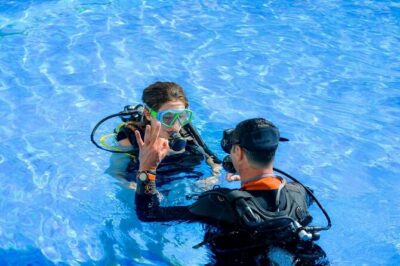
A calm instructor turns nerves into bubbles. This PADI Open Water Diver course in Sharm el-Sheikh is built for real beginners, with structured training led by PADI professionals like Mina and Amr. I like that the course aims straight at an internationally recognized certification up to 18m. One catch: the PADI certification and manual are not included, so you should budget for the extras beyond the base price.
What makes this experience especially practical is how it mixes classroom knowledge with step-by-step water skills. You get all required scuba equipment, hotel pickup and drop-off in an air-conditioned vehicle, and lunch with soft drinks plus bottled water. The format also keeps the group manageable, with a maximum of 15 participants.
The course is not for everyone, and that matters. You’ll fill out a health questionnaire, and it’s not suitable for pregnant women or people with serious medical conditions, including back problems or heart complaints. Also, since the schedule depends on weather and your safety checks can’t be rushed, plan your travel so you are not flying within 24 hours of water sessions.
In This Review
- Key highlights to know before you go
- Why Sharm el-Sheikh is a smart place to learn scuba
- How the course schedule actually works (theory, confined skills, open-water sessions)
- Theory sessions
- Confined water training
- Open-water training sessions
- Equipment, meals, and the small comfort wins that add up
- What the 18m Open Water Diver certification means for you
- Instructor quality is the real deal, and the names you’ll hear
- The real logistics: timing, group size, and what to pack
- Price and value: what you get for $411.31
- Who should book this course (and who should skip it)
- How the Red Sea experience connects to your learning
- Should you book this PADI Open Water Diver course in Sharm el-Sheikh?
Key highlights to know before you go
- Worldwide PADI certification up to 18m after you complete the Open Water requirements
- A tight 3-day structure (theory, confined skills, then open-water outings)
- All gear included, so you don’t waste vacation time hunting equipment
- Small-group feel, capped at 15 travelers, with a professional instructor guiding you
- Sharm el-Sheikh’s Red Sea training waters, known for clear learning conditions and marine life
More tanks, more dive schools
- Discover Scuba Diving★ 5.0 · 1,676 reviews
- Sharm El Sheikh: Ras Mohamed & White Island Dive & Snorkel★ 4.9 · 1,280 reviews
- PADI Open Water Diver Course★ 5.0 · 626 reviews
- From Sharm: Ras Muhammed & White Island By Boat & intro Dive★ 4.7 · 493 reviews
Why Sharm el-Sheikh is a smart place to learn scuba
Sharm el-Sheikh is one of those destinations where the underwater teaching environment matches the course goals. You are in the Egyptian Red Sea, and the whole program is designed around building competence step by step, not just checking a box. For a first-time student, that matters, because comfort usually comes before confidence.
I like the “systems” approach: you learn skills in confined water first, then you apply them during open-water sessions. The course framework also supports independent diving later, meaning you are not just practicing tricks. You’re learning how to manage buoyancy, breathing, and basic safety habits in a way that holds up in real conditions.
Also, the logistics are set up to protect your energy. Start time is 8:30 am, and you get hotel pickup and drop-off by vehicle, which reduces that stressful part of day one when you are still figuring out your mask fit and breathing rhythm.
How the course schedule actually works (theory, confined skills, open-water sessions)
This PADI Open Water Diver course is typically completed in 3 days (sometimes 3 to 4 depending on the schedule), and it’s structured as a mix of theory and water training. You will complete 5 theory sessions, 5 confined water training sessions, and 4 open-water training sessions.
Here’s what that usually means for you on the ground:
Theory sessions
The theory blocks are where you learn the why behind what you do underwater. Expect you will cover core concepts you need for safe planning and decision-making, not just memorization. Because these are multiple sessions, you have time to absorb and then practice what you learned.
Confined water training
Confined water training is where you build muscle memory without the stress of open-water conditions. This is the phase where instructors can take their time with your gear setup, buoyancy fundamentals, and controlled movements. It’s also where many students feel the biggest shift, because skills stop being scary once you know they are repeatable.

Open-water training sessions
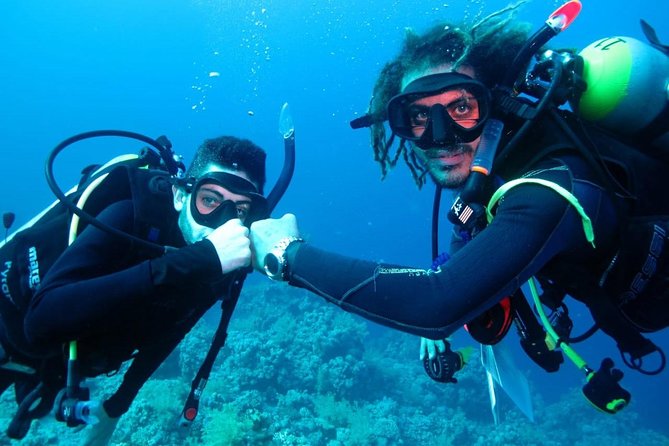
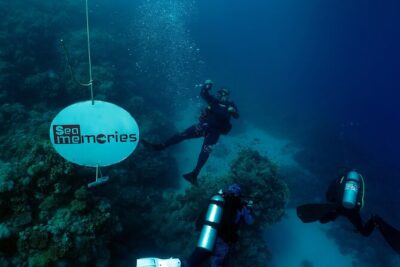
Those 4 open-water sessions are the “apply it for real” part. You’re working in the Red Sea, so conditions feel more like actual diving conditions than a sheltered area. The goal is to show you can perform skills calmly while tracking your air, staying aware of surroundings, and following your instructor’s guidance.
A practical note: the experience depends on favorable weather. If conditions are not good, you may need an alternate date option. That’s not a marketing issue, it’s a safety reality.
Equipment, meals, and the small comfort wins that add up
This course includes the use of all required scuba diving equipment. For you, that means one less headache: no last-minute rental hunt, no mystery sizing problems at the beach. It also helps you focus on the training, because you can spend your attention on learning proper techniques rather than assembling gear.
On the day(s) you’re out on the water, lunch and soft drinks are included on board, plus bottled water. That may sound basic, but it’s a big deal when you’re wearing a tank and thinking about air consumption. Hunger and dehydration are sneaky distractions, and having food handled for you makes it easier to stay calm.
Your day starts early, so these basics help you avoid the common beginner spiral: arrive tired, get nervous, fumble gear, then fall behind. With pickup, included equipment, and meals taken care of, you’re set up to learn at a pace your brain can handle.
What the 18m Open Water Diver certification means for you
The Open Water Diver certification is a worldwide credential recognized internationally. The practical value is that once you complete the course, you have a foundation for planning future scuba activities beyond Sharm el-Sheikh.
You’re aiming for certification to dive up to 18m independently, once you meet the Open Water requirements. And there’s a helpful age pathway for younger students: children aged 10 to 15 are certified to 12m, and when they turn 15 they can be certified to 18m as an adult level.
No renewal fees are part of the promise here. So if you plan to keep scuba as a hobby, you are not dealing with recurring re-credentialing costs tied to the certificate itself.
Instructor quality is the real deal, and the names you’ll hear
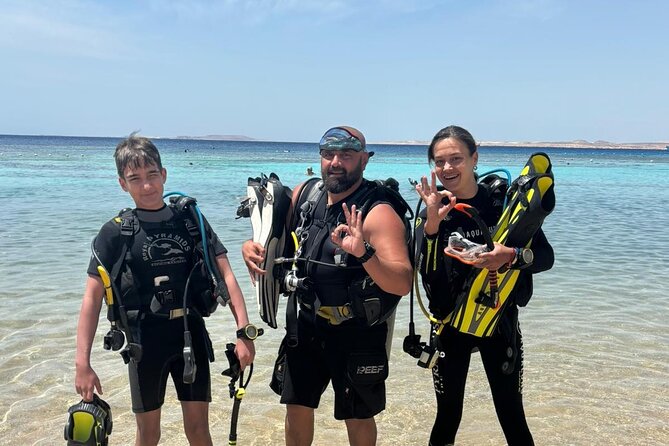
In a course like this, instructors are everything. The skills are the skills, but the teaching style is what determines whether you feel safe, whether you learn quickly, and whether you enjoy the whole process.
I paid extra attention to the instructor names people kept praising, because that gives you a hint of how consistently good the instruction is. You’ll see strong mentions tied to instructors such as:
- Mena, praised for thorough explanations and repeating steps until understanding clicks
- Amr, described as calm and relaxed, taking the time you need
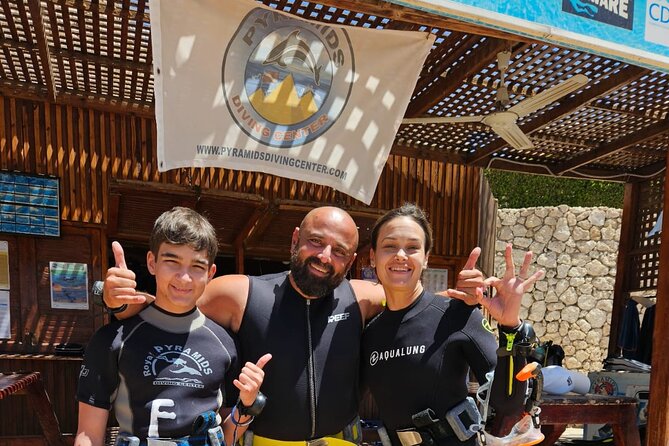
- Mina, noted for being great with a child and keeping confidence high
- Mohammed Abdelkarim, repeatedly mentioned as patient, calm, and safety-first
- Rahma, highlighted for a great overall experience and smooth course flow
- Hani (Hany Hendy), mentioned for making students comfortable
That pattern is useful for you because it suggests the training culture focuses on reassurance and competence, not intimidation. If you get anxious easily, these are the kinds of instructor traits you want in your corner.
The real logistics: timing, group size, and what to pack
The program starts at 8:30 am, and it runs over about 3 days. Hotel pickup and drop-off are included in an air-conditioned vehicle, so you are not stuck figuring out local transport while learning new equipment.
There’s also a useful constraint baked into the experience: maximum group size is 15 travelers. That matters because smaller groups tend to get more instructor attention, especially during the skills that feel hardest at first.
What you should bring is not spelled out in detail here, but you can plan for a typical early-morning training day:
- A passport (a current valid passport is required on travel day)
- Swimwear and any personal items you prefer for comfort and hygiene
- Light layers for before and after water sessions
One travel tip: the experience notes that diving within 24 hours of flying is not recommended. If you’re combining this with a long-haul flight, schedule a buffer day if you can.
Price and value: what you get for $411.31
At $411.31 per person, the value is strongest when you look at what’s covered. The price includes:
- PADI professional instructor time
- Use of required scuba equipment
- Confined water training, open-water training sessions, and theory sessions
- Lunch and soft drinks on board, plus bottled water
- Hotel pickup and drop-off
- A worldwide license outcome (as part of earning the Open Water certification)
What’s not included matters too. The big exclusions are PADI certification and the manual, plus e-learning material. Souvenir photos are also available for purchase, not included.
So how do you decide if it’s worth it for you? I think it’s good value if you want a guided, all-in logistics experience where the training day runs smoothly. If you already have scuba gear and plan to manage theory materials on your own, you might compare costs across providers. But if you want the simplest path to a structured certification, this price covers the hard part: getting you trained with equipment, instruction, and transport handled.
Who should book this course (and who should skip it)
This course fits best if you:
- Want a structured start with PADI Open Water Diver certification recognized worldwide
- Prefer learning with a professional instructor and included equipment
- Like the idea of learning theory in steps and practicing in confined water before open-water sessions
- Are traveling to Sharm el-Sheikh anyway and want to use that time for a real skill upgrade
It’s not suitable for you if:
- You are pregnant
- You have back problems, heart complaints, or other serious medical conditions
- You cannot complete the health questionnaire requirements
- You are planning to fly and then get in the water within 24 hours
Also, if you’re bringing kids, it’s a legitimate option starting from age 10. The certification depth changes based on age, so you’ll want to understand that timing if your child is close to the 15-year threshold.
How the Red Sea experience connects to your learning
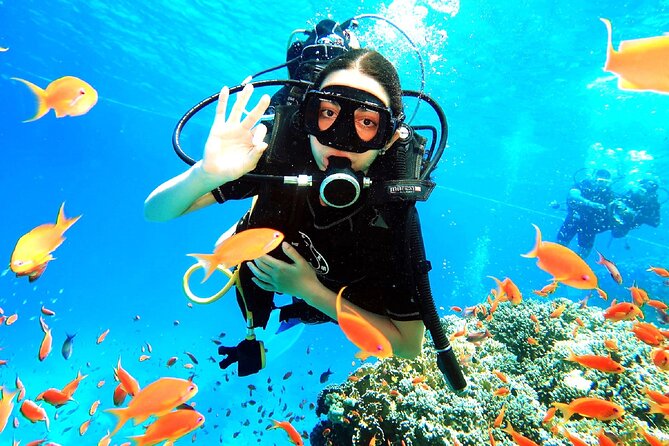
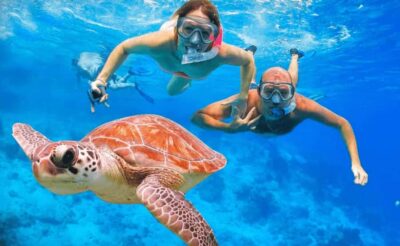
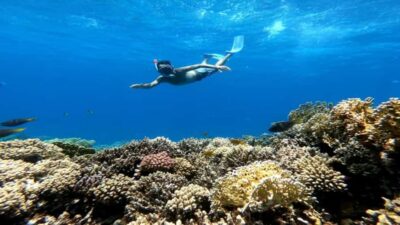
The Red Sea part is not just scenery. For first-timers, the marine environment helps make the training feel real, and it can reduce the fear factor. As you practice controlled skills, being surrounded by visible marine life makes it easier to stay engaged rather than fixated on nerves.
I also like that this course is designed around competence. You’re not being asked to perform advanced maneuvers on day one. You’re learning core skills, and then you get to experience the payoff, which is seeing more life underwater as your control improves.
Should you book this PADI Open Water Diver course in Sharm el-Sheikh?
Book it if you want a structured beginner-to-certified path with included equipment, transport, and real instructor support. The 3-day format, worldwide licensing, and worldwide-recognized certification outcome are strong reasons to choose it, especially if you want the training portion of your trip to feel organized and low-stress.
Skip or think twice if you know you might struggle with the health screening, you’re traveling right after flying, or you’re not ready for the added costs of the PADI certification and manual. Also remember the schedule depends on favorable weather, so be flexible with your overall vacation timing.
If you show up ready to learn and you pick an instructor style that clicks with you, this course is exactly the kind of vacation upgrade that pays off long after you’re back home.
Tanks and Reefs

More of Sharm el Sheikh from our review pile
- Sharm El Sheikh: King Tut Exhibition Audio Tour
★ 4.0 · 25 reviews - Sharm El-Sheikh: Royal Seascope Submarine cruise in with pickup
★ 4.0 · 26 reviews - Quad Bike in Sharm El Sheikh Desert
★ 4.5 · 26 reviews - ATV horse stargazing
★ 5.0 · 26 reviews - Sharm: Pirates Sailing Boat cruise with transfers & lunch
★ 4.4 · 26 reviews - Sharm El Sheikh: ATV Desert Stargazing Adventure with BBQ Dinner
★ 4.5 · 27 reviews
Red Sea Scuba Diving & PADI Courses, compared.
 ★ 5.0Discover Scuba DivingFrom $1271,676 reviews
 ★ 4.9Ras Mohamed & White Island Dive & SnorkelFrom $291,280 reviews
 ★ 4.9Snorkeling 6 x 1 to Orange Bay w Diving & MassageFrom $621,266 reviews
 ★ 5.0Intro Diving 2 Stops For Beginners with Pick-up and Lunch – HurghadaFrom $401,146 reviews
 ★ 4.9Intro Diving Beginner and Discover Red Sea UnderwaterFrom $611,092 reviews
 ★ 5.0Red Sea Diving Trip from Hurghada: Beginner to Advanced DiversFrom $69530 reviews
 ★ 4.7Ras Muhammed & White Island By Boat & intro DiveFrom $43493 reviews
★ 5.0Intro Diving Beginner and Discover Red Sea UnderwaterFrom $40400 reviews
★ 4.7Ras Muhammed & White Island By Boat & intro DiveFrom $43493 reviews
★ 5.0Intro Diving Beginner and Discover Red Sea UnderwaterFrom $40400 reviews
The lists this one sits on