
REVIEW · HOT AIR BALLOONING OVER LUXOR
Package deal Hot Air Balloon Ride & Full Day Luxor Tour w/Guide Lunch
Two big days in one morning and afternoon. A sunrise hot air balloon over the Valley of the Kings sets the tone, and then a full-day guided Luxor circuit covers the East and West Bank heavy hitters. I like that the day stays organized with hotel pickup and an air-conditioned vehicle, so you spend less time wrestling transport and more time looking up and taking it in.
I especially love the combination of scale and depth: you get time in the tombs with a guide who helps you pick the best option, then you move to Luxor Temple and Karnak with explanations that connect the dots. My other favorite part is the guide factor, because having a licensed Egyptologist makes the carvings, names, and layouts feel practical instead of random.
One consideration: this is a long day, starting early, and you are out in the heat for stretches. Even though the touring vehicle helps, plan for warm weather and expect you will want breaks, water, and good shoes.
In This Review
- Key takeaways before you go
- Sunrise balloon over the Valley of the Kings: what it feels like
- Choosing tombs in the Valley of the Kings (KV 11, KV 9, and KV 8)
- KV 11, Ramses III: color, rituals, and surprising scenes
- KV 9, Ramses IX: sky symbolism and a large sarcophagus
- KV 8, Merneptah: a Carter-era discovery and a distinct layout
- Optional King Tut tomb time (entrance fee applies)
- Deir el Bahari and the Colossi of Memnon: Hatshepsut’s grand statement
- Karnak Temple and the Avenue of Sphinxes: the East Bank story arc
- The Avenue of Sphinxes: a processional route with a purpose
- Two obelisks as landmarks: Hatshepsut and Thutmose I
- Luxor Temple and Ramses the Great: granite, triads, and meaning
- Lunch, heat, and a realistic plan for a long day
- Price and what you should budget for entrance fees ($140)
- Who should book this Luxor balloon and full-day temples tour
- Should you book this Hot Air Balloon and full-day Luxor tour?
- FAQ
- What time does pickup start?
- How long is the tour?
- Is hotel pickup and drop-off included?
- Does the tour include the hot air balloon ride?
- What does the tour cover on the West Bank?
- What does the tour cover on the East Bank?
- Are entrance fees included?
- Are there any optional paid sites?
- Is there lunch included?
- How many people are in the group?
- FAQ
- Is the tour affected by weather?
- What is the meeting point for ticket redemption?
- Are there any sites listed as free?
Key takeaways before you go
- Sunrise balloon over the Valley of the Kings with a smooth takeoff and landing rhythm
- Licensed Egyptologist guidance so tombs and temples feel connected, not like checkboxes
- West Bank tomb time to see the best three tombs you are recommended, plus an optional King Tut visit
- Karnak and Luxor Temple highlights including Luxor’s granite Ramses statues and the Theben Triad focus
- Small group feel with a maximum of 15 travelers, plus free time to explore at points
- Lunch and pickup included, but entrance fees are extra, so budget ahead
Other early liftoffs over Luxor
- Hot Air Balloon Ride in Luxor Egypt with Transfers Included★ 5.0 · 4,319 reviews
- Luxor: Hot Air Balloon Ride over Luxor Relics★ 4.8 · 1,681 reviews
- Hurghada: 2-Day Luxor Tour with Hotel, Balloon, & Boat Ride★ 4.5 · 1,113 reviews
- Luxury Sunrise Balloon Ride in Luxor with Hotel Pickup★ 5.0 · 1,104 reviews
Sunrise balloon over the Valley of the Kings: what it feels like
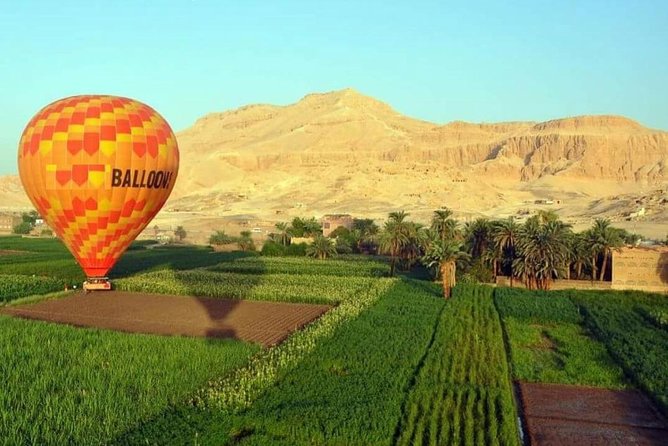
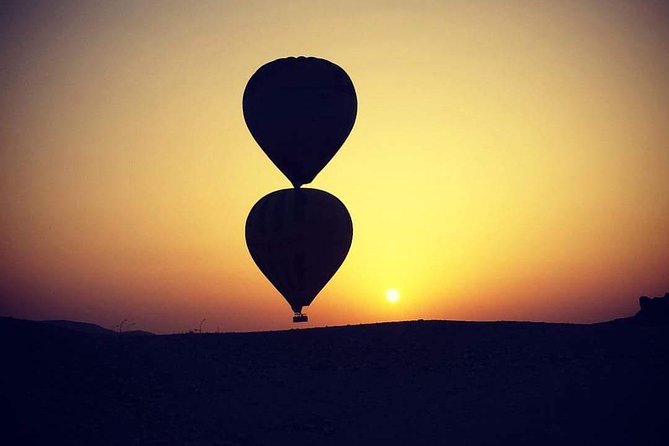
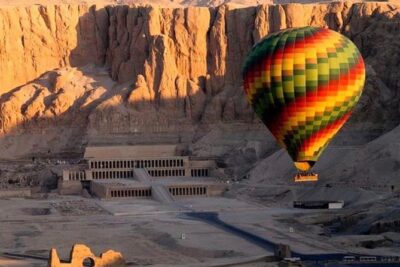
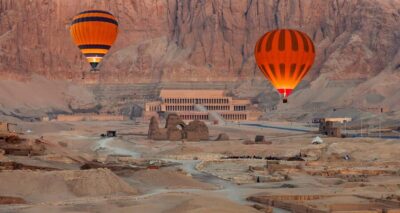
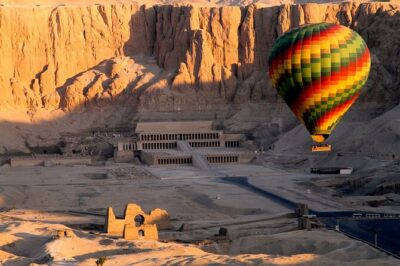
This tour starts with an early pickup around 5:30 am, with a sunrise balloon experience over the Valley of the Kings. If you only do one special thing in Luxor, do it first thing, before the day turns hot and crowded. Up in the air, the Valley of the Kings looks like a carved map, and you start understanding why these tombs matter so much.
I like that the balloon is built into the plan instead of being a separate add-on. You get the big wow moment, then the day-tour engine kicks in quickly, so you roll from sky view to ground-level temples without losing momentum.
The practical upside is timing. The tour is long, roughly 10 hours 50 minutes, but it is not wasted time. You are out early, you see more in daylight, and you are back before evening settles in.
Choosing tombs in the Valley of the Kings (KV 11, KV 9, and KV 8)
After the balloon, the West Bank portion gets underway at the Valley of the Kings. The plan is to visit three tombs, chosen from different dynasties, with your Egyptologist guide helping you decide which to see. That matters, because the Valley is huge and tombs vary a lot in how much you can enjoy in the time you have.
KV 11, Ramses III: color, rituals, and surprising scenes
One of the tombs highlighted on this route is the Tomb of Ramses III (KV 11). This one is famous for colorful painted sunken reliefs with well-known ritual texts, including items referenced as the Litany of Ra and the Book of Gates. You also see Ramses before the gods, a direct reminder that this is a royal story told through wall scenes.
What I find most interesting is the variety of side-room content. The tomb includes scenes with what the texts call foreign tributes, including detailed Aegean-style pottery, plus a royal armoury and boats. Another standout detail is the blind harpists connection, which links to the tomb’s alternative name about harpers.
KV 9, Ramses IX: sky symbolism and a large sarcophagus
The next tomb stop can include Tomb of Ramses IX. Even when some paint has faded over time, the description emphasizes how much color and detail you can still catch, including the ceiling above the sarcophagi with the goddess Nut stretching across the space. The sarcophagus is noted as one of the largest in the valley, which helps you visualize why this tomb still feels important even if not every traveler names it from memory.
KV 8, Merneptah: a Carter-era discovery and a distinct layout
Another possible tomb on the three-stop set is Tomb of Merneptah. The material ties it to the burial place of Pharaoh Merneptah, notes family connections, and also mentions that it was discovered by Howard Carter in 1903. The tomb is described as following a model of royal tombs, with fewer lateral rooms and a notable change in the corridor height.
If you want a mix of famous and less-known, this structure works. You are not stuck only on the headline tombs. You get variety, and your guide steers you based on what you care about most.
Optional King Tut tomb time (entrance fee applies)
You may also have time for the Tomb of Tutankhamun (optional). The plan calls out an entrance fee for this stop, and it frames the appeal as getting face to face with Tutankhamun’s royal mummy in the tomb. If you are a King Tut fan, this is the moment to decide on the spot. If your budget is tight, prioritize the tombs already included in your three-tomb set.
Deir el Bahari and the Colossi of Memnon: Hatshepsut’s grand statement
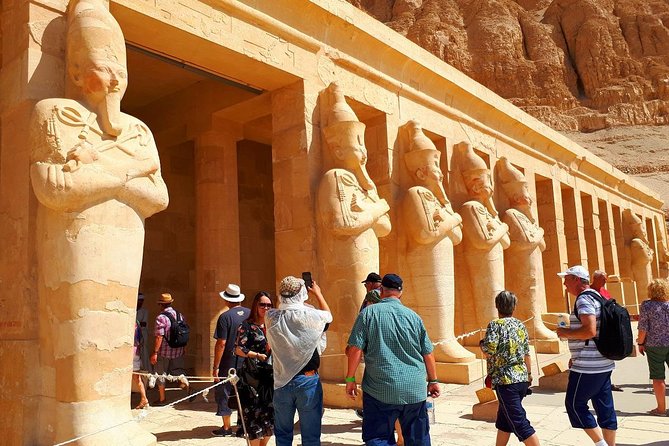
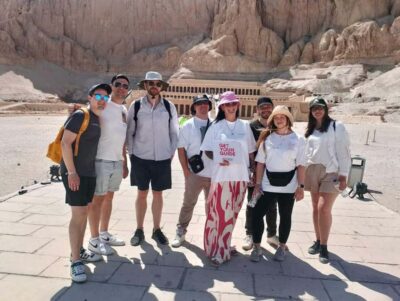
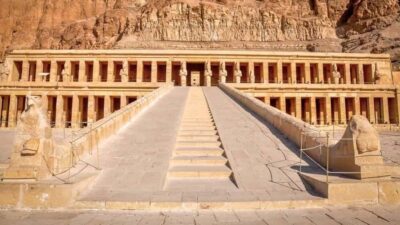
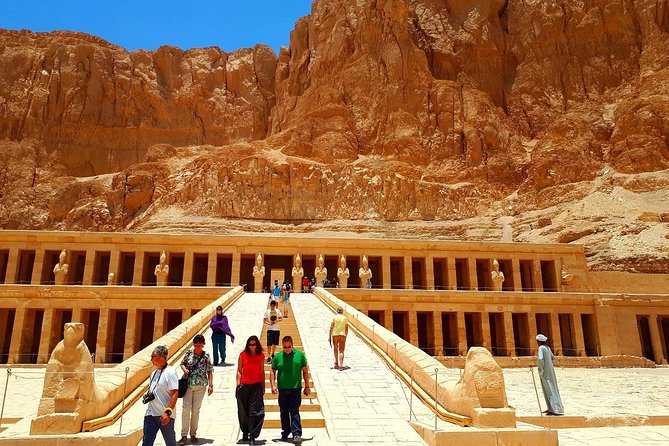
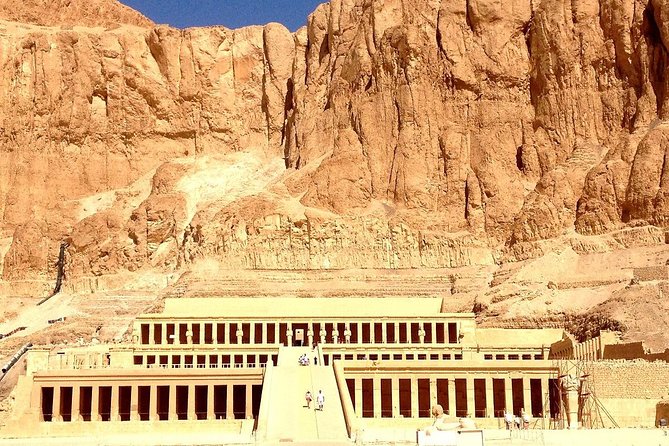
After tomb time, you shift to Deir el Bahari for the Temple of Queen Hatshepsut. This is described as the only woman who reigned as Pharaoh, and the route positions her as an ancestor of Tutankhamun through the same general dynasty line. Even if the names are new, the temple’s scale tends to do the teaching fast, especially when you have a guide to explain the connections.
From a practical view, this stop is a nice change of pace from tomb interiors. You get open-air views, big stone forms, and a sense of how rulers used temple architecture to project power.
Then the tour moves to the Colossi of Memnon. These are described as the two largest ancient statues in Egypt, from the era of Amenhotep III. They are a quick stop by comparison, but they are the kind you remember, because the statues are massive and very hard to ignore once you are standing there.
Karnak Temple and the Avenue of Sphinxes: the East Bank story arc
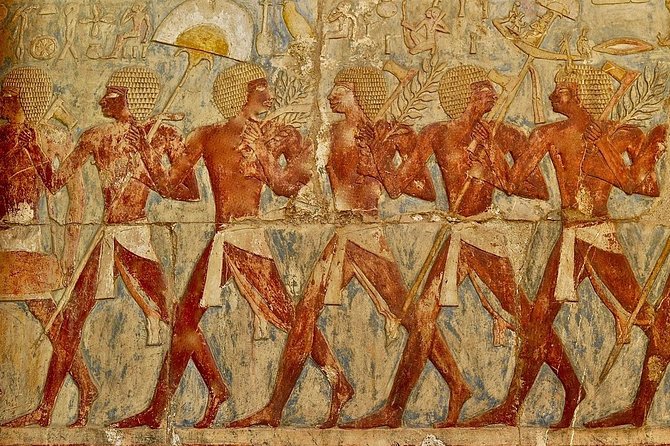
Next comes Karnak Temple. Expect time to explore major parts of the temple area, with the guide helping you focus on meaning rather than getting lost in walls and columns. The plan highlights the courtyard of Amun-Ra and connects Karnak to worship of Amun, plus the note that restoration work is visible in some parts.
The best move here is to let your guide explain the big picture first, then use your eyes. When you know who Amun is in the broader story, the temple stops feeling like random grandeur and starts reading like intentional design.
The Avenue of Sphinxes: a processional route with a purpose
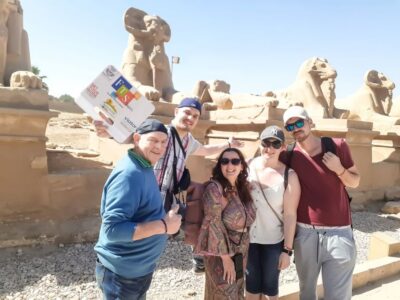
You also visit the Avenue of Sphinxes, once a long road between Karnak and Luxor, described as about 3 km (around 1.5 miles). The route explains that Egyptians used it during the Opet festival, when statues of Amun and Mut were carried along in a symbolic marriage reenactment. There is even mention that Amun transformed into Min at Luxor, tied to fertility themes.
The detail about sphinx count, plus the idea of barque chapels with offerings and a precise function for each, makes this stop more than a photo moment. It becomes a lesson in how rituals shaped the geography of the city.
Two obelisks as landmarks: Hatshepsut and Thutmose I
The tour also includes time at two obelisks: the Obelisk of Queen Hatshepsut and the Obelisk of Thutmose I. The Thutmose I obelisk note calls it the smaller of two remaining, and mentions that each face has inscriptions in three lines. The Thutmose I context includes his warrior-king reputation and contributions to Thebes, which now is Luxor.
If you like your monuments with context, obelisks are a great breather. They are not as exhausting as a long walk, yet you still get story-rich archaeology.
Luxor Temple and Ramses the Great: granite, triads, and meaning
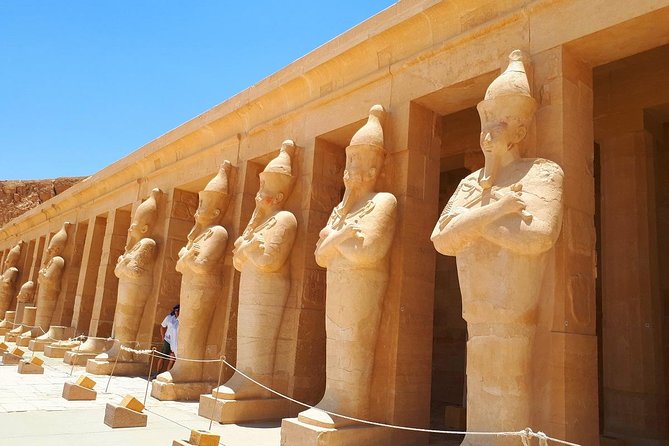
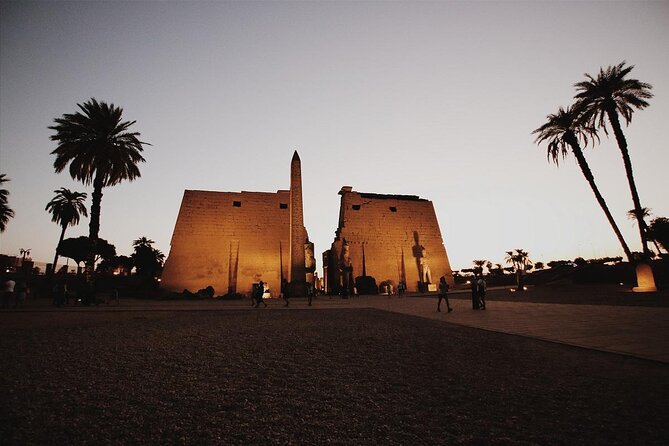
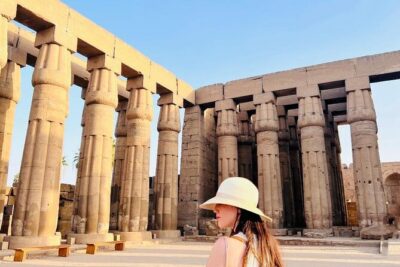
The East Bank finale is Luxor Temple, dedicated to the Theben Triad of Amun-Ra, Mut, and Khonsu. This is where the tour spotlights impressive granite statues of Ramses the Great. Even for first-time visitors, Ramses is a familiar name, and seeing his granite presence here helps anchor the rest of what you saw earlier.
This is also a good place to slow down. The itinerary gives time to explore, so you can step away from pure “follow the guide” mode and just look. Luxor Temple is one of those sites where different angles change how you read the sacred space.
Lunch, heat, and a realistic plan for a long day
This is not a short, casual tour. It runs about 10 hours 50 minutes, and it includes balloon time plus a long sequence of major sites. I like that the day uses air-conditioned transport and includes lunch, because those two things are often missing in Luxor half-tours.
One review highlight points to conditions around 43 C, so I suggest you plan like it will be hot. Bring water, wear breathable clothes, and protect your head. Start early, because late in the morning the sun turns serious quickly.
Also, pace yourself during tomb stops. The tombs are tight and cool only in short bursts, so it is easy to feel rushed. Ask your guide what to focus on first, then let your eyes take over.
Price and what you should budget for entrance fees ($140)
At $140 per person, this is priced as a combo experience, not just one attraction. You are paying for a sunrise hot air balloon ride, a licensed Egyptologist guide, pickup and drop-off, air-conditioned vehicle transport, and lunch, plus a full-day tour of major Luxor monuments across both banks.
Where value can vary is entrance fees. The tour states that entrance fees total for mentioned sites are not included, and specific places list separate amounts in Egyptian pounds. Examples called out include fees for Karnak Temple, Luxor Temple, and the Temple of Queen Hatshepsut at Deir el Bahari, plus an optional entrance fee for the Tomb of Tutankhamun.
The good news is that many stops are described as free, including some tombs and key statue sites like the Colossi of Memnon. Some tomb admissions are described as free if you have Valley of the Kings tektites. If you want a simple budget, add a contingency for entrance fees even if some sites may be discounted.
Who should book this Luxor balloon and full-day temples tour
I think this tour fits best if you want a big-picture Luxor day without guessing. You’ll likely enjoy it if you:
- want the sunrise balloon experience plus both-bank archaeology in one shot
- like having an Egyptologist explain what you are looking at
- prefer a smaller group experience, since the tour lists a maximum of 15 travelers
- can handle early mornings and a heat-heavy schedule
If you are the kind of visitor who wants a slow, solo museum day and lots of free wandering, this might feel like too much. But if you want a complete Luxor highlight reel with real explanations, this package makes sense.
Should you book this Hot Air Balloon and full-day Luxor tour?
Yes, if you want maximum Luxor coverage with a guide and a balloon planned for sunrise. The biggest strength here is the flow: balloon first for perspective, then tombs and temples with context, so you finish the day understanding the “why,” not just the “what.”
Book it if you value organization, early start efficiency, and a guide who can point you to the right tombs. Pay extra attention to entrance fees, because that is where your final total will shift, depending on what you choose at the Valley of the Kings and which paid temple areas you enter.
If your top priority is the balloon only, consider whether you’d rather do a shorter day. But if Luxor is your main destination and you want a complete hit across West Bank and East Bank, this is a strong way to do it.
FAQ
What time does pickup start?
Pickup is listed at 5:30 am.
How long is the tour?
The duration is approximately 10 hours 50 minutes.
Is hotel pickup and drop-off included?
Yes, hotel pickup and drop-off are included.
Does the tour include the hot air balloon ride?
Yes, the hot air balloon ride is included.
What does the tour cover on the West Bank?
The West Bank portion includes a visit to the Valley of the Kings with three tombs, plus the Temple of Hatshepsut at Deir el Bahari, and the Colossi of Memnon.
What does the tour cover on the East Bank?
The East Bank portion includes Karnak Temple, Avenue of Sphinxes, Obelisks, and Luxor Temple.
Are entrance fees included?
No. Entrance fees are not included. The tour notes total entrance fees for the mentioned sites are extra.
Are there any optional paid sites?
Yes. The Tomb of Tutankhamun is noted as optional with an entrance fee.
Is there lunch included?
Yes, lunch is included.
How many people are in the group?
The tour lists a maximum of 15 travelers.
FAQ
Is the tour affected by weather?
Yes. The tour notes it requires good weather. If canceled due to poor weather, you are offered a different date or a full refund.
What is the meeting point for ticket redemption?
Ticket redemption is listed at Valley of the Kings, Luxor.
Are there any sites listed as free?
Some stops are marked as free in the plan, including places like Colossi of Memnon and certain tombs, with some tomb access described as free if you have Valley of the Kings tektites.
Sunrise Over Luxor


More of Luxor from our review pile
- Private Tour Nile Felucca Ride at Sunset in Luxor
★ 5.0 · 26 reviews - Private Full day East and West Bank, Luxor
★ 5.0 · 26 reviews - Luxor Day Tour: Kings Valley & Karnak & Luxor & Hatshepsut Temple
★ 5.0 · 26 reviews - Full-Day East and West Luxor Private Tour
★ 4.5 · 26 reviews - Day Trip to Edfu & Kom Ombo temples from Luxor and drop off in Aswan or Luxor
★ 5.0 · 26 reviews - 5 Days 4 Nights Nile Cruise Tour
★ 5.0 · 27 reviews
Hot Air Ballooning Over Luxor, compared.
 ★ 5.0Hot Air Balloon Ride in Luxor Egypt with Transfers IncludedFrom $754,319 reviews
 ★ 5.04-Days Nile Cruise From Aswan To Luxor including Abu Simbel and Hot Air BalloonFrom $3493,142 reviews
 ★ 4.8Hot Air Balloon Ride over Luxor RelicsFrom $881,681 reviews
 ★ 4.52-Day Luxor Tour with Hotel, Balloon, & Boat RideFrom $2701,113 reviews
 ★ 5.0Luxury Sunrise Balloon Ride in Luxor with Hotel PickupFrom $601,104 reviews
 ★ 4.4Morning Hot Air Balloon RideFrom $55736 reviews
 ★ 5.0Sunrise Hot Air Balloon Over the Historical sites in LuxorFrom $75697 reviews
 ★ 5.0Sunrise Hot Air Balloon Ride Over LuxorFrom $90648 reviews
The lists this one sits on