
REVIEW · GIZA PYRAMIDS & SPHINX TOURS
Giza pyramids, Sphinx, and the big museumum
Pyramids, stone, and sun worship in one packed day. This 8-hour outing strings together the big icons of Egypt, from the Giza plateau to the Sphinx and on to Saqqara’s step, bent, and red pyramids, then finishes at a big museum full of coffins, jewels, gold, masks, and mummy stories. I especially like the way the guide connects the pyramids to ancient beliefs, including the shape linked to Raa, and I also like the “development over time” feel, starting with the oldest step pyramid and moving forward toward the more perfect ones. One drawback to plan for is that entrance fees and tipping are not included, so your true cost will be a little higher than the $40 price.
If you want a single day that tells a clear story, this tour is built for you. It’s a long stretch, but it’s also action-packed, with hotel pickup and bottled water included, plus a guide who helps you make sense of what you are seeing and where to stand for photos. If you hate walking in hot weather or you want a super slow, unhurried visit, you might find the pace a bit much.
In This Review
- Key Highlights You’ll Actually Care About
- Giza, Saqqara, and That Big Museum in One 8-Hour Run
- Price and Value: What $40 Really Buys
- Morning Logistics: Pickup, Timing, and Staying Comfortable
- Giza Pyramids and the Cheops Pyramid’s Big Ideas of Raa
- The Great Sphinx: One Stone, One Face, and a Sun-Temple Story
- Saqqara’s Step Pyramid of Djoser: Why Shape Beats Steps
- The Bent Pyramid and Red Pyramid: Snefru’s Legacy and Cold Interiors
- Big Museum Time: Mummies, Coffins, Gold, Statues, Masks, and Gods
- Guides, Photos, and the Pace That Makes It Worth It
- Who This Tour Is Best For (and Who Should Skip It)
- Should You Book This Giza and Museum Day?
- FAQ
- How long is the tour?
- What time does the experience start?
- Is hotel pickup and drop-off included?
- What is included in the price?
- Are entrance fees included?
- Is this a private tour?
- Are service animals allowed?
- Can I cancel for a full refund?
Key Highlights You’ll Actually Care About
- A pyramid timeline in one go from the step pyramid through bent and red, then straight into Giza
- The Sphinx explained as a single carved stone with a human face and lion body, plus its sun-temple context
- Interior cold stops where you get a practical break from the heat, including a cold feel inside one pyramid
- Photo time with a strong guide, with real tips for angles and pacing
- Big museum payoff focused on mummies, coffins, jewels, gold, statues, masks, and gods
Ways onto the Giza plateau, compared
- Cairo: Pyramids & Great Sphinx Private Tour with Camel Ride★ 4.9 · 6,335 reviews
- Tour to Giza Pyramids and The Egyptian Museum★ 5.0 · 6,016 reviews
- VIP All inclusive Best of the best Giza Pyramids,Sakkara,Memphis★ 5.0 · 3,164 reviews
- From Cairo: Pyramids of Giza, Sphinx, Saqqara & Memphis Tour★ 4.7 · 3,110 reviews
Giza, Saqqara, and That Big Museum in One 8-Hour Run
This is the kind of day you plan for on purpose. You start early, then you keep moving between monuments that usually take multiple trips to fit in. The big win is that you do not just see “pyramids,” you see how royal tomb architecture changes across reigns and ideas of what lasts.
The tour’s structure also helps you understand why people cared so much about these shapes. The guide ties the pyramid form to Raa, the god of creation, and frames the idea that the mummy should be kept safe “forever.” Even if you are not a history nerd, you will start to see patterns, like how earlier designs evolve toward those smoother, more “perfect” pyramid forms.
Now for the trade-off. This is roughly 8 hours, and a good chunk of it is outside. You will want solid shoes and a bottle refill plan in your head, even though bottled water is included. If you burn out fast in the sun, this day can feel heavy.
Price and Value: What $40 Really Buys
At $40 per person, this tour is priced like a value play. You get private transportation, a tour guide, and hotel pickup plus drop-off, plus water. That matters in Cairo, where time lost to logistics can quietly eat your day.
But there is a catch: entrance fees and tipping are not included. That means your final total depends on which sites you access inside and what the guide needs for entry. The Sphinx stop also notes that admission is not included, so you should assume you will pay something extra at key points.
Still, if you are coming to Cairo and want the “greatest hits” without spending hours coordinating transport yourself, this package can make sense. The added bonus is that it is often booked about 40 days in advance on average, so if your travel dates are fixed, it’s worth reserving early.
Morning Logistics: Pickup, Timing, and Staying Comfortable
You meet at 8:00 am. Hotel pickup and drop-off are included, which is one of the easiest ways to make this day work, especially if your hotel is not within easy reach of the sites.
The tour also includes private transportation, not shared chaos. That helps you keep the itinerary moving and reduces the waiting you normally deal with on group tours. You also get bottled water, which is small but practical on a long day.
My simple comfort checklist for this kind of plan:
- Wear breathable layers. The day starts early and can still warm up fast.
- Bring something for photos and sun protection, because you will want to pause for angles.
- Plan for interior stops. At least one of the pyramid interiors is described as quite cold, so a light layer can be smart even if it is hot outside.
Giza Pyramids and the Cheops Pyramid’s Big Ideas of Raa
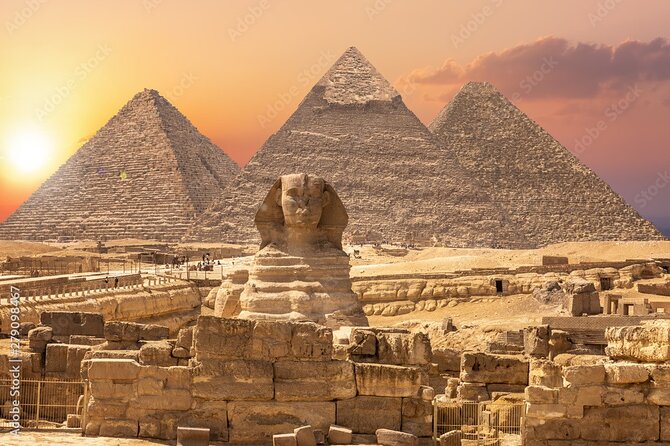
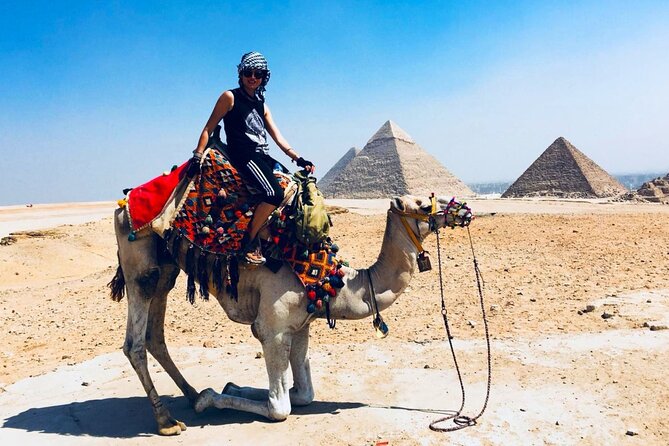
Giza is where you feel the scale immediately. This stop covers the development of royal tombs by focusing on the Giza pyramids, especially the Cheops pyramid. The guide explains how it relates to Cheops, and how the pyramid’s shape fits into ancient beliefs about creation and protection.
You are told Cheops built a pyramid similar to his father’s Red pyramid, but with improvements. The tour also frames the pyramid as built from an enormous number of stones, with the idea that the quantity symbolizes Raa, the god of creation. Whether you take every detail literally or as a vivid ancient interpretation, the point lands: these monuments were not just construction projects, they were statements about power and cosmic order.
Practical note: you only get so much time at each viewpoint. If you care about photos, arrive ready to move quickly, then use the guide’s positioning to get the cleanest angles without wasting energy chasing perfect shots.

The Great Sphinx: One Stone, One Face, and a Sun-Temple Story
Next comes the Great Sphinx, described as the guard of the pyramids, huge and powerful, cut from one stone by hand. The key visual is the mix of a human face and a lion body, tied to the idea that the king was powerful and smart.
You also hear the explanation for damage over time, including how the Sphinx was covered by sand, leading to a broken nose and destruction of the long beard. It sounds like a small detail, but it helps you read the monument as weathered, not ruined.
This stop also connects the Sphinx to sun worship through the Sun Temple of king Kefren. The story includes praying to Raa at sunrise and sunset, tied to beliefs about death and rebirth. If you like symbolism, this is where it becomes more than “cool sculpture,” it becomes a spiritual map.
And yes, there is also a wishing well element where you can make a wish by throwing a small amount of money. You should treat that as part ritual, part photo moment, and part local tradition.
The stop ends with time around the massive stones, pillars, and hand-cut details. You can get some really satisfying close-up perspectives here if you take the time to look at edges and tool marks rather than only the big front view.
Saqqara’s Step Pyramid of Djoser: Why Shape Beats Steps
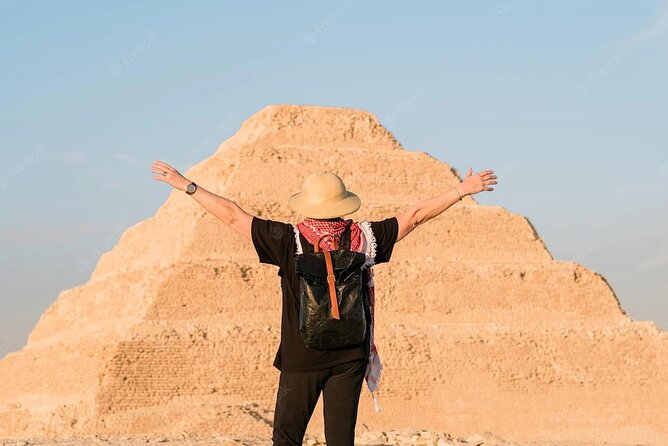
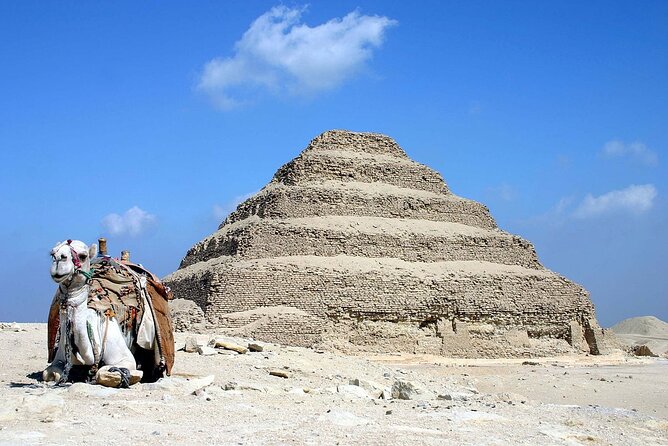
After Giza, you shift gears to Saqqara and the Step pyramid of king Zoser. This is presented as the first and oldest step pyramid, with six steps. The story centers on Imhotep, who is linked to trying to reach the pyramid form but not getting there yet.
What I like about this stop is that it puts “design” in human terms. The guide explains why a step pyramid did not match the spiritual goal, especially when it comes to reaching the energy associated with the god of sun. The tour frames the step pyramid as losing its energy pathway over time, while the “true” pyramid shape is described as more stable and more powerful for connecting to Raa.
Even if you do not agree with the ancient logic, you will appreciate the logic the guide gives you: in this world, engineering, religion, and symbolism all get mixed together.
You get about 2 hours here, which is a good amount of time to walk the grounds and not feel rushed. Entrance is listed as free for this stop, which helps keep the day from turning into an endless paywall.
The Bent Pyramid and Red Pyramid: Snefru’s Legacy and Cold Interiors
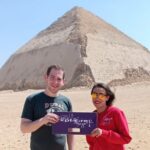
Then you move to Saqqara’s royal tomb arc in a way that feels like progress. The Bent Pyramid is built for Snefru, father of Keops, and the guide explains it through the angle change, starting with a big angle and shifting to a smaller one in the middle. That detail is the sort of thing that makes you stop and look up again, because it tells you the shape is not accidental.
The tour also mentions seeing the tomb of the king from inside, described as empty, with the note that Snefru is tied to sun god belief and kept things mysterious about his life. This kind of stop is for people who like stepping inside the “how did they think?” side of ancient monuments.
Next is the Red Pyramid, described as the first pyramid built for Snefru, with an angle said to be perfect. This stop includes a “development from step to bent to red” explanation, then connects it back to the idea of keeping the mummy safe forever. One practical detail you should notice: the inside is described as very cold. So if you run warm, you might still want a light layer for the interior.
If you also like the hands-on feel of ancient building, this part gives you that texture. You get to see and understand how the designs become more refined, and you get a physical contrast between outside brightness and inside chill.
Big Museum Time: Mummies, Coffins, Gold, Statues, Masks, and Gods
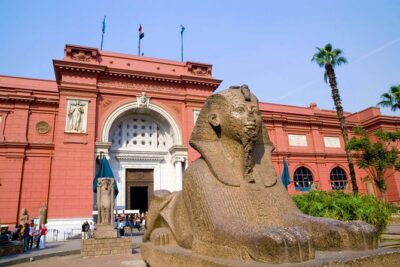
The day ends with the big museum experience, and this is a major reason I think this tour works as a package. Outdoors you get the architecture. Indoors you get the human layer, the objects that carried beliefs, status, and identity.
The museum portion is described as full of coffins, jewels, gold, statues, masks, and many unique pieces tied to different gods. It also mentions the first pyramid built in the world and the oldest writing as part of what you can see in the tour overall, so the museum helps connect the monuments to writing and religion rather than leaving you with only stone shapes.
For me, the smart way to do a museum like this on a timed day is to pick your “must see” category ahead of time:
- If you care about funerary culture, focus on coffins and related objects.
- If you like religion and symbolism, watch for the mentions of different gods and themes tied to creation and protection.
- If you want art and craftsmanship, spend your time on gold, jewels, masks, and statues, then let the rest blur into background context.
Also, this museum stop is a nice reset after the outdoor heat. Even if you are not a museum person, the range of objects makes it easier to stay engaged.
Guides, Photos, and the Pace That Makes It Worth It
The guide quality is a big part of why this type of day lands well. One named guide comes up in the experience as Morsi, noted for being knowledgeable and for helping with taking pictures. That matters because with monuments like the Sphinx and pyramids, the best angles are not always obvious, and the route matters for avoiding dead time.
The same sense shows up across other feedback: the operator stays responsive, and the driver and guide are described as solid. The tour also avoids getting bogged down in stopping for shopping, which keeps you closer to the historical route you actually booked for.
The pace is still intense. You will see a lot, but you will not see everything deeply at a slow museum cadence. If you want to linger for an hour in one place, this is not that kind of tour.
On the bright side, the way the monuments connect into a single narrative makes the time feel purposeful. You leave with a clearer mental map: what came first, what changed, and why.
Who This Tour Is Best For (and Who Should Skip It)
This tour fits best if you:
- Want a one-day pyramid overview that links Giza and Saqqara instead of bouncing between unrelated stops
- Like explanation with context, including beliefs tied to Raa
- Prefer a guided plan with hotel pickup and private transportation
- Want the museum payoff, not just outdoor monuments
You might want to look at something else if you:
- Get grumpy with long outdoor days and lots of walking
- Hate paying extra for entrances on top of a listed price
- Prefer quiet, unstructured time in a site rather than a packed itinerary
Should You Book This Giza and Museum Day?
I’d consider booking if you want maximum “Egypt highlights” without spending your day solving transportation, and if you are okay budgeting extra for entrance fees and tipping. The $40 price is strong for the included guide, private transportation, pickup, and water, and the combination of pyramid architecture plus museum objects gives you both stone and stuff, both scale and meaning.
If you decide to book, do it with a simple plan: wear comfortable shoes, bring sun protection, and be ready for a long day. When you reach the Sphinx and the pyramid stops, trust the guide’s positioning for photos, because getting the right angle fast is part of how you enjoy this kind of route.
FAQ
How long is the tour?
The tour runs for about 8 hours.
What time does the experience start?
It starts at 8:00 am.
Is hotel pickup and drop-off included?
Yes. Hotel pickup and drop-off are included.
What is included in the price?
Included items are private transportation, a tour guide, hotel pickup and drop-off, and bottled water.
Are entrance fees included?
No. Entrance fees and tipping are not included.
Is this a private tour?
Yes. It is described as a private tour/activity, with only your group participating.
Are service animals allowed?
Yes, service animals are allowed.
Can I cancel for a full refund?
Yes. You can cancel up to 24 hours in advance for a full refund. If you cancel less than 24 hours before the start time, the amount paid will not be refunded.
Giza, A Few More Ways In

More of Cairo from our review pile
- Cairo Layover Tour to Giza Pyramids Egyptian Museum and Khan Khalili Bazaar
★ 5.0 · 25 reviews - Private Luxor Day tour from Cairo by Flight
★ 5.0 · 25 reviews - Private full day tour to Giza Pyramids, Sphinx, Sakkara and Dahshour with guided
★ 5.0 · 25 reviews - Nile Dinner Cruise in Cairo With Belly Dancing and Transfer
★ 5.0 · 25 reviews - Private Giza Pyramids,Sphinx,camel,lunch, 2 tombs,Great Pyramid
★ 5.0 · 25 reviews - All inclusive Giza Pyramids ,Sphinx ,Lunch ,Camel&Inside pyramid
★ 5.0 · 25 reviews
Giza Pyramids & Sphinx Tours, compared.
 ★ 4.9Pyramids & Great Sphinx Private Tour with Camel RideFrom $486,335 reviews
 ★ 5.0Tour to Giza Pyramids and The Egyptian MuseumFrom $1556,016 reviews
 ★ 4.7Pyramids of Giza, Sphinx, Saqqara & Memphis TourFrom $903,110 reviews
 ★ 4.6Half-Day Tour to Pyramids of Giza and the SphinxFrom $502,891 reviews
 ★ 4.6Pyramids, Sakkara & Memphis Tour with LunchFrom $602,493 reviews
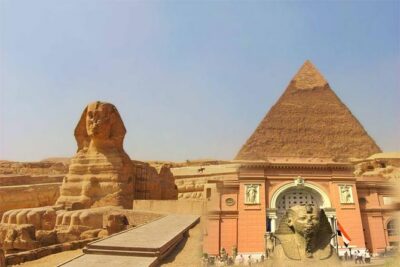 ★ 5.0Private ViP all-inclusive Giza Pyramids,Sphinx,Inside PyramidFrom $142,448 reviews
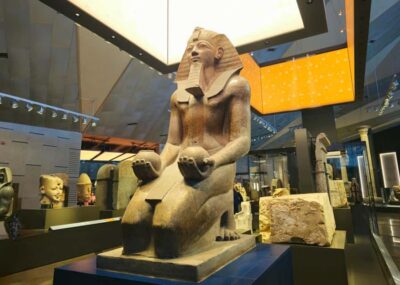 ★ 4.7Grand Egyptian Museum, Pyramids, Sphinx Tour & LunchFrom $892,282 reviews
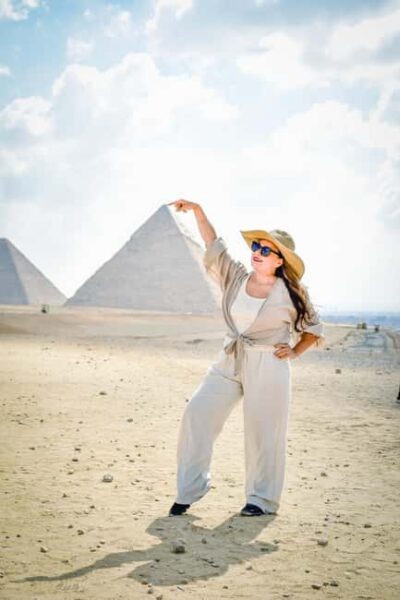 ★ 4.7Cairo Pyramids, Sphinx & Egyptian Museum Day TripFrom $932,271 reviews