
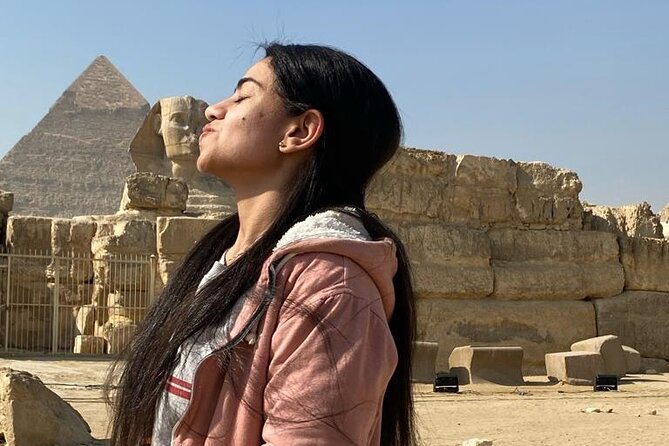
REVIEW · GIZA PYRAMIDS & SPHINX TOURS
Full day Private Tour Giza Pyramids Sakkara Memphis Dahshur
Seeing the pyramids on a tight schedule.
This private full-day route is a smart way to hit the big names around Cairo, from the Giza Plateau to the Step Pyramid area. I like that you travel in an air-conditioned private vehicle with an Egyptologist guide, so you get real context instead of just snapping photos and moving on.
I also like the practical flow: the day is paced with set time blocks at each major site, and hotel pickup means you start smoothly instead of negotiating transport in the heat. One possible drawback is that some stops are short, like the 30-minute blocks at the individual pyramids and the Sphinx, so if you want slow, lingering time at every angle, this plan may feel a bit rushed.
In This Review
- Key highlights you will actually feel during the day
- A private, full-day Giza plus Saqqara plus Dahshur plan
- Getting picked up in Cairo or Giza without wasting daylight
- Giza Plateau: how the day’s first block works
- The elephant in the room: short pyramid visits after the main Giza stop
- Great Pyramid of Cheops: what that quick stop can still teach you
- Quick stop reality check
- Khafre’s Pyramid: why it can look taller
- What to do in your limited time
- Menkaure’s Pyramid and the “smallest big one” feeling
- The Sphinx close-up: the photo time you will remember
- Practical tip for photos
- Memphis: seeing the Old Kingdom capital in an hour
- Saqqara Step Pyramid: the evolution story that makes it click
- What you should do with your hour
- Dahshur: Bent and Red pyramids to close the loop
- Why Dahshur feels different than Giza
- Food and comfort during a 10 to 12 hour day
- Value check: what $60 per person gets you, and what to budget extra
- Pacing, crowds, and the one real caveat to keep in mind
- Who this private tour suits best
- Should you book this Giza, Saqqara, Memphis, Dahshur private tour?
- FAQ
- How long is the private tour?
- Where does pickup happen?
- Is this tour really private?
- Are entry fees included?
- Is lunch included?
- Can I ride camels at the pyramids?
- What monuments and sites are covered in the day?
Key highlights you will actually feel during the day
- Hotel pickup plus private air-conditioned transport for an easier start and fewer logistics headaches
- Giza Plateau in one sweep, including Great Pyramid and the Sphinx close-up photo time
- Memphis and Saqqara together, pairing a former capital city with the Step Pyramid evolution story
- Dahshur with both Bent and Red pyramids, with the option to enter the Red Pyramid
- Entry fees included (option 1), while pyramid interiors still require separate tickets
- You can ride camels at Giza if you want that classic extra (not specified as included)
Ways onto the Giza plateau, compared
- Private guided tour to Giza Pyramids, and Great Sphinx★ 5.0 · 1,755 reviews
- VIP Giza Pyramids,Sphinx,ATV bike,CamelRide,Shopping&DinnerCruise★ 5.0 · 704 reviews
- From Hurghada: Pyramids and Egyptian Museum Tour & Boat Ride★ 4.4 · 381 reviews
- Private Tour to explore Giza Pyramids – Saqqara -Memphis★ 5.0 · 294 reviews
A private, full-day Giza plus Saqqara plus Dahshur plan
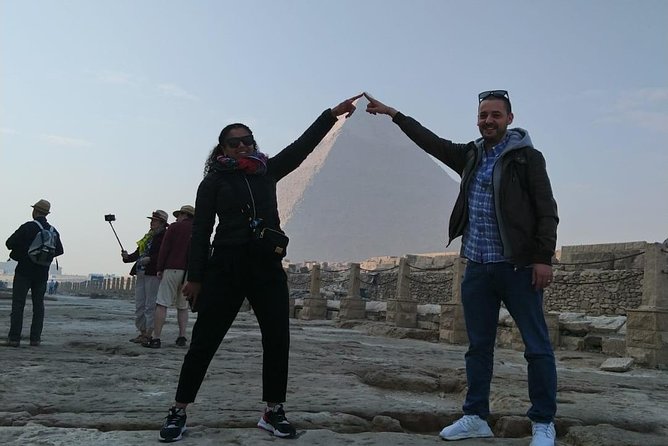
This tour is built for people who want a lot of “greatest hits” in one long day, without turning your trip into a logistics project. You leave your hotel with pickup arranged in advance, ride in an air-conditioned private vehicle, and spend the day with an Egyptologist guide who keeps the story straight.
The structure also matters. You get a longer foundation stop at Giza first, then shorter focused stops to cover the main pyramid forms and the Sphinx, then you transition to Memphis and Saqqara, and finish in Dahshur. For most visitors, that sequence helps your brain connect what you’re seeing: royal power in the Old Kingdom, burial architecture, and how pyramid design evolved.
The price is also straightforward: it’s listed at $60.00 per person, and it’s commonly booked about 25 days in advance. Since this is a private tour, “group discount” wording shows up, but the practical value comes from guide time plus transport plus included site entry (more on that below).
Getting picked up in Cairo or Giza without wasting daylight
Start matters on a Cairo day. The tour includes pickup and drop-off, and you depart your hotel in an air-conditioned private vehicle. That means you are not hunting taxis at the exact moment you want to be on the road.
Pickup is described as being from your hotel in Cairo or Giza, or from the airport with an extra $10 per person for airport pickup. Either way, you should plan to be ready a little early at the pickup point, especially on days with traffic.
This is also where the “efficiency” part of the experience shows. One of the best practical points for this style of tour is that it keeps you moving. You get punctual service and a clear route that limits dead time.
Giza Plateau: how the day’s first block works
The first stop is the Pyramids of Giza (also called the Giza Necropolis). You’re in the right place to see the Great Pyramid of Giza, Pyramid of Khafre, and Pyramid of Menkaure, plus the Great Sphinx of Giza. These are tied to the Fourth Dynasty of the Old Kingdom, and the guide explains not just what you’re seeing, but why this set of monuments matters in ancient Egyptian royal planning.
You’re given about 3 hours here. That’s the best “buffer” part of the schedule, which is useful because Giza takes time to walk, reposition for photos, and figure out the angles that feel worth your time. You also have the chance to add a camel ride if you want, since camel rides are mentioned as something you can enjoy at the site.
A practical note: there are multiple entrances, ticket counters, and busy zones. Because this tour includes admission tickets (option 1), you avoid at least some of the “where do I stand?” stress. Even so, you will still want to wear comfortable shoes, bring water, and expect that you are walking on uneven ground in places.
The elephant in the room: short pyramid visits after the main Giza stop
After the initial Giza block, the itinerary moves into smaller, time-limited visits. That means you will see the individual monuments, but you are not staying all day at a single pyramid corridor. If you love architecture and want lots of quiet time per monument, you might feel the squeeze. If you love seeing the full set and getting the story on the move, the pacing makes sense.
Necropolis stops south of the city
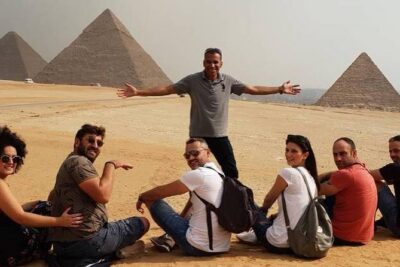
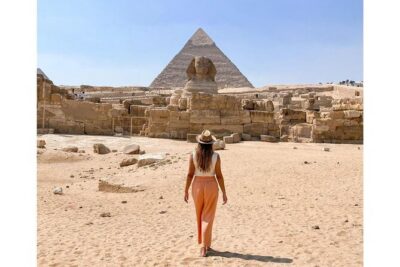
Great Pyramid of Cheops: what that quick stop can still teach you
Next is a focused visit to the Great Pyramid of Cheops (Khufu). The tour uses the Greek name Cheops for Khufu, describing him as the second pharaoh of the Fourth Dynasty in the Old Kingdom.
This stop is listed at 30 minutes, and admission is included. Even with limited time, the value here is that your guide can connect the Great Pyramid to the larger trend: the Fourth Dynasty is described as a golden age of Old Kingdom pyramid building, with pyramids larger and more refined than what came before or after.
You also get an important connection to Dahshur through the guide’s narrative: the text notes that the pyramids begun by Khufu’s father, Sneferu, were built at Dahshur. That link makes the final part of the day feel less like a separate outing, and more like the next chapter.
Quick stop reality check
A 30-minute block is great for an overview, a few strong photos, and a guided explanation. If you want extra time around the base and edges of the monument for “perfect photo” positioning, you may wish you had longer here. The tour does clearly state that entry inside any pyramid requires a separate ticket, so don’t plan on spending your time learning the interior unless you specifically buy that ticket.
Khafre’s Pyramid: why it can look taller
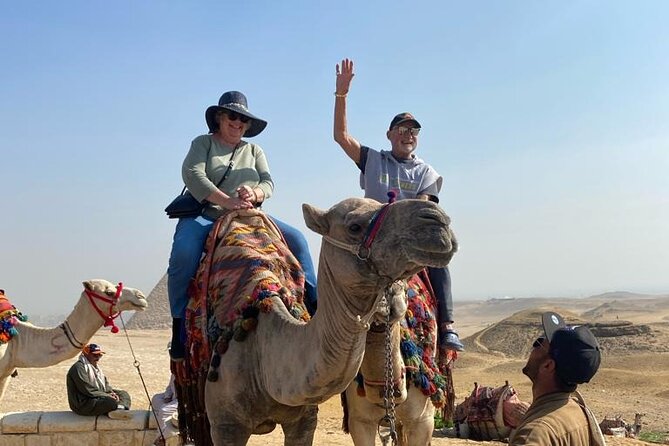
You then visit Khafre’s Pyramid. The guide notes the ancient Greek name Khefren and explains that Khafre is the builder of the second pyramid complex at Giza. A key visual detail is included: Khafre built his tomb on slightly higher ground, which makes it appear as tall as his father’s pyramid.
At 143.5 meters in height, Khafre’s pyramid is described as only slightly shorter than Khufu’s, and the tour highlights the impressive scale of the monument. Your visit here is also 30 minutes, with admission included.
What to do in your limited time
With only a half hour, I treat this kind of stop like a photo-and-meaning sprint. Listen for the explanation of why it appears taller, then spend your time walking to the viewpoints that match that story. You can also use this stop to compare the material and shape visually, since the text says the core masonry uses blocks of local limestone.
Menkaure’s Pyramid and the “smallest big one” feeling
The next pyramid in the trio is Menkaure Pyramid, associated with the Greek name Mykerinos. The tour notes he built the third of the three large Giza pyramids, and it places him as most likely connected to the royal line as the son of Khafre and grandson of Khufu.
This stop is again 30 minutes, with admission included. Menkaure’s pyramid is described as smaller due to the limited space left on the Giza Plateau. You’ll hear the original height mentioned as 65 meters, which helps you picture how “smaller” still means massive at human scale.
This quick stop is useful because it gives you a more complete sense of the whole Giza complex. Without it, Great Pyramid and Khafre’s would dominate your memory. With it, you see how even within the same site, royal priorities and practical constraints shaped the monuments.
The Sphinx close-up: the photo time you will remember
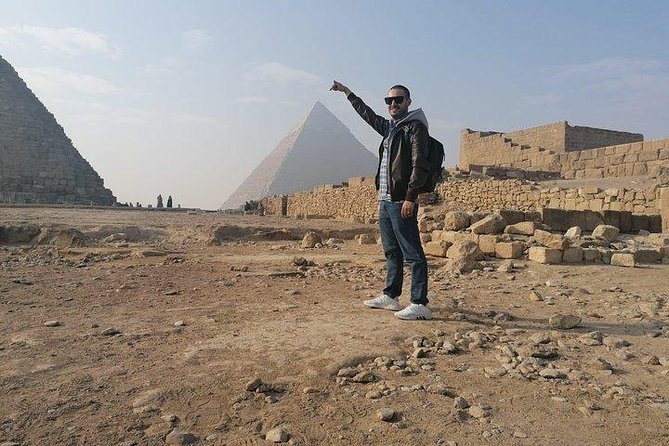
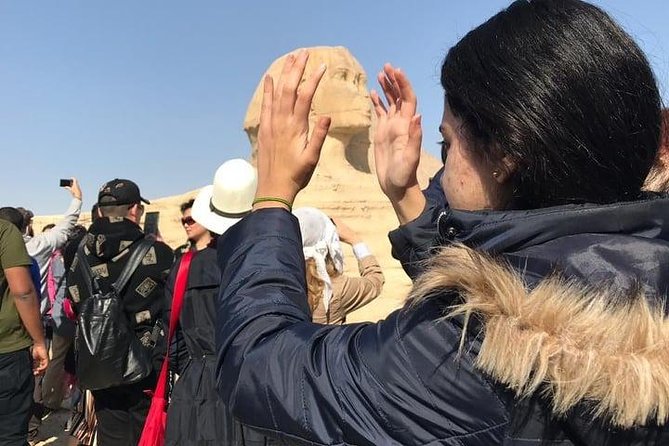
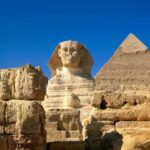
Then comes The Great Sphinx. You get a close-up look at the legendary guardian, described here as having a lion body and the head of King Chephren. The focus is partly visual, including time for amazing pictures with the Sphinx in funny positions.
This stop is listed as 30 minutes, with admission included. That’s enough time to get the classic frontal viewpoint, then move a little for angle and distance depending on the crowd and your comfort with walking.
Practical tip for photos
Sphinx time is where you should be decisive. If you love photos, pick your main viewpoint quickly, then use the remaining time for a second angle. Since the tour schedule is tight elsewhere, don’t burn 25 minutes trying to find the perfect spot.
Also, remember that the Sphinx area is a popular place. If you are sensitive to crowds, arrive in the moment with realistic expectations, and focus on getting your key angles done.
Memphis: seeing the Old Kingdom capital in an hour
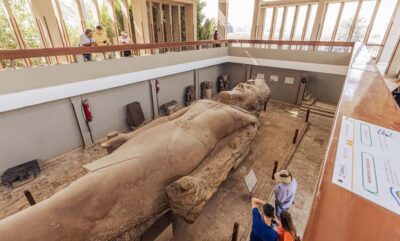
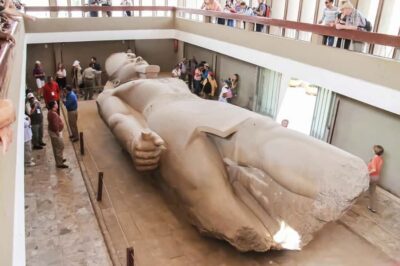
After Giza, you shift from monuments to place. The tour visits Memphis, described as an ancient Egyptian city and a World Heritage Site. The guide explains it was founded in 3200 BC by King Narmer, and that it served as the capital during the Old Kingdom eras, specifically dynasties 3 to 6.
The tour also includes the religious angle: God Ptah, associated with craftsmen and architects, is described as being worshiped there. This part of the day works well if you want to understand that pyramids were not isolated set pieces. They sat inside a system of state, labor, and belief.
This stop is about 1 hour with admission included. If you want deep museum-level detail, an hour might feel short. But for a guided overview, this duration gives you the big connections you need for the rest of your trip.
Saqqara Step Pyramid: the evolution story that makes it click
Next is Saqqara (Sakkara), including the Step Pyramid built for King Djoser. The tour emphasizes Saqqara as part of the process of pyramid evolution, describing a shift from a simpler mastaba form into the widely known step design.
This stop is also about 1 hour with admission included. Here’s why that matters: the Step Pyramid isn’t just a monument. It’s a visible clue to how ancient builders tested ideas and refined techniques over time. When you connect this to Giza, you can see a development arc rather than treating pyramids like a single design that simply appears fully formed.
What you should do with your hour
Treat your hour like a guided lesson. Listen for the evolution line from mastaba to Step Pyramid. Then spend your walk time looking for proportions and angles that make the “step” concept feel understandable.
If you only want a quick photo, you can do it. But you’ll get more satisfaction when you use the guide explanation to turn the site into a story.
Dahshur: Bent and Red pyramids to close the loop
To finish, the tour goes to Dahshur for the Bent Pyramid and Red Pyramid. The itinerary also notes you can enter the Red pyramid, which is one of the rare “yes, you can go inside” options included in the tour description.
This portion is listed as about 1 hour, with admission included. Since the tour separately states that entry inside pyramids needs a separate ticket, the best interpretation here is that the Red Pyramid entrance option is specifically something you can arrange, but you still may need to purchase or present the required ticket for the interior.
Why Dahshur feels different than Giza
Even without adding extra facts, Dahshur tends to feel more varied because you have two pyramid styles in one short block. That gives your brain a fresh contrast after the more familiar Giza triangle and the Sphinx.
It also ties back to the Giza story through Sneferu’s mention earlier in the day. When the guide points out that Sneferu built at Dahshur, your final stops become more than a last-hour add-on. They connect to the royal timeline explained at the start.
Food and comfort during a 10 to 12 hour day
The tour lists lunch in a high quality restaurant as included for option 1. That’s a meaningful inclusion on a long day. Cairo touring can easily break your energy, especially if you are on the move across multiple sites.
You are also in an air-conditioned private vehicle throughout transport. That small detail matters more than you might think, because the day is long enough that you need real breaks from the heat.
If you have dietary needs, the tour data here does not specify. So I would plan to communicate them directly when booking, or ask in advance if the lunch can accommodate your preferences.
Value check: what $60 per person gets you, and what to budget extra
This tour is priced at $60.00 per person, and it’s framed as a private day with pickup, an Egyptologist guide, and air-conditioned private transportation.
Here is the value picture based on what is explicitly included:
- Egyptologist guide
- Pick up and drop off
- Private transportation in an air-conditioned vehicle
- Entry fees (option 1)
- Lunch in a high quality restaurant (option 1)
Here is what is not included, and matters for budgeting:
- Entry inside any pyramid requires a separate ticket
- Airport pickup is extra at $10 per person
So the smartest budgeting mindset is this: you are paying for the guided route plus the main site access, but if you want interior pyramid time, you should expect another layer of cost.
Also consider your personal priorities. If you are excited to pay for interior entry, this plan can still be very efficient. If you are happy with exterior views and guided context, the included entry fees and set time blocks likely feel like good value for a whole-day private tour.
Pacing, crowds, and the one real caveat to keep in mind
The itinerary times are specific: 3 hours at the Giza Plateau, then 30 minutes each at the Great Pyramid of Cheops, Khafre’s Pyramid, Menkaure’s Pyramid, and the Sphinx, then 1 hour each for Memphis and Saqqara, and 1 hour for Dahshur.
That is a lot of monuments for one day. It is also why the tour works best for people who want a structured route and a guided narrative. It is not ideal for people who want to slow down and spend long periods just wandering.
There is also a service-quality consideration hinted by the operator’s response in the supplied feedback: when something goes wrong, they state they will take action against a guide. In other words, don’t assume everything will be perfect, but do expect that punctuality and organization are part of their standard aim.
If you are the type who likes to DIY and only pay for what you need, the “private taxi and go on your own” approach can be tempting. Still, the guide adds context that you cannot easily replicate with random stops, especially when you want to understand the old kingdom storyline across Giza, Memphis, Saqqara, and Dahshur.
Who this private tour suits best
This experience fits you if:
- You want one day to cover Giza, Sphinx, Memphis, Saqqara, and Dahshur
- You like guided explanations over reading alone
- You prefer having pickup and transport handled in an air-conditioned vehicle
- You want a structured plan with customization options built into the private format
It may not fit you as well if:
- You need long, uninterrupted time at each pyramid
- You dislike schedule-driven sightseeing
- You mainly want photos and would rather manage tickets and timing yourself
Should you book this Giza, Saqqara, Memphis, Dahshur private tour?
I think this is a good booking when you want a full, guided sweep and you value convenience. The combination of pickup, private air-conditioned transport, an Egyptologist guide, and included entry fees (option 1) makes it easy to justify the cost, especially on a long day where logistics can eat your energy.
Book it if you want the story behind what you see, and you are comfortable with short visits at several monuments. Skip it or modify expectations if you want a slower pace at Giza or you plan to spend most of the day only on pyramid interiors.
If you decide to go, the biggest win is simple: use the guide time. Ask questions as you walk, pick your photo angles quickly, and treat the short stops as “chapters,” not the whole book.
FAQ
How long is the private tour?
It’s listed as 10 to 12 hours approximately, depending on the day and travel time between sites.
Where does pickup happen?
Pickup is offered from your hotel in Cairo or Giza, and airport pickup is available for an extra $10 per person.
Is this tour really private?
Yes. It’s described as a private tour/activity, so only your group participates.
Are entry fees included?
Entry fees are listed as included under option 1, but entry inside any pyramid requires a separate ticket.
Is lunch included?
Lunch in a high quality restaurant is included under option 1.
Can I ride camels at the pyramids?
You can enjoy camel rides at Giza. The details provided do not say if it is included, so plan for it as an optional add-on.
What monuments and sites are covered in the day?
The tour covers Giza Pyramids and Sphinx, Memphis, Saqqara (Step Pyramid), and Dahshur (Bent Pyramid and Red Pyramid).
South to Saqqara and Dahshur


Giza, A Few More Ways In


More of Giza from our review pile
- Private half Day Tour to the Great 3 Pyramids of Egypt
★ 5.0 · 15 reviews - Elite Boats Tour in Cairo & Giza with Drinks Included
★ 4.5 · 15 reviews - Civilization Museum, Citadel and Old Cairo- Private Tour
★ 5.0 · 15 reviews - Private Half-Day Tour to City of the Dead and Mosque of Ibn Tulun in Cairo
★ 4.0 · 15 reviews - Full Day Tour to Explore Giza pyramids , Sakkara , Sphinx and Memphis
★ 5.0 · 15 reviews - Day Tour at The Egyptian Museum,Saladin Citadel and Khan El Khalili Bazaar
★ 5.0 · 15 reviews
Giza Pyramids & Sphinx Tours, compared.
 ★ 4.9Pyramids & Great Sphinx Private Tour with Camel RideFrom $486,335 reviews
 ★ 5.0Tour to Giza Pyramids and The Egyptian MuseumFrom $1556,016 reviews
 ★ 4.7Pyramids of Giza, Sphinx, Saqqara & Memphis TourFrom $903,110 reviews
 ★ 4.6Half-Day Tour to Pyramids of Giza and the SphinxFrom $502,891 reviews
 ★ 4.6Pyramids, Sakkara & Memphis Tour with LunchFrom $602,493 reviews
 ★ 5.0Private ViP all-inclusive Giza Pyramids,Sphinx,Inside PyramidFrom $142,448 reviews
 ★ 4.7Grand Egyptian Museum, Pyramids, Sphinx Tour & LunchFrom $892,282 reviews
 ★ 4.7Cairo Pyramids, Sphinx & Egyptian Museum Day TripFrom $932,271 reviews
The lists this one sits on