
REVIEW · DENDERA & ABYDOS TEMPLE TOURS
From Hurghada: Abydos, Osireion, and Dendera Day Tour
Three temples, one long day, big awe. This private tour from Hurghada strings together Abydos, the Osireion, and Dendera, where you learn the stories behind Osiris and Hathor while you stand in front of some of Egypt’s best-preserved religious art.
I particularly like the way the day spotlights Osireion Bath, including its watery concept tied to underground springs and its position behind the Seti I Temple at a low level. I also like the Dendera part of the itinerary, because the Temple of Hathor is all about details, from a ceiling you’ll want to crane your neck for to Roman decorations alongside Egyptian gods.
One drawback to plan for: it is an early departure with long driving time, about 4 to 5 hours each way. The road run to Abydos can feel challenging in rough conditions, so go in with patience, comfy clothes, and a water bottle mindset.
In This Review
- Key highlights to plan for
- Abydos from Hurghada: the payoff for a 4 to 5 hour drive
- Seti I Temple reliefs and the Osiris story you can follow
- Osireion Bath: watery symbolism, and why you won’t go inside
- Dendera Temple complex: Hathor, Cleopatra VII, and the ceiling you notice first
- Your guide and driver: why names like Omran and Aziz matter
- Food, comfort, and timing: what a long day actually feels like
- Price and value: is $199 per person fair?
- What to bring for Abydos and Dendera, plus one must-do checkpoint tip
- Who should book this tour, and who should skip it
- Should you book the Abydos, Osireion, and Dendera day trip from Hurghada?
- FAQ
- What sites are included on the Hurghada Abydos, Osireion, and Dendera day tour?
- Is hotel pickup and drop-off included?
- What is included in the tour price?
- How long is the day trip and how much driving should I expect?
- Will I enter the Osireion Bath?
- What should I bring or prepare before the tour?
Key highlights to plan for
- Dendera Temple complex: one of Egypt’s best preserved temple settings, and the last temple built in Greco-Roman times
- Temple of Hathor ceiling: you get time to actually look, not just pass through
- Osireion Bath concept: a watery building idea linked to underground water springs
- Seti I Temple reliefs: filigree-style carvings among the best of the New Kingdom
- Cleopatra VII sculpture at Dendera: a standout moment inside the Hathor program
Trying to choose? These Red Sea trips kept surfacing in our notes.
- Dolphin Tour Banana Boat from Soma /Sahl Hasheesh/makadi/Safaga★ 4.5 · 28 reviews
Abydos from Hurghada: the payoff for a 4 to 5 hour drive
This is not a quick hop. You’re picked up from your hotel in Hurghada city limits early, then spend serious time on the road toward Abydos. That matters because Abydos is a place you really feel with your attention, not a stop you rush. When you arrive, you’re ready to slow down, look closely, and follow the guide’s story thread.
At Abydos, the focus is on the religious meaning of the place. This tour frames Abydos as one of the holiest sites of ancient Egypt, which helps you read what you’re seeing. You start with the Abydos Temple area, then move into the Seti Temple complex. The guide’s job here is to connect the carvings to what people believed, especially around Osiris and the idea of a gateway to the underworld.
One practical point: the driving can be harder than you expect. A guide and a driver can’t control the road, but the best part is that you have an experienced Egyptology guide leading the way through the temples. If you’re sensitive to long travel or you get worn down in the heat, I’d plan this as your big day out and keep the rest of your trip calmer.
Seti I Temple reliefs and the Osiris story you can follow
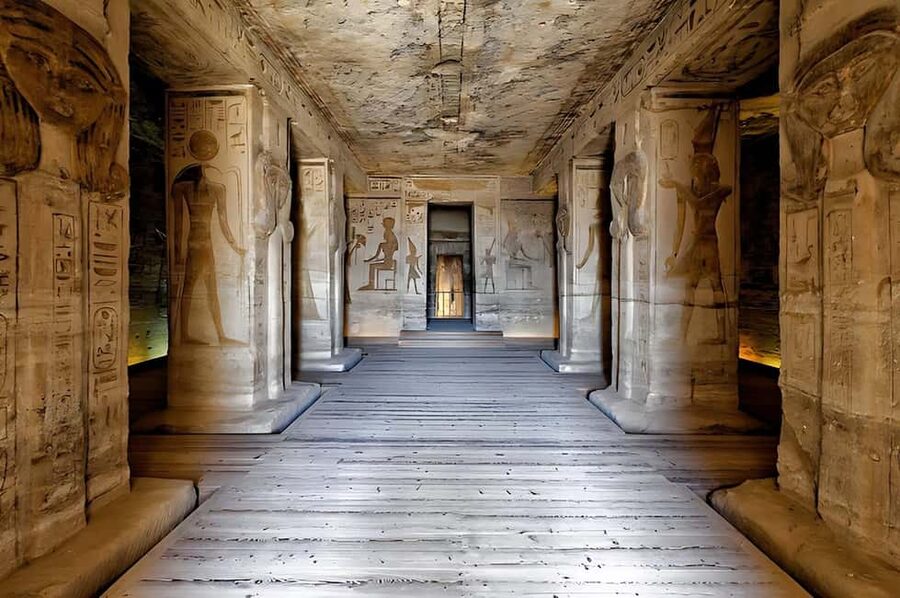
Your Abydos time centers on the Seti Temple and its reliefs. The tour describes the Seti Temple filigree reliefs as among the best in the New Kingdom, and that is exactly the kind of detail that changes your experience from seeing stone to understanding it.
The tour flow is designed so the guide explains as you walk. That makes a difference with Abydos, because without context, a lot of temples can start to look like “busy walls.” Here, the guide ties the imagery to the Osiris cult and the broader belief system. You’ll hear about legendary rulers and pharaohs, and one of the charms of the guide style on this itinerary is that it doesn’t treat every ruler as a sacred statue. Expect a human touch in how the story is told.
If you care about temples as living documents of belief, this part is strong value. You are not just taking photos. You’re learning why certain symbols and scenes were placed where they were, so when you glance back later, your brain has something to hold onto.
Also, quick sanity tip: wear sunglasses and comfortable clothes. You’ll be standing outside at times, and the day is long. Small stuff adds up when the schedule starts early.
Osireion Bath: watery symbolism, and why you won’t go inside
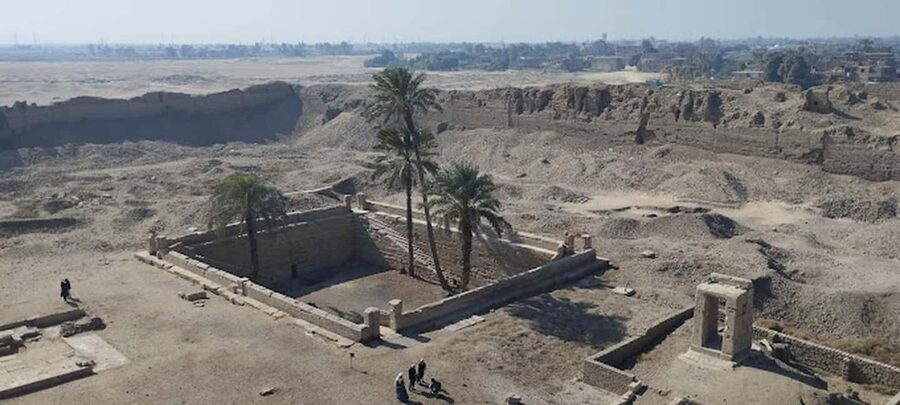
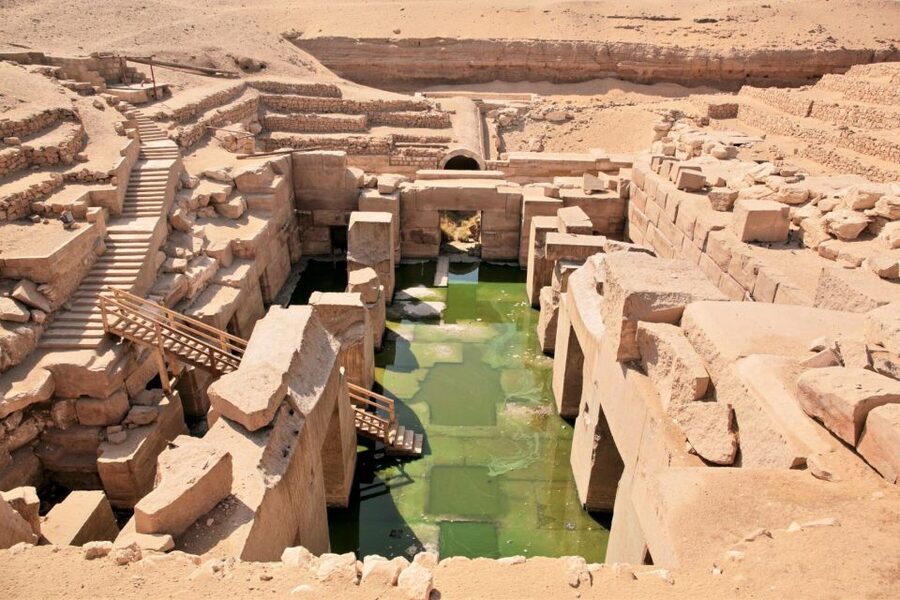
The Osireion Bath is the standout “what am I looking at here?” stop of the day. The tour explains that this is a building with a watery nature concept from its inception, established on ancient underground water springs. You also learn where it sits in relation to the Temple of Seti I, behind it, at a low level of 18 meters.
Here’s the key practical detail: this experience includes seeing the Osireion Bath, but it is not entered. You view it from above. That’s important because if you arrive expecting full access, you might be disappointed. But if you go in expecting an impressive sightline, this part lands well. The structure is memorable, and the explanation helps you understand what the tour is trying to show you: the underworld theme made physical through the water idea.
Guides on this route, including Omran and others, tend to be very focused on interpretation. That is what you want for Osireion. The building’s meaning gets clearer when the guide ties it to Osiris and the gateway concept. And since you are on a tight schedule that includes Dendera later, it’s nice that this stop is meaningful without requiring a long interior visit.
Dendera Temple complex: Hathor, Cleopatra VII, and the ceiling you notice first
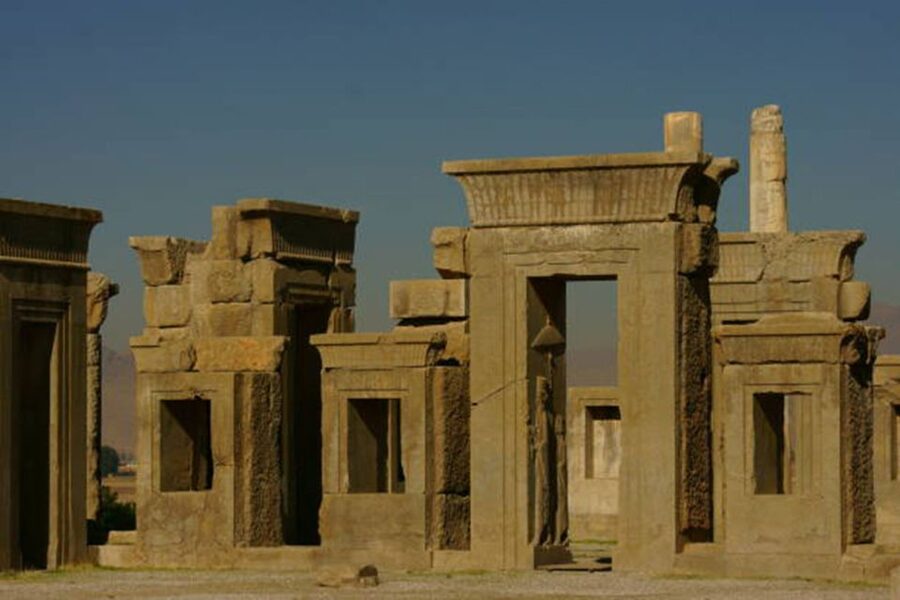
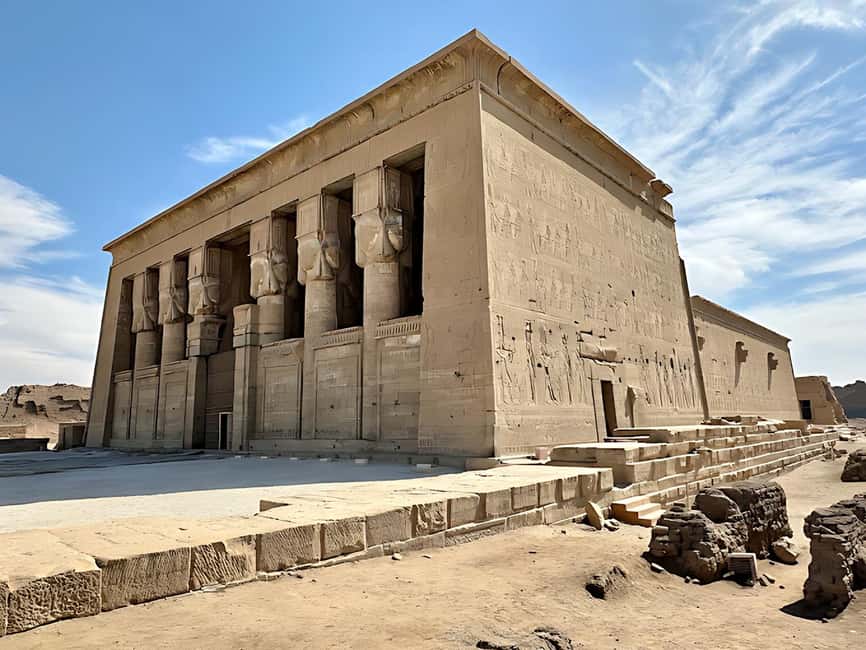
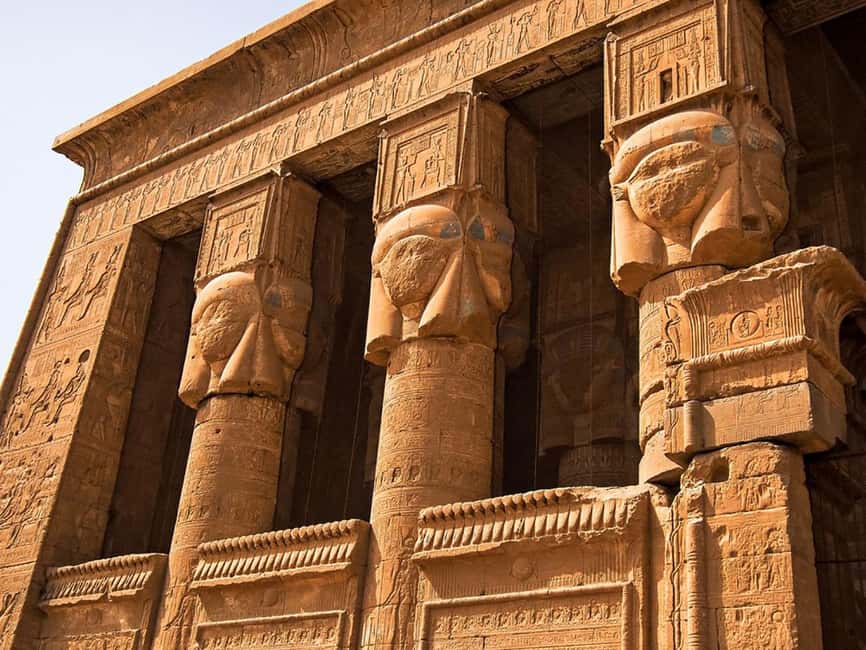
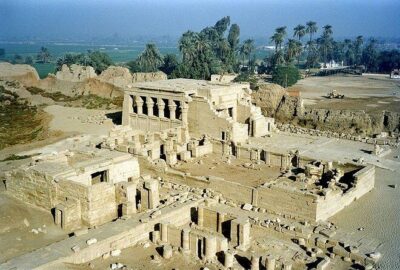
If Abydos is the setup, Dendera Temple is the show. Dendera is presented here as one of the best preserved temples in Egypt, and you’re also told it’s the last temple built in Greco-Roman times. That matters because you can spot a blend of styles and rulers, not just one uniform era look.
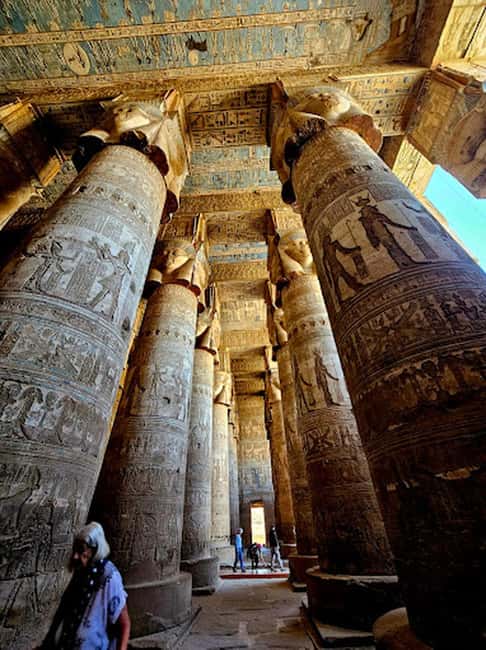
The centerpiece is the Temple of Hathor. The tour frames Hathor as the goddess connected to love, joy, happiness, and music, and then you’re shown decorations from Roman rulers alongside Egyptian gods. This is where the day feels most complete for many people, because the setting is visually strong and the symbolism is easier to enjoy at a slow pace.
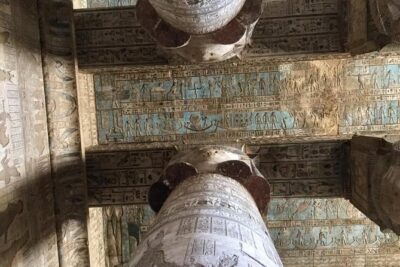
Then comes the ceiling. The tour highlights it specifically, and I get why. When you have time to stop, tilt your head up, and look carefully, temple ceilings become like a different type of museum object. You’re not just reading inscriptions, you’re scanning artwork and learning what the guide wants you to notice.
One of the best moments is the sculpture of Queen Cleopatra VII at Dendera. It’s a rare, human-feeling anchor in a site that otherwise can feel strictly ancient and religious. Even if you know Egypt well, it’s the kind of detail that makes the day feel special.
If you’re deciding whether to prioritize Dendera or Abydos, I’d lean Dendera as the easier win. It’s not that Abydos is unworthy. It’s that the road and the day length can make Abydos feel more like work and Dendera feel like reward.
Your guide and driver: why names like Omran and Aziz matter
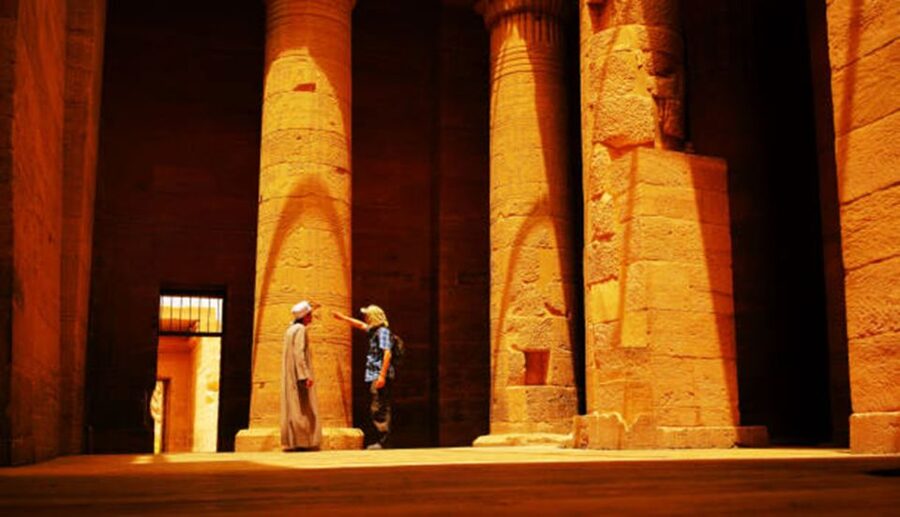
This tour is built around an Egyptologist guide. That’s not a throwaway line. The difference between a temple tour you remember and one you forget is usually the guide’s pacing and explanation style.
In the experience you’re considering, guides can include Omran, Aziz, Walid, and others, depending on the schedule. The common thread in strong feedback is that the guide tells the story with enough detail to make the carvings click, and also keeps you comfortable through a long day.
I also like that the experience often feels organized at the human level. For example, you may have a driver like Mahmoud or Ahmet, with a comfortable, air-conditioned vehicle. If you’ve traveled solo, that kind of steady, respectful handling matters. Some people also note feeling safe and cared for throughout, which is exactly what you want when you’re spending a long day out of town.
One more note: at least some guides may be able to get access to exclusive parts of the temples. That is not something you can demand, but if it happens, it adds real value because it changes what you can actually see. The practical takeaway is simple: listen closely early in the day. You’ll often get the context that helps you appreciate those extra moments later.
Food, comfort, and timing: what a long day actually feels like
This day trip typically includes lunch at a local restaurant and bottled water during tours and transfers. That’s not just “nice to have.” Lunch and water keep your day from turning into a low-energy slog, especially when the itinerary starts early.
Timing can also shift. One traveler noted the total trip ran shorter than the planned schedule, which helped on a very hot day. That’s a reminder that Egypt driving days can flex based on heat and traffic. So if you’re planning a later activity after the tour, don’t schedule anything too tight the same day.
Comfort-wise, you should expect a long day in a car, about 4 to 5 hours each way. That means you’ll want to pack for sun and temperature changes. Sunglasses help more than you think. Comfortable clothes help even more. And remember the rule about luggage: large bags are not allowed. If you’re traveling light, you’ll feel less stressed.
Also, know that the tour is not suitable for everyone. It’s not recommended for travelers with mobility issues, serious health conditions, young children, or pregnant women. If any of those apply to you, skip it. Long days on the road plus temple walking can be too much.
Price and value: is $199 per person fair?
At $199 per person, the question is value, not sticker shock. Here, the price comes with a lot of the annoying add-ons handled for you: hotel pickup and drop-off within Hurghada city limits, entrance fees to all mentioned sights, lunch, bottled water during tours and transfers, and an Egyptologist guide. Service charges and taxes are also included.
For many people, that bundle is what makes the price feel fair. You’re paying for transport over distance, timed temple visits, and guided interpretation for multiple sites. If you tried to piece it together yourself, you’d likely spend time managing entries, transport, and finding someone who can explain Osiris and Hathor in a way you can follow.
Two cost cautions to keep in mind:
- Pickup is included only within Hurghada city limits. If you’re staying in places like El Gouna, Makadi Bay, Sahl Hasheesh, Safaga, or Soma Bay, extra charges may apply (listed as an extra 10 euros per person for those areas).
- This is a long day, so you may want to price in the cost of being out of your routine for the day, not just the money.
If you want an organized, guided temple day that hits Abydos and Dendera in one go, $199 can be a solid deal.
What to bring for Abydos and Dendera, plus one must-do checkpoint tip
Bring a passport or valid ID. Police or military checkpoints can check documentation, and this tour specifically asks you to have it with you. Don’t assume you can show a photo on your phone. Bring the real thing.
Pack sunglasses and wear comfortable clothes. You’ll be outside at times, and the day starts early and runs long. Cash is also suggested, so keep some on hand just in case your lunch or small purchases at the stops have a separate setup.
And one more “plan like an adult” note: no luggage or large bags. If you’re coming straight from the airport, keep your personal items manageable so you don’t waste time rearranging.
Who should book this tour, and who should skip it
This is a good fit if you:
- Want Abydos and Dendera in a single day without managing logistics
- Enjoy guided interpretation, especially around Osiris and Hathor
- Are comfortable with long driving time and extended temple walking
This is not a good fit if you:
- Use a wheelchair or have mobility impairments
- Have heart problems or serious health conditions
- Are pregnant
- Are traveling with young children
If you’re an able-bodied adult who loves temples and wants a guided day packed with meaning, it’s an easy “yes.” If you want something slow and close to your hotel, this might feel like too much travel.
Should you book the Abydos, Osireion, and Dendera day trip from Hurghada?
I’d book it if you want one high-impact day that takes you from Abydos’s Osiris themes to Dendera’s Hathor program and Roman-Egypt mix, all with an Egyptologist guide and entrance fees handled. The ceiling at Dendera and the Cleopatra VII sculpture are the kind of moments that make the effort feel worthwhile.
I’d reconsider if you hate long drives, if road conditions make you anxious, or if your health limits long days. In that case, you can still enjoy these sites, but you may want a different format that reduces time on the road.
If you do book, tip yourself for success: bring your passport or ID, pack light, and trust the guide when they explain what to look for. That’s where the value lives on this itinerary.
FAQ
What sites are included on the Hurghada Abydos, Osireion, and Dendera day tour?
You visit the Abydos Temple area, the Seti Temple and its reliefs, the Osireion Bath (seen from above), and the Dendera Temple Complex, including the Temple of Hathor.
Is hotel pickup and drop-off included?
Yes, hotel pickup and drop-off are included if your hotel is within Hurghada city limits. Pickup from other areas like Makadi Bay, Sahl Hasheesh, El Gouna, Safaga, and Soma Bay may require an extra charge of 10 euros per person.
What is included in the tour price?
The tour includes hotel pickup and drop-off, entrance fees for all mentioned sights, lunch at a local restaurant, bottled water during tours and transfers, and an Egyptologist tour guide. Service charges and taxes are also included.
How long is the day trip and how much driving should I expect?
It is a long day trip with an early morning departure and extended driving time, approximately 4 to 5 hours each way.
Will I enter the Osireion Bath?
No. The Osireion Bath is not entered on this tour, and it can be seen from above.
What should I bring or prepare before the tour?
Bring your passport or valid ID, sunglasses, comfortable clothes, and cash. Large bags or luggage are not allowed. You may also be checked at police or military checkpoints.
More of Red Sea from our review pile
- Dolphin Tour Banana Boat from Soma /Sahl Hasheesh/makadi/Safaga
★ 4.5 · 28 reviews
Dendera & Abydos Temple Tours, compared.
 ★ 4.2Dendera Temple All-Inclusive Tour & Felucca RideFrom $60207 reviews
 ★ 4.6Luxor Day Tour Visit Dendara And Abydos TemplesFrom $80151 reviews
 ★ 4.5Dendara and Abydos Temples Day Tour from LuxorFrom $45133 reviews
 ★ 5.0Private Half-day: Dendera Temple From LuxorFrom $70132 reviews
 ★ 5.0Day Trip From Luxor to Abydos & Dendara Temples (Private)From $7555 reviews
★ 5.0Dendara and Abydos Temples Day Tour from LuxorFrom $5946 reviews
★ 5.0Luxor Day Tour Visit Dendara And Abydos TemplesFrom $7545 reviews
★ 5.0Day Trip From Luxor to Abydos & Dendara Temples (Private)From $7555 reviews
★ 5.0Dendara and Abydos Temples Day Tour from LuxorFrom $5946 reviews
★ 5.0Luxor Day Tour Visit Dendara And Abydos TemplesFrom $7545 reviews
 ★ 5.0Private Day Tour To Dandara and Abydos Temples from LuxorFrom $6936 reviews
The lists this one sits on