
REVIEW · GIZA PYRAMIDS & SPHINX TOURS
Epic 30 Pyramids of Egypt All-inclusive Full Day Tour
Three pyramid zones in one day. This full-day Cairo and Giza plan is interesting because it mixes the headline sights with lesser-seen angles, so you do not just stare at monuments from one single viewpoint. I like the private car and driver approach, plus the air-conditioned vehicle and snacks so the long day stays manageable.
The second thing I like is the chance to cover Dahshour and Saqqara alongside Giza, including scenic high plateaus for photos. One consideration: site entry tickets are not included for the main pyramid zones, so you will want to budget extra on top of the $30 tour price.
In This Review
- Key highlights worth your time
- How this Cairo-to-pyramids day stays efficient
- Price and site tickets: what the $30 really covers
- Giza Plateau: Khufu, Khafra, Menkaura and that classic photo angle
- Great Sphinx and the valley temple area
- Saqqara: Djoser and the tomb details you might miss elsewhere
- Panoramic views of Abusir from Saqqara height
- Dahshour: Bent Pyramid plus the Red and black pyramid context
- What the pacing feels like when you only have 6 hours
- Private transport, group size, and what it means for Cairo navigation
- The guide experience: patient explanations and safety-first movement
- Should you book this pyramids day tour?
- FAQ
- How long is the Epic 30 Pyramids of Egypt tour?
- Is pickup included, and do we return to the same place?
- Are admission and entry fees included in the $30 price?
- Do I need to pay for admission at Giza, Saqqara, and Dahshour?
- Is a licensed tour guide included?
- What fitness level do I need?
- What if the weather is bad or I need to cancel?
Key highlights worth your time
- Private car, driver, and parking fees: Door-to-door pacing with less time stuck sorting out Cairo traffic.
- All-inclusive-style comfort: Air-conditioned ride, snacks, and bottled water keep the day from feeling like a slog.
- Three big necropolises in one stretch: Giza plus Saqqara plus Dahshour, with viewpoints built in.
- Sphinx and valley temple time: You get time to see the Great Sphinx and the associated valley temple area.
- Dahshour is the bonus: You have a shot at the Bent Pyramid area, plus the Red and black pyramid views.
- Mobile ticket: Handy for a smoother entry-day rhythm.
Ways onto the Giza plateau, compared
- Cairo: Pyramids & Great Sphinx Private Tour with Camel Ride★ 4.9 · 6,335 reviews
- Tour to Giza Pyramids and The Egyptian Museum★ 5.0 · 6,016 reviews
- VIP All inclusive Best of the best Giza Pyramids,Sakkara,Memphis★ 5.0 · 3,164 reviews
- From Cairo: Pyramids of Giza, Sphinx, Saqqara & Memphis Tour★ 4.7 · 3,110 reviews
How this Cairo-to-pyramids day stays efficient
This is a 6-hour day that aims to hit the Cairo and Giza highlights without dragging you through a maze of logistics. You start in Cairo, ride in an air-conditioned vehicle, and keep moving as the day unfolds. The tour also includes parking fees, which is one of those small things that can silently make or break a long day.
What makes this feel good is the rhythm. You are not just doing one stop. You get the Giza core, then you shift to Saqqara, and later you push out toward Dahshour for the Bent Pyramid zone. Even with the travel time, the schedule is built around short, focused blocks at each area, like 30 minutes for a panoramic photo platform and about an hour for Saqqara’s grounds.
The “up to 15 people” limit also matters. It usually means the group stays small enough to move without constant waiting. Add snacks and bottled water, and you get a day that feels practical, not rushed on empty.
Price and site tickets: what the $30 really covers
The advertised price is $30 per person, and that gets you the transportation and comfort basics. In other words, you are paying for the car, driver, snacks, water, and parking. The catch is that major monument entry fees are not included for some stops.
Here is what is stated for key sites, in Egyptian pounds:
- Giza pyramids admission: 200 EGP per adult, 100 EGP per child or student (ticket not included)
- Saqqara admission: 180 EGP per adult, 90 EGP per child or student (ticket not included)
- Dahshour admission: 60 EGP per adult, 30 EGP per child or student (ticket not included)
Also, some segments are marked as admission ticket free, like the panoramic viewpoints and the Great Sphinx area time blocks, and the Step Pyramid of Djoser slot.
One more pricing note from the tour info: it lists “Sites Entry Fees” as $30 per adult and $15 per child or student. That means you should expect an extra payment for entry on top of the tour fee, regardless of which currency you end up using day-of. I recommend you budget for it upfront, so you do not end the day doing math under pressure.
Giza Plateau: Khufu, Khafra, Menkaura and that classic photo angle
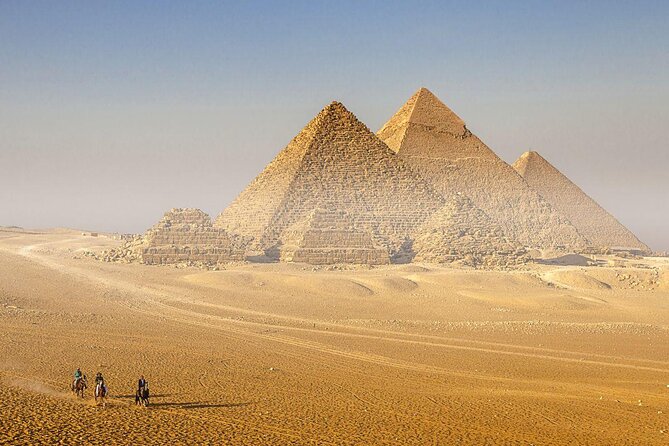
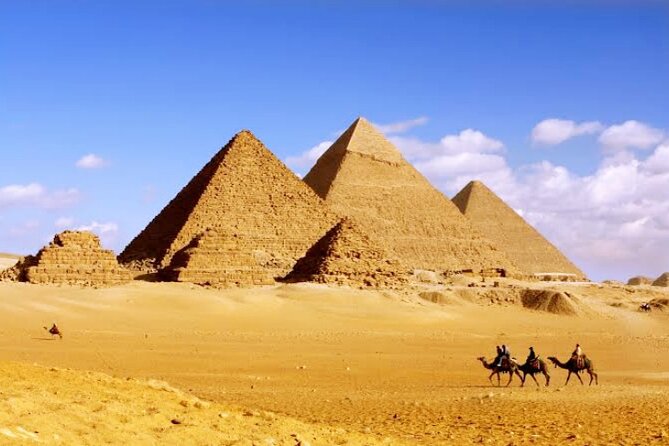
Giza is the obvious start, and it is still worth being the first stop of the day. You get time at the royal cemetery on the plateau, where the big names live: Khufu, Khafra, and Menkaura. This is the “seven wonders” tier of sightseeing, the kind of place where your brain needs a minute just to process scale.
You also get a stated time block of about 1 hour 30 minutes at the Giza pyramids area. That is enough time to wander, take photos, and still feel like you did more than just walk up, glance, and leave.
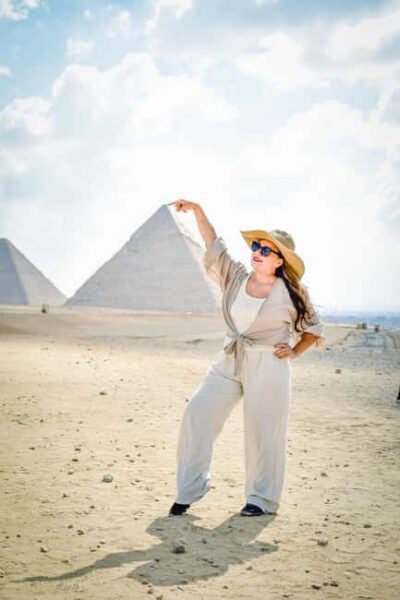
Then you shift to a high plateau viewpoint for a panoramic look. The plan calls for about 30 minutes here, and it is designed for one-shot composition. You can photograph the three royal pyramids along with the queens pyramids in one frame, which is the whole point of this stop. If you care about photography, this is where that effort pays off.
Great Sphinx and the valley temple area
After the main pyramid views, the day moves to the Great Sphinx. You have about 30 minutes here, including time to look at the Sphinx itself and the valley temple area.
What makes this stop feel more meaningful than just seeing a famous statue is the context you get built into the visit. The description highlights the idea of a valley temple connection with ancient Egyptian burial practices, including the role tied to preparing bodies before burial. You are not just staring at stone. You are linking it to what the area was used for.
Also, this slot is marked as free admission for that time segment. So you get an important “must-see” without stacking another paid ticket on the calendar for this particular portion.

Saqqara: Djoser and the tomb details you might miss elsewhere
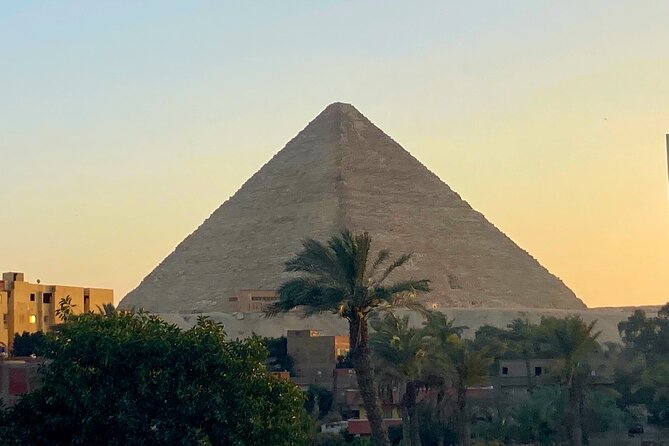
Next comes Saqqara, and this is where the day starts to feel less like a highlight reel and more like an actual story of royal burial design. You visit the Royal Pyramids of King Titi and King Unas, and you get about 1 hour at this necropolis area, with entry marked as not included.
This is also where the tomb stop gets more specific. The plan points out the nobles tombs, including the colorful tomb of Kajemny dating back to the 24th century BC. Even if you do not read every label, the presence of named tombs and time depth changes the experience. You are not just moving through ruins. You are tracking different eras and burial traditions in one broader landscape.
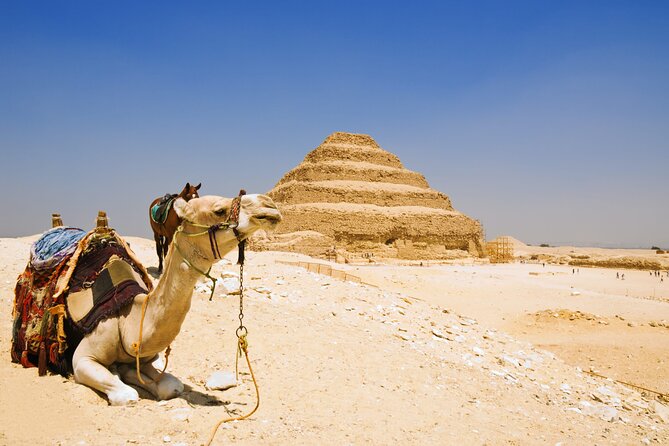
Then you have the Step Pyramid of Djoser, described as the first pyramid in Egypt. That portion is marked as free admission, with about 1 hour of time on site. The Step Pyramid part matters because it gives you a sense of progression. You see early pyramid ambition here, before later versions at Giza and elsewhere.
Panoramic views of Abusir from Saqqara height
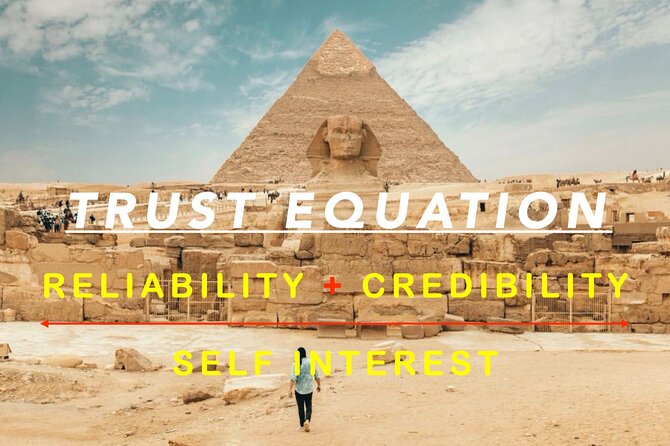
Between Saqqara’s main areas and the Dahshour drive, you also get a panoramic view of Abu Sir from a high plateau. This segment is marked as admission free, and it adds variety without turning into another long, ticketed stop.
Abu Sir is presented as a necropolis with 14 pyramids, and it served as a royal necropolis during the Fifth Pharaonic Dynasty. You are also given a comparison point: the Abusir pyramids are described as having relatively inferior quality compared to fourth dynasty Giza pyramids, with an explanation that may relate to changes in royal power or economy. You also learn they are smaller and built with local stone.
The most practical payoff here is perspective. If you have only seen Giza, this viewpoint helps you understand that pyramid-building was not a single moment in time. It was a continuing project that evolved, scaled, and changed materials and technique.
Dahshour: Bent Pyramid plus the Red and black pyramid context
Dahshour is the part that many people are happy they added, because it is less centered in the usual one-day pyramid pattern. This is where the tour becomes more interesting for anyone who wants variety beyond the postcard pyramid lineup.
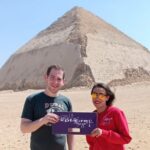
You get the Bent Pyramid area with a Dahshour admission fee listed as 60 EGP per adult (30 EGP per child or student), and the time on this major segment is about 1 hour with entry marked as not included.
From there, the description connects Dahshour directly to the bigger pyramid evolution story:
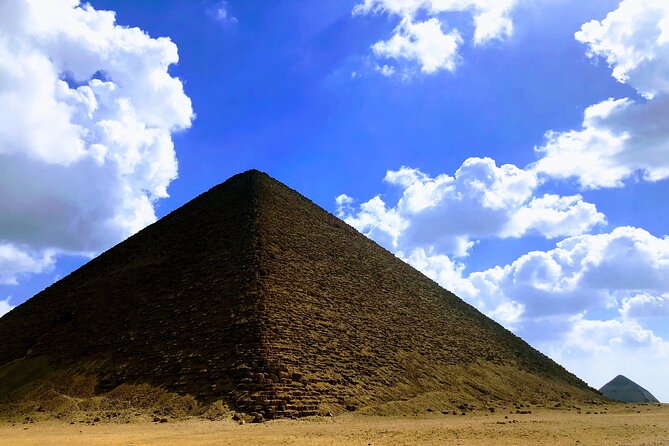
- The Red Pyramid of King Senefru is referenced with dates back to the 27th BC era.
- The Bent Pyramid is also called the white pyramid, and you can walk around it and see the “evolution” from step structures like Saqqara to the more complete forms linked to Giza.
Then you get another quick look tied to the black pyramid, named for its mud-brick material. The plan notes that it is among the few mud-brick pyramids that survived weather and destruction enough to be seen today. This is one of those details that can make you slow down. Mud-brick construction is a reminder that not everything was built in the same way with the same materials.
A short extra viewpoint segment is about 30 minutes and is marked free admission for that portion, which helps keep the day’s cost manageable even while you add these extra angles.
What the pacing feels like when you only have 6 hours
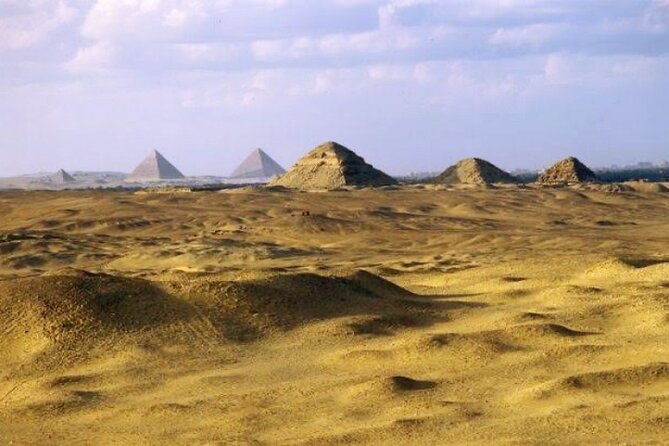
On paper, 6 hours can sound tight. In practice, this schedule is built to avoid “one big boring block” fatigue. You see a major paid zone at Giza for about 1.5 hours, then you break it with a short panoramic viewpoint. After that, you keep momentum with a 30-minute Sphinx area.
In Saqqara, you get around an hour for the necropolis, then another hour for Djoser. The panoramic Abusir view adds another layer without demanding a full second entry fee for an extra site.
Dahshour then completes the arc with the Bent Pyramid segment and a final 30-minute stop for the black pyramid context view.
This is also why the tour notes a moderate physical fitness level. You should be ready for walking on uneven ground and for short stretches where your feet do the work. If you are comfortable with that, the schedule feels like a good trade: you cover a lot, but you still have structured breaks.
Private transport, group size, and what it means for Cairo navigation
One underrated part of pyramid days is simply reaching the sites without losing half your day negotiating roads and meeting points. This tour is built around private transportation and an experienced driver in an air-conditioned vehicle, which you will feel most on the roads into and out of Cairo.
The group size cap also helps. With a maximum of 15 people, you are not dealing with a huge bus energy where everyone moves like a slow wave. You move in a more controlled way, which makes it easier to get back to the car on time and stay on the planned schedule.
On the guide side, the tour lists a licensed tour guide (optional). That gives you a choice. If you want a more interpretive experience, you can arrange for that extra layer. If you are more self-directed with your own reading and photo priorities, you can stick to the driver and timing plan.
The guide experience: patient explanations and safety-first movement
The best days in Egypt are not just about monuments. They are about the person coordinating your path when roads get chaotic and crowds show up.
From the kinds of feedback attached to this experience, guides connected with this route are often described as patient, responsible, and focused on keeping the day smooth. People also point out detailed explanations of the pyramids and history, plus practical help navigating busy Cairo. Names that show up in that context include Hassan Attia, Deen Mosleh, and Ameer, along with drivers like Mustafa.
You will still want to do your part. Bring a little flexibility, use the restroom before you leave each longer stop, and accept that some photo moments take waiting for the right angle. But when the coordination is good, you get more than a checklist. You get a clearer sense of how the different necropolises relate.
Should you book this pyramids day tour?
I think this is a good booking if you want:
- A structured day that hits Giza plus Saqqara plus Dahshour
- Comfort built in, snacks and bottled water, not just transportation
- A small-group setup, max 15 people, with private vehicle handling
- Extra interest in the evolution story of pyramids, especially the Bent Pyramid zone at Dahshour
I would hesitate if:
- You hate paying site entry fees separately. This tour’s base price covers transport and comfort, but the main zones list admission fees that are not included.
- You want a long, slow museum-style visit. This is more “focused time in the right places” than “hours of in-depth wandering.”
One last practical note: the experience requires good weather. If conditions are poor, the plan says you will be offered a different date or a full refund.
FAQ
How long is the Epic 30 Pyramids of Egypt tour?
It runs about 6 hours, approximately.
Is pickup included, and do we return to the same place?
Pickup is offered, and the tour ends back at the meeting point.
Are admission and entry fees included in the $30 price?
No, site entry fees are not included. Some segments are marked admission free, but main pyramid areas list separate admission amounts. The tour also lists Sites Entry Fees as $30 per Adult and $15 per Child or Student.
Do I need to pay for admission at Giza, Saqqara, and Dahshour?
The tour lists separate admissions for these areas in Egyptian pounds: Giza (200 EGP adult, 100 EGP child or student), Saqqara (180 EGP adult, 90 EGP child or student), and Dahshour (60 EGP adult, 30 EGP child or student). Some panoramic or specific viewing segments are marked free.
Is a licensed tour guide included?
A licensed tour guide is optional, not included by default.
What fitness level do I need?
The tour requires a moderate physical fitness level.
What if the weather is bad or I need to cancel?
The experience requires good weather. If it is canceled due to poor weather, you will be offered a different date or a full refund. There is free cancellation up to 24 hours in advance for a full refund.
Giza, A Few More Ways In

More of Cairo from our review pile
- Cairo: Djoser Pyramid & Memphis Private tour with transfers.
★ 4.0 · 14 reviews - White Desert Overnight Camping Sharing Tour in Egypt
★ 5.0 · 15 reviews - Cairo Best 2Days tour Pyramids, Saqqara & Old Cairo
★ 5.0 · 15 reviews - Monastery St Simon with Cave Church and Garbage City Private Tour
★ 5.0 · 15 reviews - Full-Day Tour to Giza Pyramids, Egyptian Museum & Khan Al-Khalili
★ 5.0 · 15 reviews - Private Walking Tour in ElMoez Street & Khan Elkhalili Market
★ 5.0 · 15 reviews
Giza Pyramids & Sphinx Tours, compared.
 ★ 4.9Pyramids & Great Sphinx Private Tour with Camel RideFrom $486,335 reviews
 ★ 5.0Tour to Giza Pyramids and The Egyptian MuseumFrom $1556,016 reviews
 ★ 4.7Pyramids of Giza, Sphinx, Saqqara & Memphis TourFrom $903,110 reviews
 ★ 4.6Half-Day Tour to Pyramids of Giza and the SphinxFrom $502,891 reviews
 ★ 4.6Pyramids, Sakkara & Memphis Tour with LunchFrom $602,493 reviews
 ★ 5.0Private ViP all-inclusive Giza Pyramids,Sphinx,Inside PyramidFrom $142,448 reviews
 ★ 4.7Grand Egyptian Museum, Pyramids, Sphinx Tour & LunchFrom $892,282 reviews
 ★ 4.7Cairo Pyramids, Sphinx & Egyptian Museum Day TripFrom $932,271 reviews