
REVIEW · GIZA PYRAMIDS & SPHINX TOURS
Day Tour To Dahshur Pyramids Memphis & Sakkara
Saqqara shows pyramid history in layers. This private 5-hour loop from Cairo or Giza takes you past Step Pyramid evolution, then to the Bent and Red Pyramids, and finishes in ancient Memphis with big statues and the Alabaster Sphinx.
I especially liked two things. First, the pyramid contrast is the whole point here, you go beyond Giza and see how Old Kingdom building styles change across dynasties. Second, the Egyptologist-led explanations can be excellent, with guides like Mohammed and Jassy described as energetic, organized, and good at making the details stick.
One tradeoff to plan for: some site entry is marked as not included, and the schedule also includes short government-approved shopping stops, so if you want zero extra detours, you will need to manage expectations.
In This Review
- Key highlights at a glance
- Saqqara, Dahshur, and Memphis in one tight, well-timed day
- Private AC ride, pickup, and the real rhythm of 5 hours
- Stop 1 in Cairo: where the day gets started
- Saqqara: Step Pyramid plus Old Kingdom tombs
- Pyramid of Teti and Pyramid of Unas: why these small stops matter
- Mastaba of Ti: everyday life scenes in tomb form
- Dahshur’s Bent and Red Pyramids: the evolution you can see
- Memphis: Ramses II statue and the Alabaster Sphinx
- Lunch, bottled water, and the built-in shopping stops
- What to look for in a great Egyptologist guide
- Price and value: is $40 a smart deal here?
- Should you book this Dahshur, Memphis, and Saqqara day tour?
- FAQ
- What does the $40 per person price include?
- How long is the tour?
- Is this tour private?
- Are hotel pickup and drop-off included?
- Is lunch included, and what is it?
- Are entry fees included for all pyramids and monuments?
- What is the cancellation policy?
Key highlights at a glance
- A rare Saqqara-to-Dahshur comparison in one day, not just one famous pyramid complex
- Private, A/C transport with hotel pickup and drop-off, built for comfort in Cairo traffic
- Egyptologist-led stops that can include hieroglyph and site-specific context
- Extra entry tickets may be needed for Teti, Unas, and the Mastaba of Ti
- Lunch is included, typically koshari, plus bottled water for the day
Ways onto the Giza plateau, compared
- Cairo: Pyramids & Great Sphinx Private Tour with Camel Ride★ 4.9 · 6,335 reviews
- Tour to Giza Pyramids and The Egyptian Museum★ 5.0 · 6,016 reviews
- VIP All inclusive Best of the best Giza Pyramids,Sakkara,Memphis★ 5.0 · 3,164 reviews
- From Cairo: Pyramids of Giza, Sphinx, Saqqara & Memphis Tour★ 4.7 · 3,110 reviews
Saqqara, Dahshur, and Memphis in one tight, well-timed day
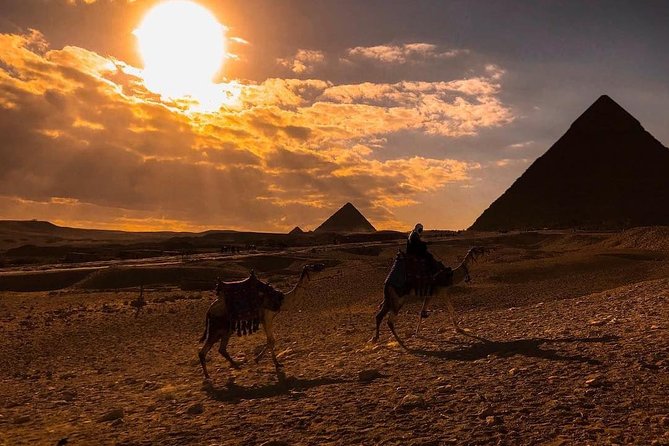
This is a day tour built around contrast. In about five hours, you go from Saqqara’s Step Pyramid story to Dahshur’s Bent and Red Pyramids, then into Memphis for the iconic monumental vibe you expect from Egypt. It’s not meant to be a slow museum day, it’s meant to keep you moving while still giving time at each place.
The biggest practical win is the private setup. You’re picked up from your hotel in Cairo or Giza and brought back at the end, using a private A/C vehicle. That matters because Cairo day plans are only as good as your transport timing, and traffic can turn a relaxed schedule into a headache.
The other win is that the tour is structured around big-name locations that tell connected stories. Saqqara and Dahshur are both tied to how pyramids evolved, while Memphis helps you remember that Egypt’s ancient capitals and monuments were not isolated events. You finish the day with images that feel like they belong to the same world, not three unrelated stops.
Private AC ride, pickup, and the real rhythm of 5 hours
This is a private tour, meaning only your group participates. That sounds obvious, but in practice it changes how the day feels. You are not stuck waiting for a slow walker in another party, and you are not forced to rush because someone else wants a toilet break right now.
Expect the day to move in chunk-sized segments. Saqqara stops are short, typically around 30 minutes each for the pyramids and related tomb areas listed, then Dahshur gets longer, about an hour. Memphis also gets an hour. That mix is smart because it prevents you from burning your energy on one site for too long.
From the reviews, the best drivers are the ones who keep things orderly. People describe drivers like Mohammed and Abdullah as efficient, which is exactly what you want when you have a packed circuit. If your guide is also good at staying on schedule, you can get a full day without feeling like you are being herded.
Tip for your comfort: wear shoes you can walk in for uneven stone and sandy edges. Some pyramid interiors can feel tight and dim, and one review mentioned it can be hard inside, but doing it is worth it if you feel comfortable.
Stop 1 in Cairo: where the day gets started
The tour begins with pickup from your hotel in either Cairo or Giza. The itinerary lists a Cairo stop right at the start, with about an hour allocated there and admission marked as free.
In real terms, this part of the day is usually about setting the tone, getting oriented, and getting you out of the city quickly. You may also get a first look at how your guide plans the rest of the route, especially if entrance tickets might require a quick extra purchase later in the day.
This is also when you’ll want to ask one simple question: where do you plan to spend extra time, and where do you plan to keep it quick? A good guide will align the pacing with what you care about most, and some guides are noted for letting you control time at each site.
Saqqara: Step Pyramid plus Old Kingdom tombs
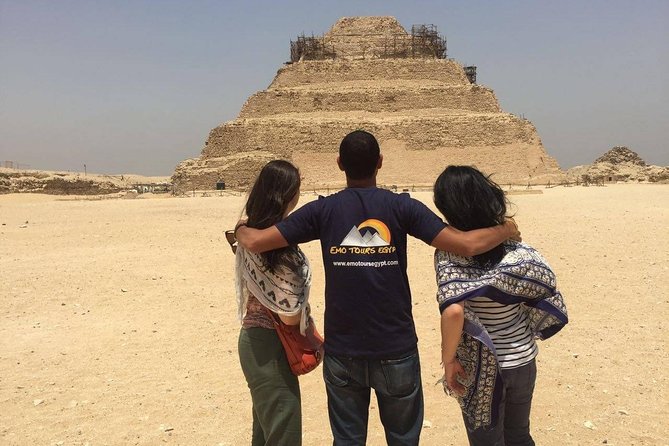
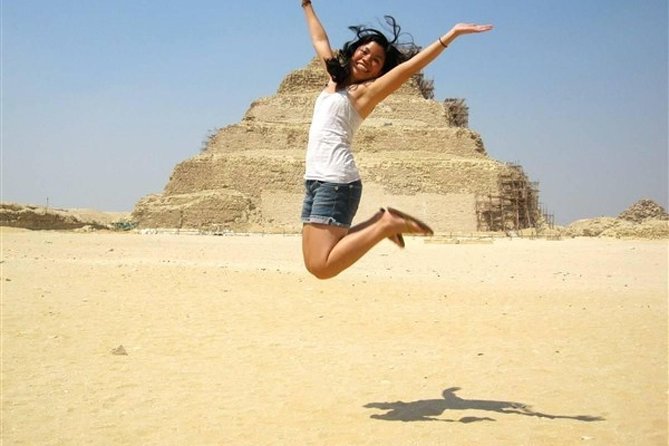
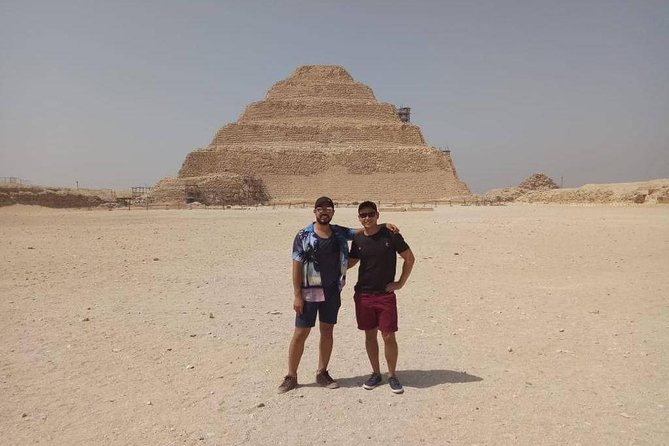
Saqqara is about evolution and early technique. The tour’s first major monument stop is the Step Pyramid of King Zoser. It’s set about 27 km southwest of Cairo, and the tour frames it as a key part of the pyramid evolution, moving from simpler mastaba forms to the recognizable pyramid shape.
You’ll be there for about 30 minutes, so think of it as a focused visit. You want to look at the structure from different angles, then take a close look at details before you move on. This is one of those places where photos can tempt you to linger too long, so decide in advance what you want, wide shots or close-up stones and inscriptions.
Then the tour continues deeper into Saqqara with smaller, more specific pyramid sites. The program lists the Pyramid of Teti and the Pyramid of Unas, each with about 30 minutes on the clock, and it also includes the Mastaba of Ti. These are not the biggest pyramids on the map, but they can be the most interesting because they connect you to burial practices and inscriptions that shaped later Egyptian funerary traditions.
A key practical point: entry at Teti, Unas, and the Mastaba of Ti is listed as not included. That means you should expect extra cost on arrival for those specific areas.
Necropolis stops south of the city

Pyramid of Teti and Pyramid of Unas: why these small stops matter
The Pyramid of Teti is presented as the final resting place for Pharaoh Teti, tied to Old Kingdom architecture. It’s the kind of site that can feel less dramatic from far away, but more meaningful once you are inside the layout.
The Pyramid of Unas is where the story takes a sharp turn. The description highlights that it has smooth sides and that it is especially significant because of the discovery of Pyramid Texts carved into subterranean chambers. These are spells for the king’s afterlife, and the program notes that Unas’s pyramid is where this tradition shows up for the first time in this context, continuing through later royal funerary practices.
In other words, even though you only get about 30 minutes, these stops can be a big payoff if your guide explains what you are looking at. And from the reviews, that is where the best guides really shine. People describe Mohammed as able to explain a lot in a digestible way, even reading out hieroglyphic script and tying it to what it means.
If your goal is pure architecture, these pyramids still deliver. If your goal is understanding the ancient belief system behind the architecture, these stops are where you’ll get the most meaning per minute.
Mastaba of Ti: everyday life scenes in tomb form
The tour also includes the Mastaba of Ti, listed as one of the most important archaeological sites of Saqqara. This mastaba is notable for having two serdabs and wall scenes that show everyday life.
The tour information also mentions that it was discovered by Auguste Mariette. That name matters because it connects the site to Egyptology’s long tradition of excavation and documentation, not just to a modern tourist route.
Time here is again around 30 minutes, and entrance is not included. So treat this like an add-on that gives variety. After pyramids and corridors, scenes of daily routines can be a refreshing switch, and that’s a nice contrast in a packed itinerary.
Dahshur’s Bent and Red Pyramids: the evolution you can see
After Saqqara, you head toward Dahshur. The tour lists the location as a royal necropolis on the west bank of the Nile, about 40 km south of Cairo, known for several pyramids, including the Bent and Red Pyramids.
This is where you see pyramid history less like a textbook and more like physical evidence. The tour frames Dahshur as containing two of the oldest, largest, and best-preserved pyramids in Egypt, built around 2613 to 2589 BCE. That date range is huge, and it gives you a sense that you are looking at a foundational stage of Egyptian royal monument building.
You get about an hour here, and admission for the Dahshur stop is listed as free. Still, for photography and viewing, time can fly. If you want the full visual understanding, stand back for the overall shape first, then walk in for details, then go back to wider views again. You start noticing how the design choices create the feel of the structure.
From a pure experience standpoint, many people like this day specifically because it offers a different perspective than Giza. It is still pyramid country, but the mood changes. Saqqara feels closer and layered, while Dahshur feels older, more spread out, and more open to the sky.
Memphis: Ramses II statue and the Alabaster Sphinx
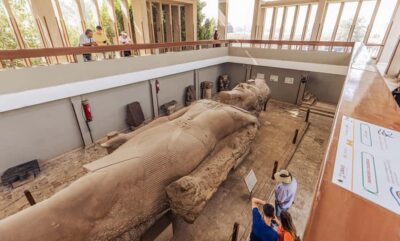
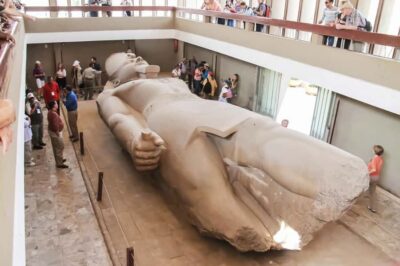
The final cultural stop is Memphis, described as the ancient capital of Egypt dating back to 3100 B.C. The tour highlights two major sights: the colossal statue of Ramses II and the great Alabaster Sphinx.
This part is great if you want the day to close on something visually bold. You have pyramids on pyramids earlier, then Memphis shifts you into massive stone sculpture and the monumental language of Egypt’s power centers.
The Memphis time is listed as about an hour, with admission marked as free for the stop. That’s a good amount of time because it lets you get photos, then slow down just enough to absorb what makes Memphis feel like a capital rather than a tomb site.
Lunch, bottled water, and the built-in shopping stops
The tour includes lunch at a local restaurant, and the typical dish mentioned is koshari. Several reviews describe the food as good, which matters because koshari is filling and it keeps you from turning cranky halfway through pyramids.
You also get bottled water. With Egypt heat and long stone walks, this is not a luxury. It’s a practical detail that keeps the day from turning into a dehydration problem.
Now for the tradeoff part. The tour information spells out extra time blocks, about 20-minute stops at locations connected to perfumes and cotton, papyrus making, and handmade carpets. Specifically, these are Paradise Perfumes, Flower Cotton, Key of Life Papyrus, and Handmade Carpets, plus government souvenir stops for higher quality goods.
You do not have to buy anything. But you should know these stops are part of the rhythm. If you are shopping-curious, they can be fun and a bit cultural. If your main goal is archaeology only, plan to treat these as quick breaks, not the day’s main event.
One more practical note from reviews: some guides spend time reading explanations from a phone or focusing on shop visits, and English can vary. If language clarity and deep on-site explanations matter a lot to you, ask your booking contact what to expect and make sure you communicate what you want from the guide.
What to look for in a great Egyptologist guide
This tour can run on two engines: the route and the guide. The best experiences in the reviews share a few patterns.
First, guides like Mohammed and Jassy are described as energetic and able to explain Egypt in a way that is organized and digestible. That matters when you have multiple sites close together, because you can otherwise end up with dates and names floating around without structure.
Second, time at sites is where you feel the difference. One review praised the ability to spend as much time as wanted at each site, which is exactly how you avoid the feeling of being rushed for photos only.
Third, guide style can include hands-on explanation. One review mentioned reading hieroglyphics and explaining what they meant. Even if you do not go deep on symbols, it makes the carvings feel less like decoration and more like a message.
Your move: if your guide is moving quickly, ask simple follow-up questions. You’ll get more out of the pyramids if you steer the conversation toward what you actually want to understand.
Price and value: is $40 a smart deal here?
At $40 per person, this tour sits in a budget-friendly range for a private, hotel pickup, A/C vehicle day trip that includes a guide and lunch. The value depends on your priorities.
If you want a private day with comfort, this is strong value. Private transport in Cairo is not cheap if you hire it separately, and lunch plus bottled water help keep the all-in cost reasonable.
But there are two value reducers to factor in. Entry is listed as free for some stops, but not included for Teti, Unas, and the Mastaba of Ti. Also, the built-in shopping stops can take time. If you end up buying nothing and still feel rushed, you might feel less impressed.
My take: this is a good buy if you care about seeing pyramid evolution across Saqqara and Dahshur and you enjoy having an Egyptologist guide connect the dots. If you only want the biggest pyramids, or you dislike shop interruptions, you should consider whether this schedule matches your style.
Should you book this Dahshur, Memphis, and Saqqara day tour?
Book it if you want a pyramid day that goes beyond the usual big names and shows how Egyptian royal burial monuments evolved. The combination of Saqqara Step Pyramid, the smaller but meaningful Teti and Unas stops, Dahshur Bent and Red Pyramids, and then Memphis with Ramses II and the Alabaster Sphinx makes for a day that feels varied without being scattered.
Skip it or choose another option if you are highly sensitive to shop stops and you want every minute to be spent strictly on monuments. Also, be ready for extra entry fees at parts of Saqqara, since those admissions are listed as not included.
If you do book, do three things: wear comfortable shoes, bring a little cash for any extra admissions, and communicate what matters most to you, explanations versus photos versus pace. When the guide is doing their job well, this day can be one of the best ways to understand how Egypt’s pyramid story unfolds outside Giza.
FAQ
What does the $40 per person price include?
The tour includes all transfers by private A/C vehicle, hotel pickup and drop-off, a private tour with a guide, lunch (koshari), and bottled water.
How long is the tour?
The duration is listed as approximately 5 hours.
Is this tour private?
Yes. It is a private tour, and only your group will participate.
Are hotel pickup and drop-off included?
Yes. Pickup is offered from your hotel in Cairo or Giza, and you are transferred back to your hotel at the end.
Is lunch included, and what is it?
Lunch is included at a local restaurant, and the included meal mentioned is koshari.
Are entry fees included for all pyramids and monuments?
No. Entry fees are described as including basic area only. The Step Pyramid area in Saqqara is listed as admission ticket free, while the Pyramid of Teti, Pyramid of Unas, and Mastaba of Ti are listed as admission ticket not included.
What is the cancellation policy?
Free cancellation is offered. You can cancel up to 24 hours in advance of the experience start time for a full refund.
South to Saqqara and Dahshur

Giza, A Few More Ways In


More of Cairo from our review pile
- Cairo Layover Tour to Giza Pyramids Egyptian Museum and Khan Khalili Bazaar
★ 5.0 · 25 reviews - Private Luxor Day tour from Cairo by Flight
★ 5.0 · 25 reviews - Private full day tour to Giza Pyramids, Sphinx, Sakkara and Dahshour with guided
★ 5.0 · 25 reviews - Nile Dinner Cruise in Cairo With Belly Dancing and Transfer
★ 5.0 · 25 reviews - Private Giza Pyramids,Sphinx,camel,lunch, 2 tombs,Great Pyramid
★ 5.0 · 25 reviews - All inclusive Giza Pyramids ,Sphinx ,Lunch ,Camel&Inside pyramid
★ 5.0 · 25 reviews
Giza Pyramids & Sphinx Tours, compared.
 ★ 4.9Pyramids & Great Sphinx Private Tour with Camel RideFrom $486,335 reviews
 ★ 5.0Tour to Giza Pyramids and The Egyptian MuseumFrom $1556,016 reviews
 ★ 4.7Pyramids of Giza, Sphinx, Saqqara & Memphis TourFrom $903,110 reviews
 ★ 4.6Half-Day Tour to Pyramids of Giza and the SphinxFrom $502,891 reviews
 ★ 4.6Pyramids, Sakkara & Memphis Tour with LunchFrom $602,493 reviews
 ★ 5.0Private ViP all-inclusive Giza Pyramids,Sphinx,Inside PyramidFrom $142,448 reviews
 ★ 4.7Grand Egyptian Museum, Pyramids, Sphinx Tour & LunchFrom $892,282 reviews
 ★ 4.7Cairo Pyramids, Sphinx & Egyptian Museum Day TripFrom $932,271 reviews
The lists this one sits on