
REVIEW · GIZA PYRAMIDS & SPHINX TOURS
Custom Tour to Giza Pyramids and Desert ATV
Eight in the morning beats Cairo chaos. This private Giza Pyramids and desert ATV tour is built for people who want less hassle, with door-to-door pickup and a guided route that helps you get moving right past the crowd of touts. I especially like the way the guide setup can feel personal, and I’ve heard first-hand that guides like Mohamed, with assistant Mahmoud, keep things organized from the first moment you meet them. One thing to consider: the most famous add-ons, like going inside a pyramid or doing a camel ride, are not included and cost extra.
The second big win is value that actually adds up. Entrance fees are included, so you do not need to scramble for money at the gate, and you can focus on the monuments instead. Add in a climate-controlled private vehicle and the fact the whole experience is about a half day, and you get a smoother day in Cairo, especially when the sun ramps up.
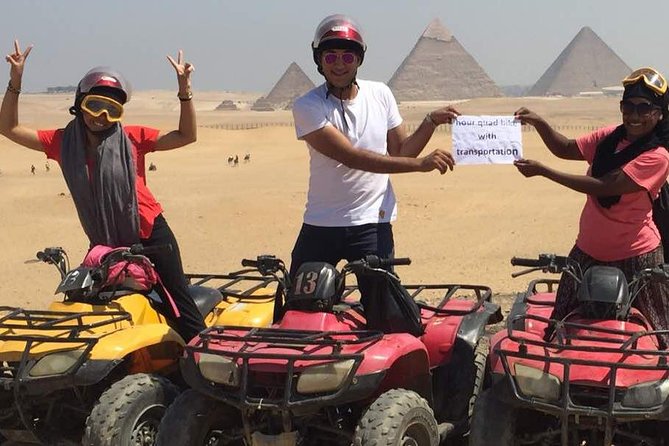
For the desert portion, you trade waiting in lines for sand time. The itinerary includes an ATV hour with sweeping views over the Sahara dunes as you steer across the landscape. The main drawback is simple: you’ll spend a lot of the day outdoors, so plan for sun and dust, and understand that your comfort will depend on how you handle heat and outdoor conditions.
In This Review
- Key Things to Know Before You Go
- Private Pickup That Gets You Past the Crowd
- How The Giza Tour Moves, Stop by Stop
- Stop 1: Pyramids of Giza Starting Around 8:00 am
- Stop 2: Giza Plateau Orientation Time
- Stop 3: Great Pyramid of Cheops (Khufu)
- Stop 4: Khafre’s Pyramid Complex
- Stop 5: Menkaure Pyramid Complex
- Stop 6: Great Sphinx
- ATV Hour and Desert Views: What You’re Really Signing Up For
- Price and Value: Why $60 Can Actually Make Sense
- The Comfort and Pace You Should Expect
- Who This Tour Is Best For
- Should You Book This Giza Pyramids and ATV Tour?
Key Things to Know Before You Go
- Hotel pickup and drop-off in Cairo or Giza: you start and end at your place, not a random meeting point
- Included entry fees: fewer surprises once you reach the Giza Plateau
- A/C private transportation: easier comfort while traveling between stops
- Stop-by-stop guide route at the pyramids and Sphinx: you get context without wasting time guessing
- An ATV hour in the desert: the adrenaline is part of the route, not an afterthought
- Extras like inside-pyramid access cost extra: plan your budget if you want the add-ons
Ways onto the Giza plateau, compared
- Cairo: Pyramids & Great Sphinx Private Tour with Camel Ride★ 4.9 · 6,335 reviews
- Tour to Giza Pyramids and The Egyptian Museum★ 5.0 · 6,016 reviews
- VIP All inclusive Best of the best Giza Pyramids,Sakkara,Memphis★ 5.0 · 3,164 reviews
- From Cairo: Pyramids of Giza, Sphinx, Saqqara & Memphis Tour★ 4.7 · 3,110 reviews
Private Pickup That Gets You Past the Crowd
Cairo traffic can turn a good plan into a stressful one fast. That is why I like this tour’s core idea: you get pickup from your hotel in Cairo or Giza, then you’re taken to the Giza Plateau in a private, climate-controlled vehicle. It’s a small detail, but it changes the whole day. You spend less time negotiating and more time actually seeing.
The tour is designed to be private for your group only, which matters at busy sites. At Giza, crowds and attention from touts can feel constant. A guided, direct route does not remove everything, but it usually helps you keep your bearings and move with purpose.
Your ride is also part of the comfort equation. The vehicle is described as a private A/C latest model, and the day is timed to start around 8:00 am. That early start helps with both heat and the general chaos that comes later.
If you’re the type who wants a simple plan, this is one of those tours that feels built for that. You do not have to decide where to go first, or how to manage transportation between the key sights. The schedule takes you through the main pyramid structures, then transitions to the desert activity.
How The Giza Tour Moves, Stop by Stop
This experience is organized into clear segments, each with a practical purpose. You’ll visit the Pyramids of Giza complex, then move across the plateau to the major structures, and finally head into the desert for your ATV time. Even if you only have a half day, you’ll cover the “greatest hits” without turning it into a sprint.
Here’s what each stop is doing for your understanding of the site, and what you should watch for.
Stop 1: Pyramids of Giza Starting Around 8:00 am
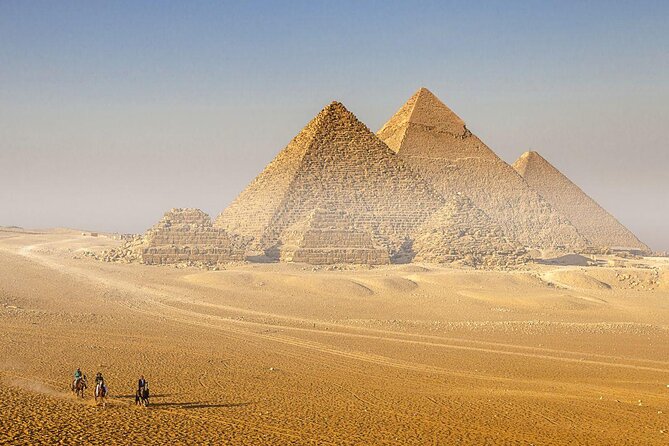
The day begins with pickup and transfer to the Giza Pyramids, then you start with the big three: the Great Pyramids of Khufu (Cheops), Khafre (Chephren), and Menkaure (Mykerinos). This is the heart of the area, so your guide’s job here is to help you see what you might otherwise miss, like how the complexes relate to each other.
This stop is also where you’ll likely be told about optional add-ons. The tour notes opportunities to visit the pyramids from inside, or take a camel ride around the pyramids. Both are described as extra charge. If inside access is on your bucket list, plan your budget ahead of time so it doesn’t turn into a last-minute decision under pressure.
You’ll typically get around two hours at the start segment, with admission ticket details handled by the tour. That matters because Giza is one of those places where every extra stop can eat time and energy.
Stop 2: Giza Plateau Orientation Time
Next comes the Giza Plateau stop, which is essentially your orientation zone. The plateau is the site of the Fourth Dynasty Giza Necropolis and includes more than just the pyramids themselves, like cemeteries, a workers’ village, and an industrial complex.
Even if those additional features are not the center of your photos, this stop helps you understand what you’re standing on. It’s easy to see the pyramids as separate monuments, but they belong to a larger plan.
You get about 30 minutes here, which is short enough to keep the pace, but long enough for a guide to explain the bigger picture without turning it into a lecture.

Stop 3: Great Pyramid of Cheops (Khufu)
At the Great Pyramid of Khufu, you spend about 30 minutes. This stop is where context really helps. The tour text includes a fascinating detail about Khufu, including how inscriptions in his necropolis at Giza and later documents shape what we know.
You’ll also hear about how some reliefs and statues were discovered in fragments, and how a small ivory figurine linked to the king was found later in a temple ruin at Abydos. You don’t need to memorize these details, but you’ll feel the difference between seeing a pyramid as a single shape versus seeing it as part of a human story and a political era.
Practical tip: focus on the structure in front of you, then let the guide’s story connect it. Otherwise, you might lose the visual to the info, or lose the info to the visual.
Stop 4: Khafre’s Pyramid Complex
Khafre’s pyramid complex is more than a pyramid sitting alone. It includes pieces that your guide will help you notice, like the valley temple, Sphinx temple, causeway, and mortuary temple, all connected to the king’s pyramid.
You’ll get about 30 minutes here, so the goal is to walk key parts and understand the layout quickly. If you care about why these sites look the way they do, this is a good stop. You start seeing how the monuments form a connected system rather than a single “thing to stare at.”
Also worth knowing: the tour highlights statues found in a well in the floor of the valley temple during excavation work. It’s a reminder that so much of what we learn comes from what’s been uncovered, not just what’s still standing.
Stop 5: Menkaure Pyramid Complex
Menkaure’s complex follows in a similar format, with about 30 minutes. You’ll see the valley temple, causeway, mortuary temple, and the king’s pyramid. The tour also notes that during the Fifth Dynasty, a smaller ante-temple was added to the valley temple.
If you’re wondering why one complex might feel slightly different from another, this is where you start noticing those differences. These are not just identical pyramid boxes. The details reflect changes over time and the choices of rulers and builders.
This stop is great for people who love comparing and contrasting, because the guide can point out the same “types” of components across the complexes.
Stop 6: Great Sphinx
The Great Sphinx is one of those moments where you instantly understand why it’s famous. You’re looking at a monument tied to the reign of king Khafre, and the tour includes a note about later additions to the area during the New Kingdom.
You’ll get about 30 minutes, which is usually enough time for photos and a clear explanation, without dragging you away from the rest of the day. The Sphinx is also the best place to slow down for a moment, because it tends to be where your brain finally catches up with everything you’ve seen so far.
If you’re visiting mainly for big views, this is your pivot point. After this, the day shifts from stone monuments to sand views and motion.
ATV Hour and Desert Views: What You’re Really Signing Up For
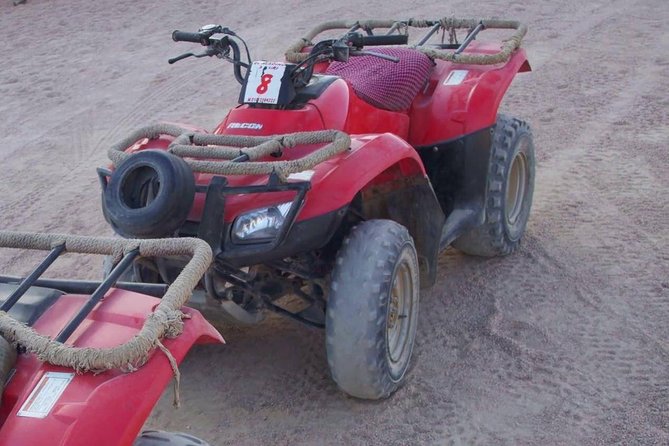
After the last main monument stop, the itinerary transitions into the desert activity, starting the quad bike tour and referencing a buggy option in the description. The included portion is an ATV hour, which is the key promise in what you’re paying for.
This part matters because it changes the vibe from sightseeing to doing. Seeing pyramids is incredible, but it’s still mostly standing and walking. Driving through desert terrain is moving through the landscape, and the contrast makes the day more memorable.
The tour description specifically mentions custom buggies capable of speeds over 50 mph. You should treat that as the operator’s claim, and keep your expectations realistic based on local conditions and safety rules. Still, the underlying point is solid: you’re not just doing a slow scenic loop. You’re getting a real desert experience.
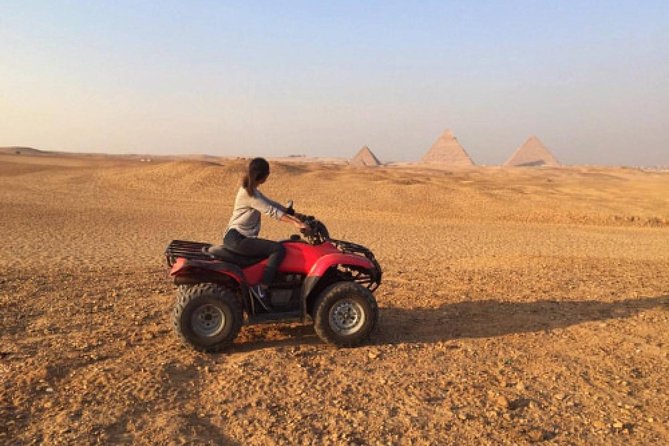
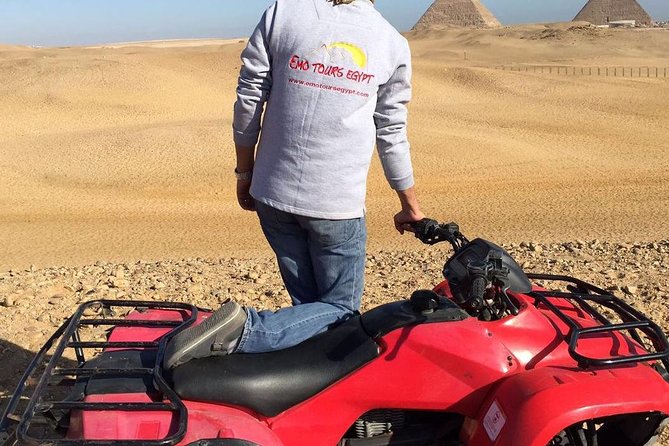
What you’ll likely enjoy most is the view angle. Riding across sand puts the pyramids into the background in a different way than a ground-level monument view. It’s the kind of change that makes photos look more dimensional. Even if you don’t care about photos, the sense of scale helps you understand why this area feels so “otherworldly.”
Practical considerations:
- Wear shoes you’re comfortable getting dusty. Sand and dust happen.
- Sun protection matters. You’re outside during bright hours.
- If you want calmer desert riding, ask your guide about how your group will be set up. The tour is private, so there’s more flexibility than in mass group setups.
Price and Value: Why $60 Can Actually Make Sense
At $60 per person for a private tour lasting about 5 hours, the value depends on what’s included. Here, the “included list” is the story: private A/C transfers, hotel pickup and drop-off, a tour guide, bottle water, entry fees, and an ATV hour.
That package can be a better deal than piecing together multiple parts on your own, mainly because entrance fees and transport are already handled. Giza often has multiple fee points, and it’s easy to lose time and momentum when you’re trying to manage it yourself.
Also, the tour is booked in advance on average about 21 days ahead, which suggests a steady demand for this exact combination: monuments plus desert driving. That’s usually a sign it’s not random.
What costs extra:
- Lunch at local restaurants, with koshari mentioned as an option
- Inside any of the pyramids
- Camel ride opportunities around the pyramids, noted as extra charge
If you’re the kind of person who wants to do everything, you may spend more than $60 once you add inside-pyramid tickets and a camel ride. But if you’re happy with the outdoor highlights plus the desert ride, this price can feel very fair because the biggest expensive parts are already included.
The Comfort and Pace You Should Expect
A lot of people underestimate how tiring Giza can be, even when you only have a few hours. The sun, walking, and the constant attention can drain you. This tour’s pacing helps because it uses a guided route with set stops rather than open-ended wandering.
The climate-controlled vehicle is a big help, not just for comfort but for staying sharp. When you’re not baking in a hot car between stops, you notice details more. And because entrance fees are included, you avoid awkward pauses at the gate.
The tour also includes bottle water, which is practical. It’s the small thing that keeps you from thinking about your thirst every few minutes.
Your day still happens outdoors, though. So come prepared. If you have a hat, sunglasses, and sunscreen, bring them. If you don’t, you might find it easier to buy some basics locally, but that adds time and makes the day less smooth. Best approach is to pack before you arrive.
Who This Tour Is Best For
This is a great fit if you want:
- A private experience so you can move at a comfortable pace
- A guide who helps you understand what you’re looking at, not just where to stand
- A desert activity after the monuments, especially if you’re bored of tours that only involve walking around
- A “start smart” timing, with pickup and an 8:00 am start
It’s also a strong choice if you’re staying in Cairo or Giza and want a simple, door-to-door plan. The pickup and drop-off are designed for exactly that.
If you are traveling with limited time, the half-day format is convenient. If you want a more slow, deep “study every stone” experience, this might feel brief. But for most people, it hits the right balance between the key monuments and the adrenaline desert ride.
Should You Book This Giza Pyramids and ATV Tour?
I’d book it if you want the practical Cairo solution: get picked up, get inside where you need to go, see the main pyramid complex and the Sphinx with a guide, then end with an ATV hour in the desert. The included entrance fees and private A/C transfers make it feel like a true package, not a patchwork day.
Skip it or plan carefully if you’re mainly after inside-pyramid access or a camel ride as a must-have. Those are extra charge in the tour notes. Also, if you’re sensitive to heat or outdoor dust, your enjoyment will depend on how you manage sun protection and comfort.
If you want a memorable Giza day without the usual chaos, this tour is built for that.
Giza, A Few More Ways In


More of Cairo from our review pile
- Cairo Layover Tour to Giza Pyramids Egyptian Museum and Khan Khalili Bazaar
★ 5.0 · 25 reviews - Private Luxor Day tour from Cairo by Flight
★ 5.0 · 25 reviews - Private full day tour to Giza Pyramids, Sphinx, Sakkara and Dahshour with guided
★ 5.0 · 25 reviews - Nile Dinner Cruise in Cairo With Belly Dancing and Transfer
★ 5.0 · 25 reviews - Private Giza Pyramids,Sphinx,camel,lunch, 2 tombs,Great Pyramid
★ 5.0 · 25 reviews - All inclusive Giza Pyramids ,Sphinx ,Lunch ,Camel&Inside pyramid
★ 5.0 · 25 reviews
Giza Pyramids & Sphinx Tours, compared.
 ★ 4.9Pyramids & Great Sphinx Private Tour with Camel RideFrom $486,335 reviews
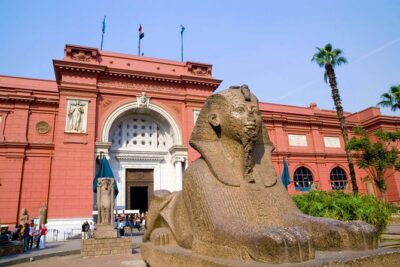 ★ 5.0Tour to Giza Pyramids and The Egyptian MuseumFrom $1556,016 reviews
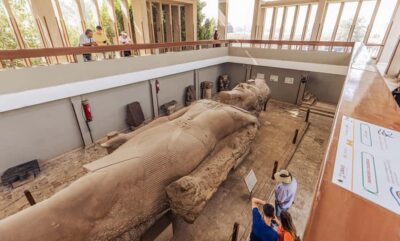 ★ 4.7Pyramids of Giza, Sphinx, Saqqara & Memphis TourFrom $903,110 reviews
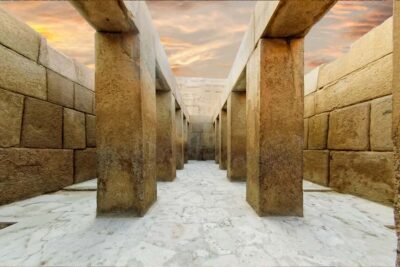 ★ 4.6Half-Day Tour to Pyramids of Giza and the SphinxFrom $502,891 reviews
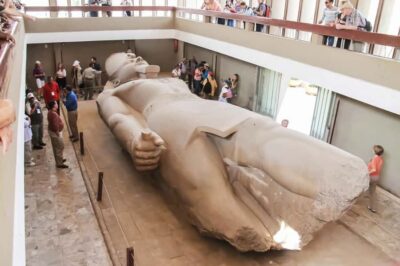 ★ 4.6Pyramids, Sakkara & Memphis Tour with LunchFrom $602,493 reviews
 ★ 5.0Private ViP all-inclusive Giza Pyramids,Sphinx,Inside PyramidFrom $142,448 reviews
 ★ 4.7Grand Egyptian Museum, Pyramids, Sphinx Tour & LunchFrom $892,282 reviews
 ★ 4.7Cairo Pyramids, Sphinx & Egyptian Museum Day TripFrom $932,271 reviews
The lists this one sits on