
REVIEW · KHAN EL-KHALILI & THE CAIRO BAZAARS
Cairo Shopping tour Private Papyrus Essential oils Bazar Cotton
Cartouches, papyrus, and cotton, all in one ride. This private Cairo or Giza shopping tour uses a guide to help you move through the bazaars with less hassle, plus a driver and hotel pickup included. I like that the stops focus on tangible souvenirs you can actually see being made, not just stand-and-browse shopping.
My second favorite part is the variety. You get time for handmade papyrus and an essential oils visit tied to the story of the Seven Sacred Oils found at Sakkara, then you switch gears to Egyptian cotton and a perfume-focused stop. One thing to consider, though, is that this is still a shopping day, and some past customers felt certain shops were less flexible on price and timing, so set your expectations before you start.
If you end up with a guide like Adelle, that name comes up with this operator for a reason. A good guide matters here because you will be asked to decide and buy, while also trying to verify quality and prices on the spot.
In This Review
- Key points worth knowing before you go
- Cairo pickup and timing, so you do not lose your whole day
- What makes this “private shopping with a guide” work (and what can trip you up)
- Mamluk Jewellery and Bazaar: cartouches, silver, and writing your name in hieroglyphics
- Papyrus Institute: from hand-made paper to handmade paintings
- Essential oils and the Seven Sacred Oils story in the Bedouin house
- Cotton at the Three Pyramids Bazaar: a shopping stop you should compare
- Perfume factory stop: how they say ancient Egyptians made scents
- Price and value: why $5 can be tempting, and what to watch for
- Who this tour fits best, and who should skip it
- Should you book the Cairo papyrus, oils, cotton shopping tour?
- FAQ
- How long is the Cairo shopping tour?
- Is hotel pickup and drop-off included?
- Is this a private tour?
- What stops are included during the day?
- Are admission tickets included?
- What is included for meals and drinks?
- Does the guide offer multiple languages?
Key points worth knowing before you go
- Hotel pickup across Cairo and Giza is included, with extra charges for farther areas like New Cairo and the airport zones
- Four shopping stops in about 7 hours, with admission tickets included at each main stop
- Multilingual guide support is offered (English, Spanish, Italian, German, French, Chinese, Japanese, and more)
- Papyrus and essential oils are framed as museum-style learning plus shopping, including the Seven Sacred Oils story
- Cartouches and jewelry options include silver and gold cartouches where you can write your name in hieroglyphics
- Lunch is included as local Egyptian food, listed as koshari or falafel
More bargaining practice in the Khan
- Cairo 8 Hour Private Tour of Pyramids, Egyptian Museum and Bazaar★ 5.0 · 2,931 reviews
- Cairo: Private Pyramids, Museum & Bazaar Tour with Lunch★ 4.6 · 744 reviews
- Cairo Citadel, Old Cairo and Khan El Khalili: Private Tour★ 4.6 · 741 reviews
- Cairo: Local Markets & Khan el Khalili Private Shopping Tour★ 4.6 · 614 reviews
Cairo pickup and timing, so you do not lose your whole day
This is set up as a 7 hour private shopping outing, with options for multiple departure times during the day. That matters in Cairo, because traffic can swing your schedule fast. I like that you get hotel pickup and drop-off, so you are not spending your limited vacation time figuring out transport.
Pickup is included for hotels, hostels, and private houses in Cairo and Giza. The operator notes extra charges for farther zones like New Cairo, 6 October, airport areas, Heliopolis, Nasr City, and the Alexandria Desert Road, so if you are outside central areas, you should confirm the exact pickup cost early.
You also get a mobile ticket, which is the kind of small modern detail that keeps day-of logistics smooth.
What makes this “private shopping with a guide” work (and what can trip you up)
The pitch is simple: you get a private car, a driver, and a guide who will help you buy with less stress. In practice, this can be a big deal when you are shopping in areas where bargaining is normal and product quality can vary. A guide can help you ask the right questions, compare items across shops faster, and avoid turning your day into an exhausting back-and-forth.
The trade-off is that a guided shopping tour still pulls you toward specific stores. In other words, you are not doing free browsing at your pace. If you are the type who hates sales pressure, you will want to slow down, set a budget, and treat each store like a chance to collect information before you decide.
A final note on language: the operator states the guide can provide multiple languages at no extra cost, including English, Spanish, Italian, German, French, Chinese, and Japanese. If you want shopping help without language strain, this is a real value point.
Mamluk Jewellery and Bazaar: cartouches, silver, and writing your name in hieroglyphics
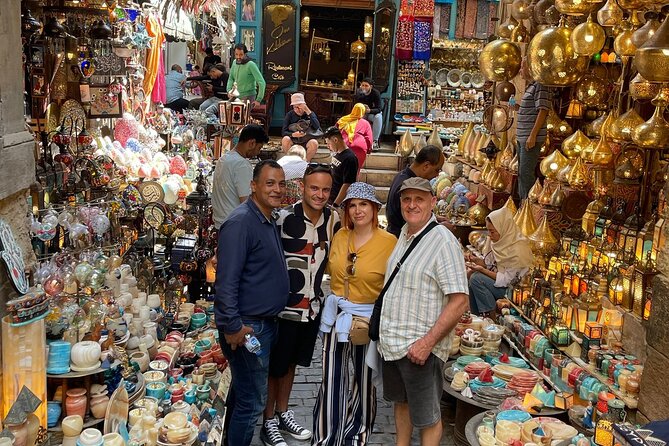
Your first stop is a Mamluk jewelry and bazaar stop, described as government bazaars where you can shop for souvenirs and jewelry without hassles. The tour emphasizes real gold and real jewelry, plus cartouches in silver or gold where you can have your name written in hieroglyphics.
This is where you should be extra methodical. Cartouches sound straightforward, but quality comes down to materials, workmanship, and what exactly you are paying for. I’d go in with two things ready: a clear souvenir target and the patience to ask how the item is made and what the finish actually is.
The upside of starting here is momentum. If you want one signature item like a personalized cartouche, early is better because you can compare later shops to that first price point. The downside is that if you have not set your budget, the first stop can tempt you into buying before you know what else is available.
Also, the tour includes admission ticket time at this stop, and it is listed as about 2 hours, so you will have room to browse. Use that time to compare, not to rush.
Papyrus Institute: from hand-made paper to handmade paintings
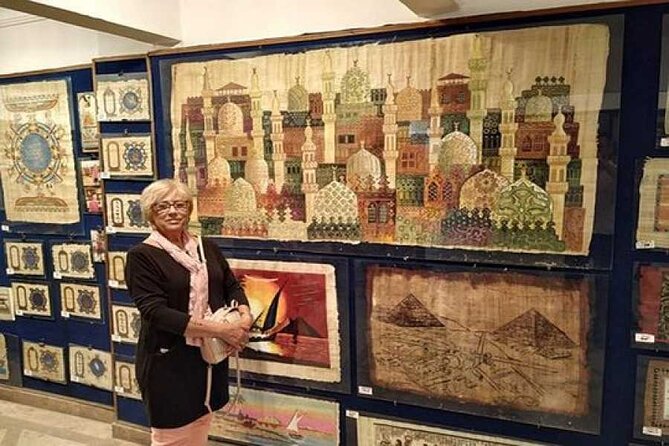
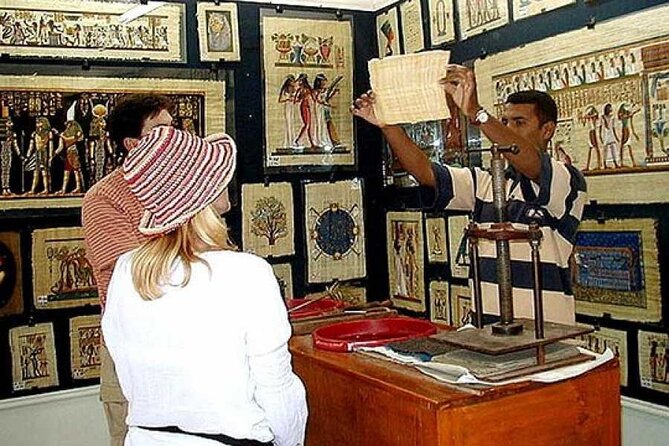
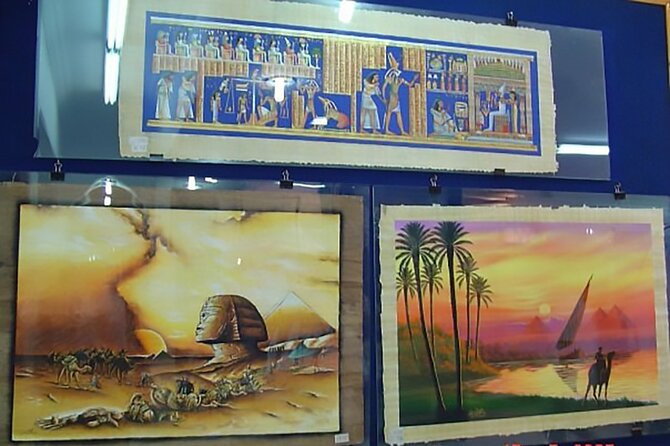
Next, you go to a “real papyrus institute” experience, focused on how paper is made by hand and on buying handmade papyrus items. The day here is not just about taking photos and moving on. You should expect explanations around papyrus production and opportunities to shop for handmade paintings and papyrus pieces with bright colors.
Papyrus shopping can be surprisingly tricky. A lot of souvenirs out there look papyrus-like, but they may not be made from real papyrus or may be produced in ways that lower quality. The tour frames this as a place that shows the process, which is useful because seeing how something is made helps you judge what you are buying.
Another nice touch in this stop is the inclusion of the tour’s sensory element, a visit described around lotus blue lily flower and an opportunity to smell ancient Egyptian essence. That kind of detail is not just theatrical. When you are evaluating perfumes and oils later, your nose helps you choose what you actually like.
Timing here is listed as about 2 hours with an admission ticket included, so you should be able to take your time without feeling yanked along.
Essential oils and the Seven Sacred Oils story in the Bedouin house
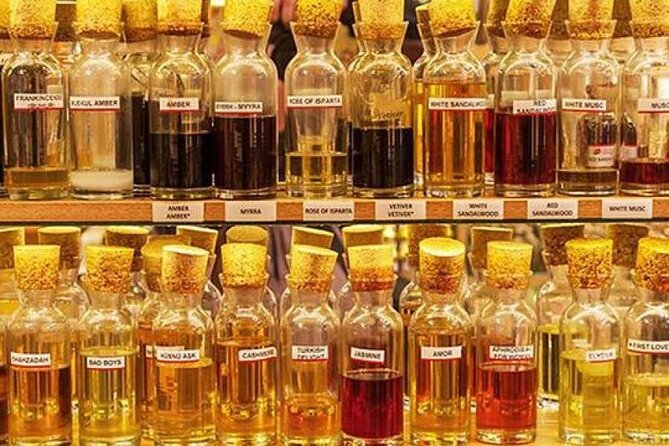
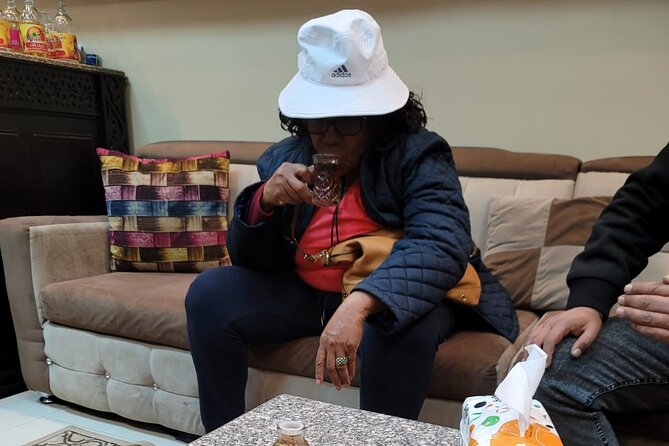
After papyrus, you shift to essential oils at a Bedouin family house. The tour describes pure essential oils and mentions “7 sacred oils” tied to the story of oils found in the Kagemni Tomb at Sakkara, dated to about 2330 BC. That is a big historical claim in the tour framing, but the practical takeaway for you is simpler: you are being asked to shop based on a narrative plus scent and product feel.
Here is how I’d approach it. Treat essential oils like you would any concentrated fragrance product: ask what each oil is, how it is extracted (as far as they explain it), and how long it takes to smell and settle. If you are sensitive to scent, test small amounts first.
In one earlier booking, a customer questioned oil storage conditions, specifically that oils were kept in transparent jars under light. You may not be able to control how any store displays products, but you can still pay attention to packaging, sunlight exposure, and whether you see sealed containers versus open samples.
The tour lists this stop as about 2 hours and includes admission tickets. That length is important because you need time to compare scents and prices without feeling rushed.
Cotton at the Three Pyramids Bazaar: a shopping stop you should compare
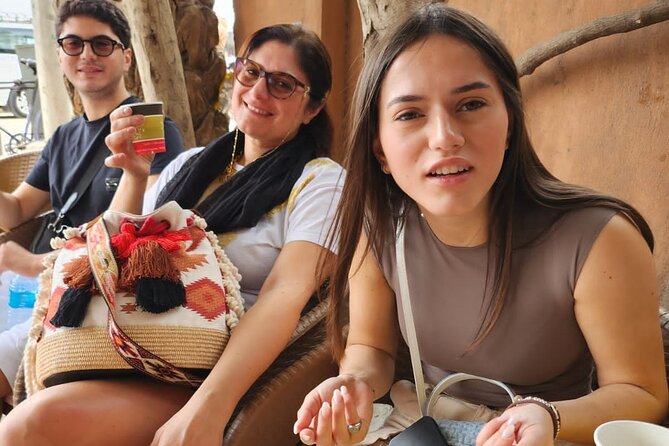
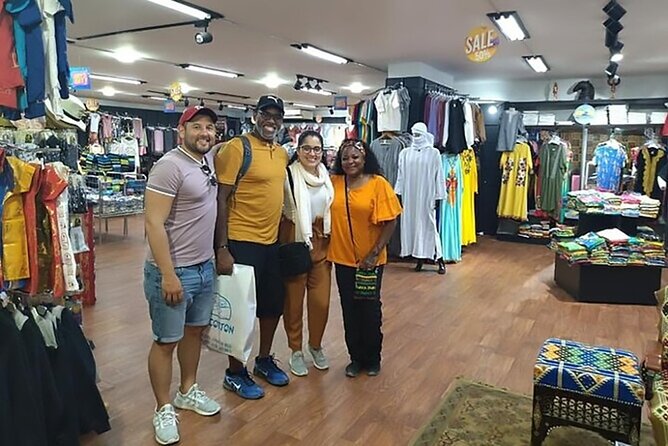
Then comes Egyptian cotton, with the tour pointing out that cotton is a major export for Egypt. You visit an Egyptian cotton store, and the shopping focus is on items like cotton-based souvenirs and cartouches or statues, plus other small products.
Cotton sounds easy, but it is one of those categories where names can be misleading. I’d use this stop to compare what “Egyptian cotton” means in terms of thickness, thread feel, and how the item is labeled. Even if two stores both claim the same thing, the actual fabric can vary.
Also, if you are heading home with textiles, think about how you will pack and carry items. Cotton can be bulky, so decide early whether you want lightweight souvenirs or something heavier you can fit into your luggage.
This segment is listed as about 2 hours, with an admission ticket included.
Perfume factory stop: how they say ancient Egyptians made scents
You finish with a perfume factory stop that again ties essential oils to the idea of how ancient Egyptians made perfumes from flowers. This portion is listed as about 1 hour with admission tickets included.
Perfume shops can be hit or miss if you just want a quick scent. But if you like learning while shopping, this last stop can work well because it is a more focused theme than general souvenirs. Bring an open mind, but keep your budget clear, because perfume can add up fast once you start sampling.
If you decide to buy, I suggest you compare oil-based perfume versus spray perfume if they offer options, and ask for the exact product type. The tour centers on “pure essential oils,” so ask what you are taking home and how it is intended to be used.
Price and value: why $5 can be tempting, and what to watch for
The listed price is $5.00 per person, with a private car, driver, hotel pickup and drop-off, bottled water, tea and coffee, lunch, and admission tickets included for the main stops. On paper, that is standout value, especially with admissions and transport built in.
But here is the reality check: the real cost for most people on this kind of day is what you choose to buy. This is a shopping-focused itinerary, and the stores sell items you may or may not want at the price you are offered. One criticism that shows up with this style of tour is that some shops felt overpriced and less flexible on bargaining, especially when compared with street options near tourist areas.
So I’d treat the $5 as the entry fee for guidance and access, not a guarantee that every souvenir will be the best deal. If you plan to buy only one or two items, you can still come out well. If you plan to buy many things, you should walk in ready to compare.
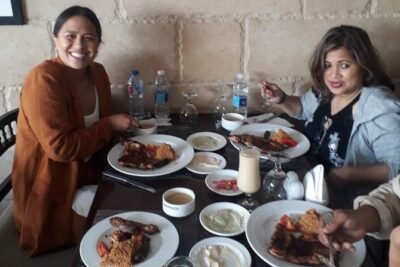
Lunch is included as local Egyptian food, listed as koshari or falafel. That helps because a full day of shopping can get expensive fast if you keep buying snacks. Bottled water is included too, which is not flashy, but it saves you from the Cairo “oops, it is too hot” moment.
Who this tour fits best, and who should skip it
This tour is a strong fit if you:
- Want personalized shopping help for cartouches, papyrus items, essential oils, and cotton products
- Like sensory experiences, not just browsing (smell the oils, see papyrus process)
- Prefer a private setup with hotel pickup rather than juggling taxis and store hopping alone
- Are shopping for a small number of standout souvenirs, not doing everything as impulse buys
It may not fit you as well if you:
- Hate shopping pressure or want fully free time with no store lineup
- Are only looking for one bargain and do not care about the learning parts
- Get frustrated when stores show firm pricing or a fixed routine
If you are a careful shopper, bring patience. You will get the most value when you ask questions, compare, and decide calmly.
Should you book the Cairo papyrus, oils, cotton shopping tour?
If you want a guided shopping day with transport, admissions, lunch, and multilingual help, I think this is worth considering. The variety of stops makes it feel more than a single-store routine, especially with papyrus and essential oils included.
I would book it if you plan to buy at least one meaningful souvenir and you appreciate having a guide to cut through confusion. I would hesitate if you are hunting for the absolute cheapest prices and you strongly prefer street shopping without store selection, because this format can steer you toward specific shops and set the tone for pricing.
Before you confirm, do one simple thing: decide what you want to buy, set a budget, and ask your guide to help you compare within the day. That turns a shopping tour into a smarter purchase, not just a longer day.
FAQ
How long is the Cairo shopping tour?
It runs for about 7 hours total.
Is hotel pickup and drop-off included?
Yes, hotel pickup and drop-off are included for Cairo and Giza locations. Some farther areas (like New Cairo, airport areas, Heliopolis, Nasr City, and 6 October area) have extra pickup charges.
Is this a private tour?
Yes. It is a private tour, and only your group participates.
What stops are included during the day?
The tour includes stops for a Mamluk jewelry and bazaar experience, a papyrus shop and papyrus making area, an Egyptian cotton shop at a bazaar, and a perfume factory stop.
Are admission tickets included?
Admission tickets are included for the main stops listed in the tour.
What is included for meals and drinks?
Coffee and/or tea are included, bottled water is included, and lunch is included as local Egyptian food (koshari or falafel).
Does the guide offer multiple languages?
Yes. The guide support lists English, Spanish, Italian, German, French, Chinese, Japanese, and other languages at no extra charge.
Deeper into Khan el-Khalili


More of Cairo from our review pile
- Cairo Layover Tour to Giza Pyramids Egyptian Museum and Khan Khalili Bazaar
★ 5.0 · 25 reviews - Private Luxor Day tour from Cairo by Flight
★ 5.0 · 25 reviews - Private full day tour to Giza Pyramids, Sphinx, Sakkara and Dahshour with guided
★ 5.0 · 25 reviews - Nile Dinner Cruise in Cairo With Belly Dancing and Transfer
★ 5.0 · 25 reviews - Private Giza Pyramids,Sphinx,camel,lunch, 2 tombs,Great Pyramid
★ 5.0 · 25 reviews - All inclusive Giza Pyramids ,Sphinx ,Lunch ,Camel&Inside pyramid
★ 5.0 · 25 reviews
Khan el-Khalili & the Cairo Bazaars, compared.
 ★ 4.6Private Pyramids, Museum & Bazaar Tour with LunchFrom $70744 reviews
 ★ 4.6Cairo Citadel, Old Cairo and Khan El Khalili: Private TourFrom $85741 reviews
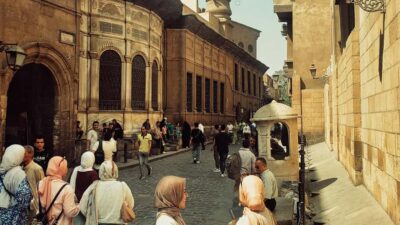 ★ 4.6Local Markets & Khan el Khalili Private Shopping TourFrom $24614 reviews
 ★ 5.0Day Tour to Giza Pyramids Complex, Egyptian Museum & BazaarFrom $136530 reviews
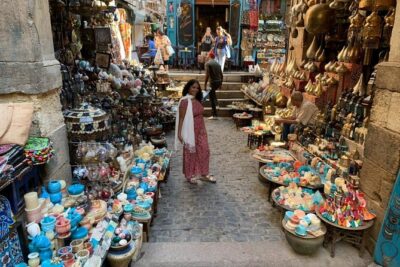 ★ 5.0Cairo VIP Guided Tour to Khan El-Khalili Market with LunchFrom $14431 reviews
 ★ 5.0The Egyptian Museum, the Citadel, Khan Khalil Bazaar & Old CairoFrom $3418 reviews
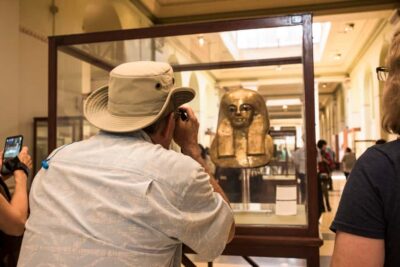 ★ 4.8Egyptian Museum, Pyramids & Bazaar TourFrom $77298 reviews
 ★ 4.5Best of the best Giza Pyramids, Nile Sphinx, Museum,Bazzar,CamelFrom $22253 reviews
The lists this one sits on