
REVIEW · NILE CRUISES BETWEEN LUXOR AND ASWAN
Aswan to Luxor: 4-Day Private Nile Journey
Nile nights make temple visits feel real. This 4-day private Aswan to Luxor journey pairs expert guidance with a three-night Nile cruise, so the sites never feel random. I like the Philae Temple boat ride for its cinematic start, and I like the Valley of the Kings morning because it puts you inside the heart of the pharaoh story. One consideration: the optional Abu Simbel add-on is a long day by road, so you’ll want to choose it only if you truly want that extra effort.
What really improves the trip is how well it runs day to day. The tour caps at 10 people, and you get an Egyptologist guide plus onboard crew who keep meals, transfers, and timing moving. Still, your final cost will depend on add-ons and onboard extras, since drinks are not included and the Tutankhamun tomb entry is an extra ticket on the spot.
In This Review
- Key things to know before you go
- Why this Aswan to Luxor cruise feels efficient
- Day 1 in Aswan, Philae Temple and the Unfinished Obelisk
- Day 2: optional Abu Simbel by car, then Kom Ombo’s sun and crocodile gods
- The Abu Simbel option (if you have the stamina)
- Kom Ombo after lunch, a temple with two halves
- Day 3: Karnak’s Hypostyle Hall and Luxor Temple on the east bank
- Day 4: Valley of the Kings, Hatshepsut, and the Tutankhamun tomb ticket
- Cruise comfort, meals, and the small details that matter
- Price and value: what you get for $840 per person
- Timing, cruise departure days, and pacing your expectations
- Should you book this Aswan to Luxor Nile journey?
- FAQ
- FAQ
- What are the start and end points of the tour?
- How long is the total trip, and how many nights are on the Nile?
- Do you get pickup service?
- Are meals included?
- Is Abu Simbel included in the main plan?
- Are entrance fees included?
- Can I cancel and get a full refund?
Key things to know before you go
- Three-night Nile cruise included, with full-board meals, so you are not budgeting food and logistics every step of the way.
- Small group size (max 10) helps your guide manage the pace during high-demand sites like Karnak and the Valley of the Kings.
- Philae via motorized boat to Agilika gives you a classic Aswan arrival experience right away.
- Optional Abu Simbel can be a great fit if you like monumental set pieces, but it is also a big time commitment.
- Kom Ombo is not just a stop, it is a two-god temple with a distinct Greco-Roman feel.
More boats sailing the same stretch
- 4-Days Nile Cruise From Aswan To Luxor including Abu Simbel and Hot Air Balloon★ 5.0 · 3,142 reviews
- 4-Day 3-Night Nile Cruise from Aswan to Luxor&Abu Simbel+Balloon★ 5.0 · 2,023 reviews
- 4-Day 3-Night Nile Cruise from Aswan to Luxor including Abu Simbel, Air Balloon★ 4.5 · 612 reviews
- From Aswan: 4-Day Nile Cruise from Aswan to Luxor with Guide★ 4.1 · 593 reviews
Why this Aswan to Luxor cruise feels efficient
This is the kind of trip that saves you stress. You are not trying to coordinate trains, separate guide time, and “where do we go next?” panic. Instead, you get a tight plan: major temples by day, cruise time on the Nile by night, and guided context so you know what you are looking at when the carvings start to blur.
You also get two different kinds of Egypt in a single rhythm. Aswan and the upper Nile give you temple drama with desert light and river travel. Luxor and the Thebes necropolis give you scale, symbolism, and the feeling that every wall is trying to out-speak you with stone.
The small-group limit matters more than people think. Big buses can turn history into a rushed photo sprint. Here, the group size helps your guide keep things organized so you can actually slow down and take things in.
Day 1 in Aswan, Philae Temple and the Unfinished Obelisk
Day one starts with a clean handoff at Aswan Airport. A staff member meets you at the exit door holding a sign with your name, which is a small detail, but it reduces the “am I at the right place?” moment after a flight.
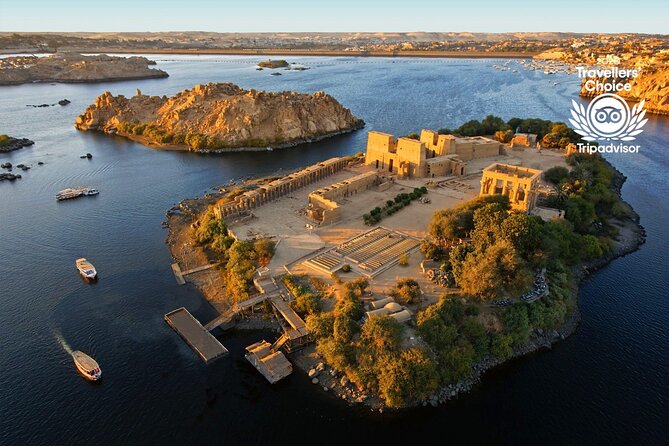
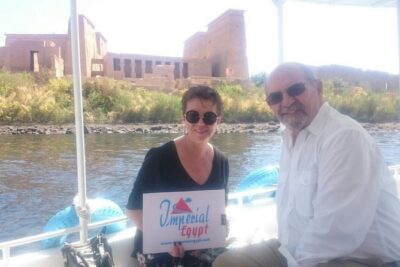
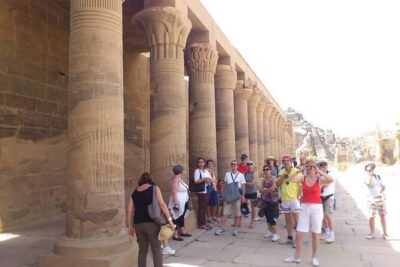
Then comes Philae Temple. You do not just walk in off a street. You ride a motorized boat to Agilika Island and step into a sacred complex dedicated to Isis. The temple’s story is part of what makes it memorable: it reflects a blend of Egyptian, Greek, and Roman influence, which is not what many first-time visitors expect. It is also a lesson in how modern engineering changed ancient sites. When the Aswan High Dam was built, Philae was dismantled and reassembled carefully, so the stone you see today carries both ancient meaning and modern preservation effort.
After the main temple, you head to the granite quarries and the Unfinished Obelisk. This is one of those stops that feels different from the “perfectly complete” attractions. You are seeing a project that stopped midstream, which makes the craftsmanship feel more human. The obelisk here is reported to be about one-third taller than other ancient Egyptian obelisks, and the scale helps you understand how serious stone shaping was in this part of the Nile.
Practical tip: plan for some walking and sun exposure. Even when you move efficiently, temples and quarries mean uneven ground, bright light, and time outdoors. If you are the type who gets tired fast in heat, bring sunglasses and a hat you actually like wearing.
Day 2: optional Abu Simbel by car, then Kom Ombo’s sun and crocodile gods
Day two has two moods, and you choose which one you want most.
The Abu Simbel option (if you have the stamina)
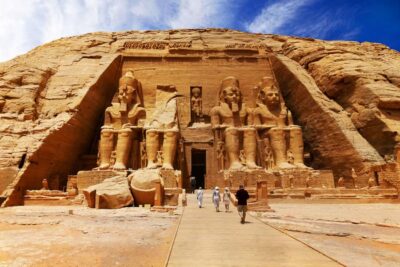
If you opt for it, you go from Aswan to Abu Simbel by car. The drive is about 3.5 hours each way, so this is an all-day commitment even before you count temple time.
Abu Simbel is a dramatic payoff. You see the twin temples of Ramses II and Queen Nefertari. Ramses II’s façade is dominated by four massive statues, each about 70 feet tall. The site is famous not only for the art, but for the engineering rescue story: these temples were dismantled and moved to save them from floodwaters related to the Aswan High Dam.
This is one of the rare places where the setting and the backstory hit at the same time. You are not just looking at a monument, you are also seeing why it had to become portable.
Kom Ombo after lunch, a temple with two halves
Back on the water, your cruise continues toward Kom Ombo. You disembark to visit a Greco-Roman temple dedicated to Haroeris, the sun god, and Sobek, the crocodile god.
Kom Ombo feels like a clever contrast day. Abu Simbel is giant and royal. Kom Ombo is more specific, with a temple designed around two divine roles. You get the sense of how Egyptians organized beliefs in physical space, down to the way a temple is planned.
Practical tip: Kom Ombo is usually easier on your feet than some bigger temple complexes, but the heat still applies. I like timing it so you do your main photos early and leave time to look slowly at inscriptions without rushing.
Day 3: Karnak’s Hypostyle Hall and Luxor Temple on the east bank
Day three transitions from the upper Nile tempo to Luxor’s concentration of monuments. The east bank is where the grand temple complexes sit, and your day focuses on two major hits.
First up is a stop connected with Horus, the falcon-headed sky god. The structure you see here is built by Ptolemy III around 230 BC and is known for being well-preserved and colorful. That color detail matters. When people think of Egypt, they often imagine stone that looks uniformly gray. In places like this, you can still feel the original visual impact of the carvings.
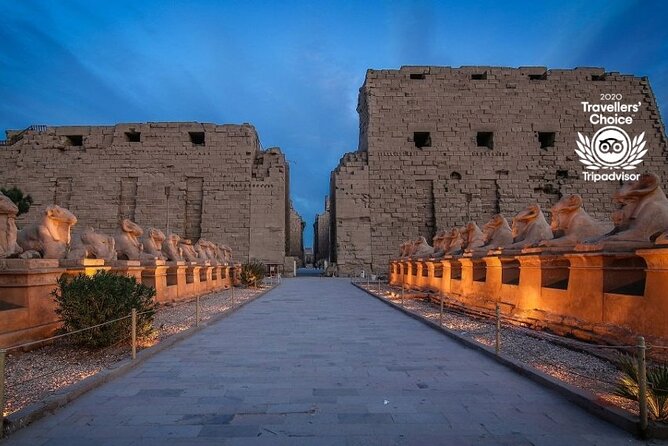
Then you cruise to Luxor. Once you arrive, you shift to the Temple of Karnak. Karnak is where “wow” turns into “how is this possible.” You walk through the Great Hypostyle Hall, surrounded by rows of columns that rise to about 80 feet high. That height does something to your brain. It stops you from looking only at one carving. You end up looking up, then out, then back down at the details, like your eyes need time to recalibrate.
Karnak also helps you understand why Luxor matters. This is a long-term statement made by generations of pharaohs who wanted their names to stay in stone.
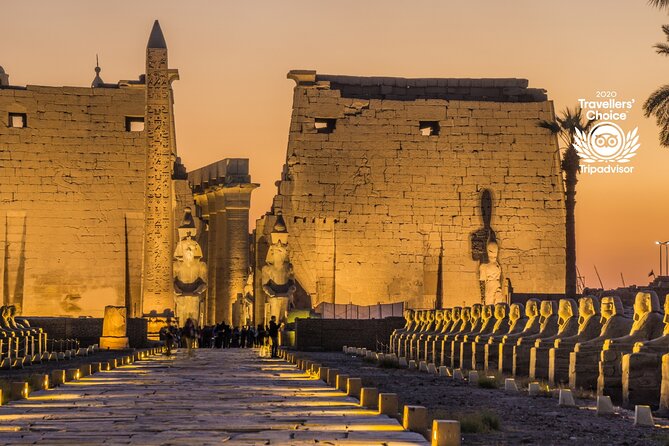
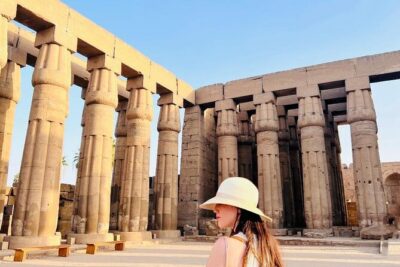
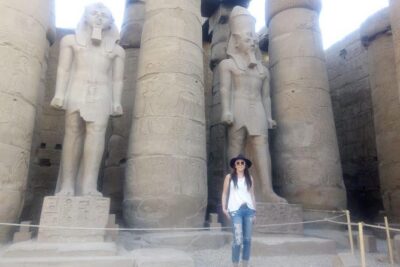
After Karnak, you continue to the Temple of Luxor. Here, you see large statues of Ramses II along the front, plus the courtyard linked to Ramses II and the colonnade connected to Amenhotep III. The effect is different from Karnak. Karnak is overwhelming scale. Luxor Temple is more focused pageantry, with scenes and structure that feel like a guided route through power.
Practical tip: Karnak and Luxor Temple both get crowded. If you want better photos, do the hard-core photo angles early and then shift into “read the story” mode with your guide when the crowds peak. It is more rewarding, and the day feels longer in a good way.
Day 4: Valley of the Kings, Hatshepsut, and the Tutankhamun tomb ticket
Day four is about the west bank, where the Theban necropolis tradition concentrates. This is where Egypt turns from temples built for life into tombs built for eternity.
You start with the Colossi of Memnon. These are huge stone statues associated with a pharaoh, and seeing them first helps you understand why the west bank feels like an open-air monument display.
Next comes the Temple of Hatshepsut. She is described here as Egypt’s first female pharaoh, and the temple is known for being architecturally striking. Even if you have never heard her story before, the temple’s layout and design language help you grasp the political and spiritual authority behind her reign.
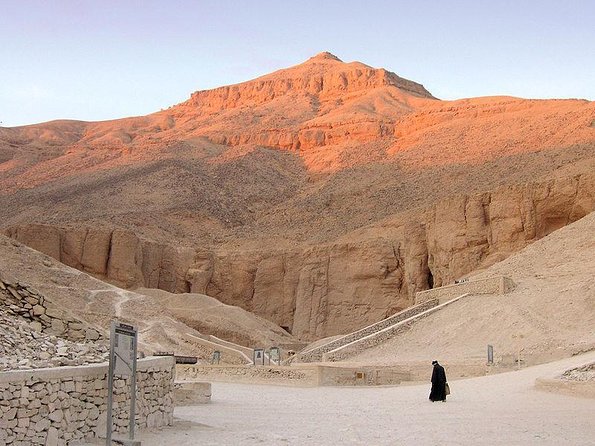
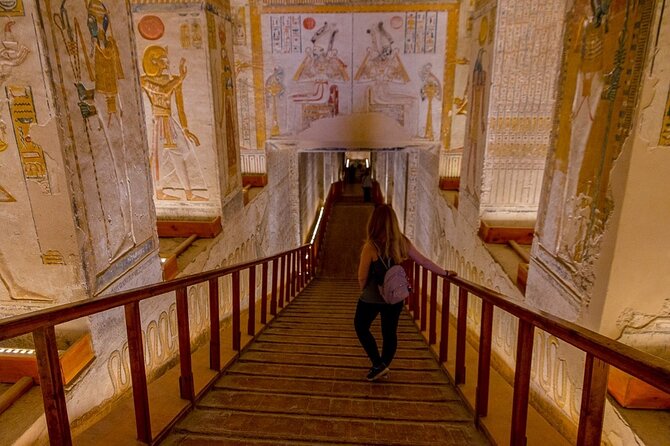
Then you reach the Valley of the Kings, a UNESCO World Heritage Site and the burial ground where tombs were built for pharaohs and nobles over many centuries, including about a 500-year span beginning in the 16th century BC. This is the setting that makes Tutankhamun feel less like a pop-culture name and more like a historical person with a physical resting place.
You can also enter the tomb of Tutankhamun. It is an extra ticket you buy on the spot. That’s important for your planning because it can affect timing and what you can do if the line moves slowly.
Practical tip: go in with an open mind about what you are seeing inside a tomb. The tomb is not the museum fantasy version of Egypt. It is small, focused, and powerful. The best move is to use the guide’s context, then take in the details at your own speed.
At the end of day four, you transfer to Luxor Airport. That means you are not stuck wondering how to get to your next plan.
Cruise comfort, meals, and the small details that matter
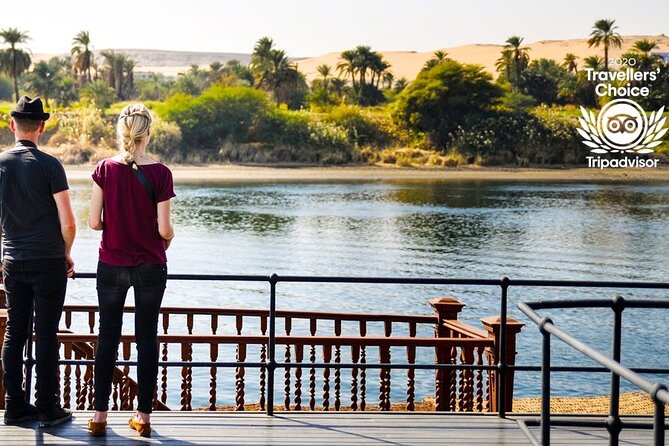
The cruise here is a three-night Nile sailing with onboard accommodation described as a 5-star standard cruise and full-board service. Practically, that means you should not spend your trip tracking lunch breaks or wondering where dinner is. Meals are included across the days, with breakfast, lunch, and dinner provided.
The ship experience is also part of what people remember. The onboard style is described as friendly and attentive, and the service approach aims to keep you comfortable without turning the day into a rigid schedule. Food-wise, you should expect daily buffet-style choices rather than one fixed menu. That matters if you have picky eating habits, dietary preferences you can manage, or simply want flexibility after a long day walking among stones.
Room comfort is often a big variable with cruises, but the key takeaway here is that the day-to-day flow is built around you being able to start tours refreshed and end them with a real place to rest.
Important note on cost creep: drinks on board are not included. If you like bottled water, soft drinks, or alcoholic drinks with dinner, budget for it separately.
Price and value: what you get for $840 per person
At $840 per person, this tour is trying to package the expensive parts of Egypt travel into one bill: expert guided sites, a 3-night cruise, transfers, and entrance fees for the sites listed.
Here is how the value usually works in your favor:
- You pay for a guide presence during major sites, which saves time and boosts your understanding.
- You are not paying for separate hotel nights. The cruise handles accommodation while you travel.
- Transfers are included by modern air-conditioned vehicle, which is a real comfort factor, especially when you do long drives or heat-heavy days.
Here is where you might spend extra:
- Abu Simbel is explicitly optional by car.
- Tutankhamun tomb entry is an extra ticket on the spot.
- Drinks on board are not included.
- Tipping for cruise crew, tour guides, and drivers is not included.
My advice: treat this as two decisions. First, decide if you truly want the Abu Simbel day. Second, decide how you want to handle tomb entry fees and onboard drinks. If you choose carefully, the $840 looks like sensible value for a fast, guided sweep of major Upper Nile to Luxor highlights.
Timing, cruise departure days, and pacing your expectations
The cruise departures run on specific days, including Friday, Monday, or Wednesday. That matters because you cannot assume this exact package sails every day. If your dates are flexible, picking one of the listed departures can make planning smoother.
The tour is also structured in a way that keeps you busy but not chaotic: temples in the morning and midday, cruise segments between, and the heavy West Bank day on day four. That pacing works well if you can handle a steady walking pace and some heat.
Group size is kept small, up to 10 people. With that, you can expect a more organized feel at the sites, with less time spent waiting in a long queue of strangers.
One more practical point: you will get mobile ticketing and meet-and-assist at arrival and departure. That helps reduce last-minute confusion when you are moving through airports and pickup points.
Should you book this Aswan to Luxor Nile journey?
Book it if you want a guided, low-stress route that hits the big monuments without forcing you to build the logistics yourself. This is a strong choice for first-timers who want real context at Philae, Karnak, Luxor Temple, and the Valley of the Kings, and for anyone who likes the idea of pairing temple days with relaxing cruise evenings.
Think twice if you are easily exhausted by long driving days. If you are not sure about Abu Simbel, skip it. You can still see a lot even without that extra car segment, and day four already carries major weight with the west bank and tomb entry.
Also, plan for extras that affect cost. Keep drinks separate, and remember the Tutankhamun tomb entry is an on-the-spot ticket. If you budget for those items upfront, the rest of the experience reads as good value.
FAQ
FAQ
What are the start and end points of the tour?
It starts in Aswan and ends in Luxor, with transfers provided through to Luxor Airport at the end of day four.
How long is the total trip, and how many nights are on the Nile?
The overall experience is about 4 days, including a three-night Nile river cruise.
Do you get pickup service?
Yes, pickup is offered, and the tour includes meet-and-assist service upon arrival and departure.
Are meals included?
Yes. Breakfast, lunch, and dinner are included on the cruise for the listed days.
Is Abu Simbel included in the main plan?
Abu Simbel is described as optional. The tour notes an optional Abu Simbel trip from Aswan by car, and it is not included unless you choose it.
Are entrance fees included?
Entrance fees are listed as included for the sites mentioned in the itinerary. The tomb of Tutankhamun is noted as requiring an extra ticket bought on the spot.
Can I cancel and get a full refund?
Yes. Free cancellation is available up to 24 hours in advance for a full refund.
Sailing Luxor to Aswan
- 4-Days Nile Cruise From Aswan To Luxor including Abu Simbel and Hot Air Balloon
★ 5.0 · 3,142 reviews


More of Aswan from our review pile
- Day Tour to Abu Simbel from Aswan by Bus
★ 4.5 · 25 reviews - 4 Day 3 Night Nile Cruise from Aswan with Abu simbel and Balloon
★ 5.0 · 25 reviews - 4-Days Nile Cruise sails Aswan to Luxor &Abu Simbel. Air Balloon
★ 5.0 · 26 reviews - 4 days 3 Nights Nile Cruise from Aswan to Luxor
★ 5.0 · 26 reviews - 4 Days 3 Nights from Aswan to Luxor Nile cruise+Abu simbel temple
★ 5.0 · 27 reviews - 4-Day 3-Night Nile Cruise from Aswan to Luxor – Luxury Tour
★ 4.5 · 27 reviews
Nile Cruises Between Luxor and Aswan, compared.
 ★ 5.04-Days Nile Cruise From Aswan To Luxor including Abu Simbel and Hot Air BalloonFrom $3493,142 reviews
 ★ 4.54-Day 3-Night Nile Cruise from Aswan to Luxor including Abu Simbel, Air BalloonFrom $329612 reviews
 ★ 4.14-Day Nile Cruise from Aswan to Luxor with GuideFrom $830593 reviews
★ 4.54-Days Nile Cruise From Aswan To Luxor including Abu Simbel and Hot Air BalloonFrom $320509 reviews
★ 4.14-Day Nile Cruise from Aswan to Luxor with GuideFrom $830593 reviews
★ 4.54-Days Nile Cruise From Aswan To Luxor including Abu Simbel and Hot Air BalloonFrom $320509 reviews
 ★ 5.04-Day 3-Night Nile Cruise from Aswan to Luxor – Private TourFrom $504369 reviews
★ 4.54 Days Nile Cruise from Aswan to Luxor including Abu Simbel and Hot Air BalloonFrom $329356 reviews
★ 5.04-Day 3-Night Nile Cruise from Aswan to Luxor – Private TourFrom $504369 reviews
★ 4.54 Days Nile Cruise from Aswan to Luxor including Abu Simbel and Hot Air BalloonFrom $329356 reviews
 ★ 5.04-Day 3-Night Nile Cruise from Aswan to Luxor With Balloon and Abu SimbelFrom $311327 reviews
 ★ 5.04-Days Nile Cruise Aswan&Luxor,Hot Air Balloon&Abu Simbel.Hot dealFrom $524322 reviews
The lists this one sits on