
REVIEW · ABU SIMBEL TEMPLE TRIPS
Aswan, Nubian village & Abu Simbel & Luxor in 03 Days overland
Dawn to temples, three days in southern Egypt. This private overland route links Aswan’s Nubian village life with the boat-to-island wonder of Philae Temple, then heads to Abu Simbel for sunrise views, finishing with both banks of Luxor. I like that the pacing is built around a guided storyline, not just checklists, and I really love the included first-class Aswan to Luxor train ticket that saves you from a long travel day.
There is one trade-off to keep in mind: it is full-throttle. You start early, especially for Abu Simbel (pickup is around 4:00 to 4:15), and entrance fees are not included, so you need to plan extra time and money for tickets on top of the tour price. That said, the service side seems strong, with guides such as Khaled earning repeat praise for clear English, safety, and making the day feel smooth.
In This Review
- Key highlights worth your attention
- Why this 3-day Aswan to Luxor plan feels efficient
- Philae Temple, the island trip to Isis’s world
- Aswan High Dam and Lake Nasser: the modern side of the Nile
- Nubian village time: color, crafts, and real conversation energy
- Abu Simbel at dawn: the long day that earns its keep
- When your guide turns temples into a story
- First-class train from Aswan to Luxor: the smart reset
- Luxor West Bank: Valley of the Kings and Hatshepsut’s curves of power
- Colossi of Memnon: fast, iconic, and a good palate cleanser
- Karnak Temple: the Avenue of Sphinx to the Hypostyle Hall
- Luxor Temple: Ramses II statues, Alexander’s mention, and an obelisk clue
- Price and value: what you pay for, what you still need to budget
- Who this tour suits best
- Should you book this Aswan, Nubian village, Abu Simbel, and Luxor tour?
- FAQ
- What does the tour price include?
- Are entrance fees included?
- Are meals included?
- Is accommodation included?
- How early is the Abu Simbel pickup?
- Is this tour private?
- Is the Temple of Philae visit guided?
- Do you have free time during the day?
- Do you need good weather for the tour?
- Is there free cancellation?
Key highlights worth your attention
- Private, air-conditioned transfers that take the stress out of moving between sites
- Philae Temple by boat with guided context and time to explore on your own
- Abu Simbel at early sunrise light via an escorted convoy and Egyptologist-led touring
- First-class train from Aswan to Luxor included, so day 3 starts with momentum
- Luxor West Bank to East Bank coverage across the big three, Karnak and Luxor Temple included
- Nubian village interaction where guests have found translation help makes conversations easier
Further south to Abu Simbel, other operators
- 4-Days Nile Cruise From Aswan To Luxor including Abu Simbel and Hot Air Balloon★ 5.0 · 3,142 reviews
- From Aswan: Abu Simbel Temple Day Trip with Hotel Pickup★ 4.4 · 2,807 reviews
- 4-Day 3-Night Nile Cruise from Aswan to Luxor&Abu Simbel+Balloon★ 5.0 · 2,023 reviews
- 4-Day 3-Night Nile Cruise from Aswan to Luxor including Abu Simbel, Air Balloon★ 4.5 · 612 reviews
Why this 3-day Aswan to Luxor plan feels efficient

Southern Egypt is not a place where you want to freestyle every step. Distances are long, sites are timed, and Abu Simbel is its own special beast. This tour does the heavy lifting by bundling the key moments of Aswan, Abu Simbel, and Luxor into one connected rhythm, with an Egyptologist to tie it all together.
You also get the best kind of “semi-independent” setup. You are not stuck in a rush with your guide talking nonstop, because you get free time inside several stops. That balance is what makes the itinerary enjoyable instead of exhausting.
Finally, the included train is a smart value move. A first-class seat from Aswan to Luxor means you keep your energy for the monuments, not for logistics.
Philae Temple, the island trip to Isis’s world
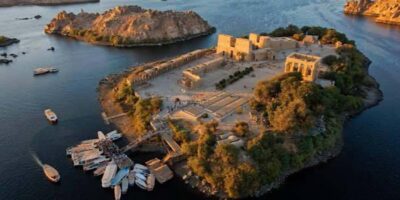
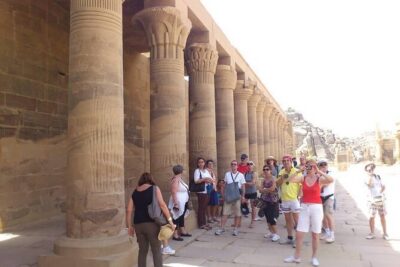
Philae Temple is the kind of stop you can’t really replace. You start with a short motorboat ride to the island, and the first thing you notice is the sense of place. The temple sits in an environment that feels engineered for reverence, and it matters because Philae was dedicated to the goddess Isis.
This site also carries an emotional engineering story. When the High Dam changed Nile waters, the temple had to be carefully moved to its current location, about 500 meters from the original spot. Seeing it in person gives that “this was saved” feeling more weight than any photo can.
How the visit works: you get a private tour that walks you through the temple, then your guide gives you time to explore further on your own. That free time is key. It lets you slow down and look for hieroglyphs and little details without feeling like you are behind schedule.
Main consideration: Philae is outdoors, and you should plan your stamina for a bit of walking in temple courtyards.
Aswan High Dam and Lake Nasser: the modern side of the Nile

Next comes the High Dam, a classic Aswan stop that adds context for why the river’s story changed. The dam took 10 years to build, from 1960 to 1970, and it created Lake Nasser, described here as the second largest artificial lake in the world.
Why it belongs in the same trip as Philae and Abu Simbel: it is the reason those older monuments faced a future underwater. You even cross over to see the Friendship emblem, which is a small, memorable waypoint in a mostly technical stop.
This is not a long stop, so you do not get bored. It is the kind of place where a guide’s narration helps you connect the dots between ancient survival and modern infrastructure.
Nubian village time: color, crafts, and real conversation energy

The Nubian village visit is one of those experiences that changes how you think about a place. Instead of only seeing history as stone, you meet people keeping living traditions alive along the Nile.
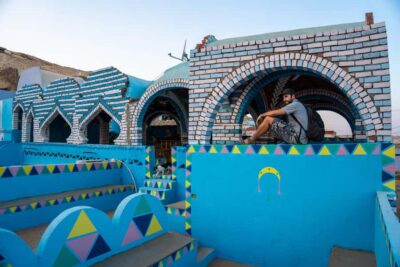
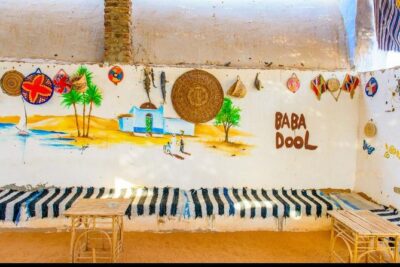
You reach the village by Nile boat, and that is not just transport. It is a moving window on the river, with islands along the way. The village itself is known for colorful painted houses, and the vibe is calm and everyday, not staged.
What you can do there goes beyond walking past souvenir shops. You enter Nubian houses, you can play and take photos with crocodiles, and you browse for Nubian handicrafts and aromatic herbs. One guest especially valued the chance to interview a Nubian family, and they noted helpful translation support from their guide.
Best use of your time: ask questions, even simple ones. People respond well when you show interest in daily life, not just monuments.
Possible drawback: this is still a short visit. If you want a slow, deep cultural immersion day, you might wish it were longer.
Other afternoons in the Nubian villages
Abu Simbel at dawn: the long day that earns its keep
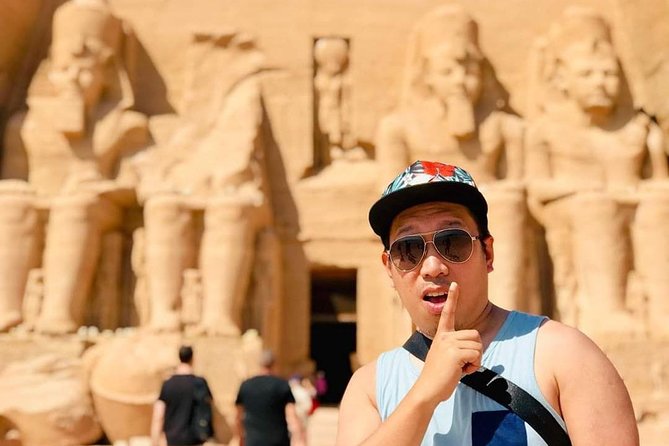
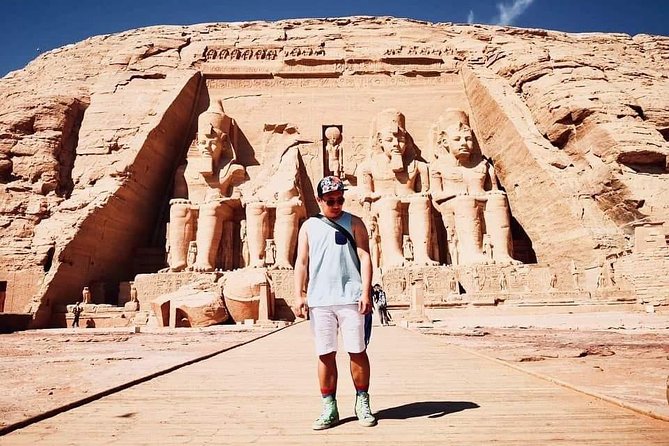
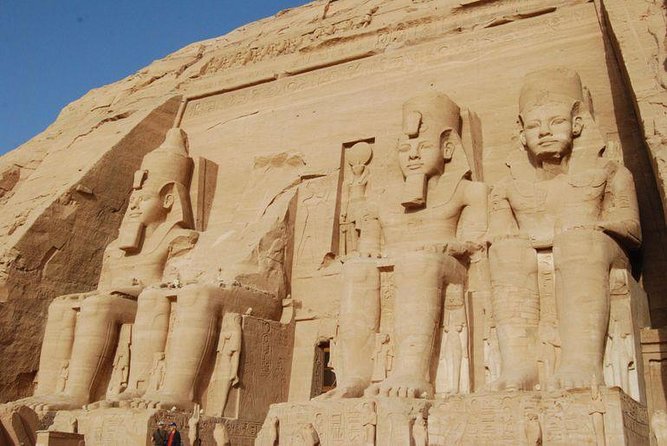
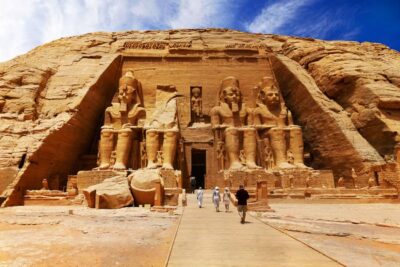
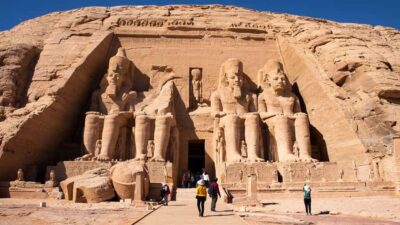
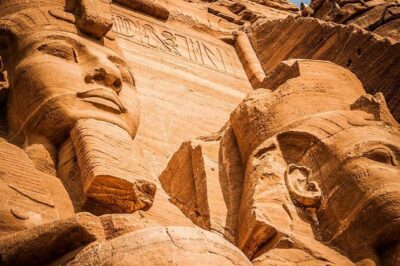
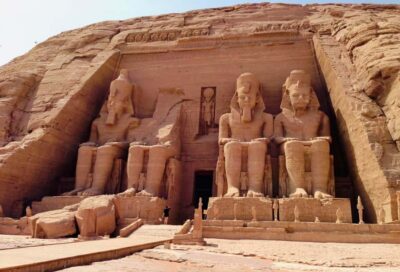
Abu Simbel is the headline. The temples were built by Ramses II, and they are famous for both their scale and their dramatic story. Here, the plan is to leave Aswan early and join an escorted convoy around 05:00, with pickup scheduled about 4:00 to 4:15.
The timing matters. The tour is designed so you see the temples in the light of the rising sun, which makes the stone feel more alive than it would under flat midday light. You then get a guided Egyptologist tour, followed by free time.
The day is long: you drive about three hours each way, with around two hours at the temples, and the whole outing clocks in around 11 hours. This is the trade-off for that early-sun access.
What makes the temples unforgettable: Abu Simbel is not only about Ramses II. It is also about the engineering that saved the complex when Lake Nasser flooded the area. One guest described it as an engineering miracle, involving cutting temples into large pieces, dismantling, lifting, and reassembling. That’s the kind of fact that you feel more strongly when you are standing where the pieces ended up.
When your guide turns temples into a story
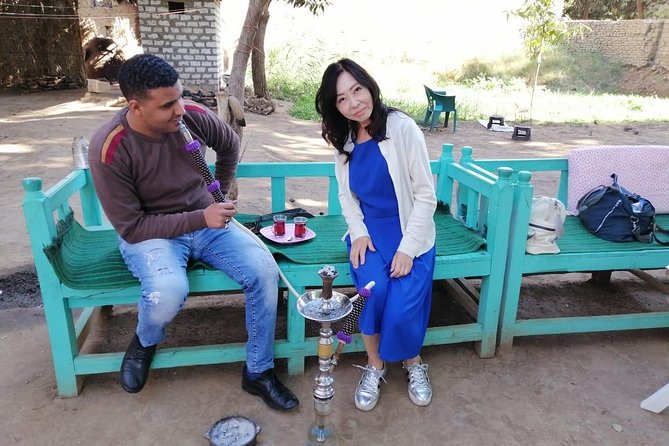
One reason this tour earns high praise is how guides shape the experience. Multiple guests specifically mentioned Khaled for clear English, enthusiasm, and patience. That matters because Abu Simbel and Luxor can otherwise feel like a pile of impressive structures.
A strong guide helps you notice what to look for, and it keeps the day flowing. It also helps with small moments, like taking photos for you without making the stop feel like a forced photo line.
That said, Abu Simbel is the one day where you want to be mentally prepared for complexity. It runs with a convoy and a tight schedule, and you should expect that the “day will feel like an operation,” even when it is well managed.
First-class train from Aswan to Luxor: the smart reset
After two intense days, the included train ticket is a breather you can feel. You get a first-class seat from Aswan to Luxor, which helps you shift from “road and early starts” mode into “monuments day” mode.
This is not just comfort. It is time and energy management. Instead of spending your daylight hours on travel, you arrive ready to start the Luxor East and West Bank circuit without feeling wrecked.
Luxor West Bank: Valley of the Kings and Hatshepsut’s curves of power
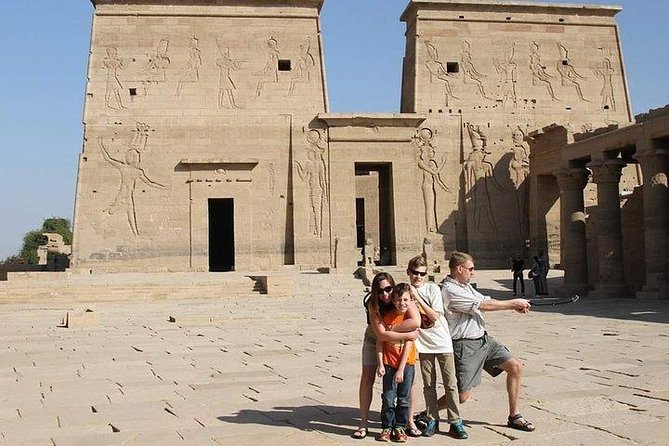
Day 3 starts on the West Bank, where Luxor’s story turns from temples to tombs.
Valley of the Kings: you get a brief stop at the visitors center. Then, a key detail: guides are not permitted inside the tombs. Your guide still helps by telling you what to look for in the elaborately decorated rooms. If you want to visit the tomb of Tutankhamun, there is an additional cost you pay directly.
Tip for your first-time visit: don’t try to see everything. Pick what grabs you, then spend longer looking at how scenes and writing are laid out. The guide’s pointing helps you avoid feeling lost in the dark corridors.
Temple of Hatshepsut: this stop is one of the strongest “wow and meaning” combinations in Luxor. You learn the story of Queen Hatshepsut, including the fact that she posed as a male to gain the throne. The temple itself feels striking, with big courtyards and intricate hieroglyphic decoration. You also get free time to explore at your leisure.
Colossi of Memnon: fast, iconic, and a good palate cleanser
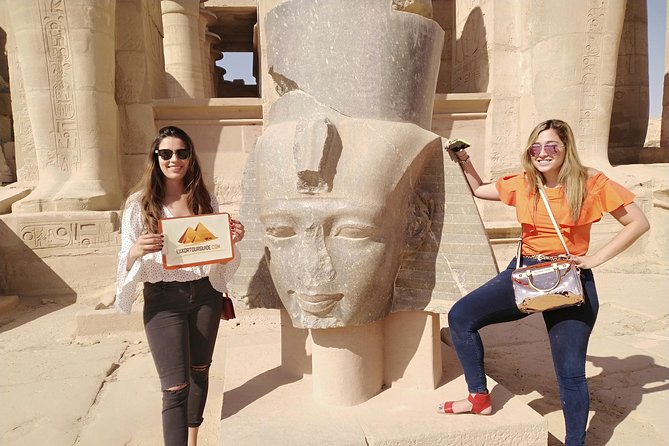
The Colossi of Memnon are quick, and that is part of the charm. You see the two giant statues marking the funerary temple of Amenhotep III. As your schedule moves on, it is a short visual hit that helps you transition without downtime.
Since this stop is only about 15 minutes, treat it like a camera moment and a stretching break. Then you’re ready for Karnak, which is where Luxor really stretches time.
Karnak Temple: the Avenue of Sphinx to the Hypostyle Hall
Karnak is big, and that size can be intimidating if you do not have a guide. The tour starts with the Avenue of Sphinx, and your guide explains the massive facade construction as you enter.
One of the best parts here is the way the complex is presented as layers. You see how different pharaohs added their legacy over time, and the oldest ruins here date back over 3,000 years. The deeper you go, the more sense it makes that this was an ongoing project, not a one-time build.
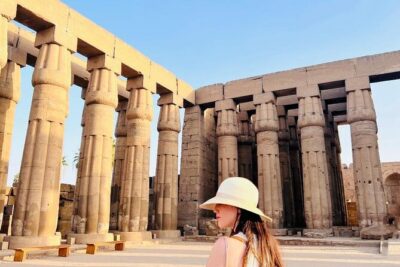
Then comes the Great Court and the Great Hypostyle Hall. You’ll face 134 towering columns, which can feel like an ancient forest of stone. There is also a sacred lake toward the rear where pharaohs and their offerings were purified, adding a spiritual layer to the architecture.
After the guided portion, you get additional free time. That is valuable because you can slow down and retrace the highlights you heard about earlier.
Main consideration: Karnak involves walking through large spaces. Wear shoes you can trust.
Luxor Temple: Ramses II statues, Alexander’s mention, and an obelisk clue
To close the trip, you go to Luxor Temple, still connected historically to Karnak by a two-kilometer Avenue of Sphinx. In this temple, Ramses II’s presence is obvious, including statues that dominate the space.
Luxor Temple has survived Nile floods, foreign invasion, and thousands of years of exposure. That endurance makes it feel more personal than sites that look like they are only “ruins for viewing.”
Your guide helps you interpret the inner walls and columns covered with hieroglyphics. You’ll also learn how Alexander the Great wrote himself into Luxor Temple’s story, and you can see one of the original pair of obelisks, with the other now in Paris at Place de la Concorde.
The day ends with a return to your hotel on the East Bank of Luxor.
Price and value: what you pay for, what you still need to budget
At $300 per person, this tour is built around a few expensive-to-organize pieces: Egyptologist guidance, private air-conditioned vehicle transport, the Abu Simbel convoy day, and the included first-class Aswan to Luxor train.
What is not included is also important. Entrance fees for all sites are extra, and meals and drinks are not covered. Gratuities are recommended, and accommodations are not included because you book your own place by request.
So is it good value? For a short three-day window that includes Abu Simbel plus both Luxor banks, it can be a strong deal, mainly because you avoid the “tangle” of arranging the big legs yourself. But you should set aside a separate budget for tickets, including any upgrade if you want King Tutankhamun’s tomb.
Who this tour suits best
This fits you if:
- You want a structured, safe way to cover Aswan, Abu Simbel, and Luxor without wrestling logistics.
- You prefer guided context, especially for sites like Philae and Karnak where details matter.
- You like a private setup with a car and a guide, not a crowded bus experience.
It might not be your match if:
- You hate early mornings and long days, because Abu Simbel starts around 4:00 to 4:15 pickup.
- You want a fully independent trip with zero extra planning and no guide.
Should you book this Aswan, Nubian village, Abu Simbel, and Luxor tour?
If you want the southern Egypt “big hits” in three days, I’d say yes, with one smart condition: budget for entrance fees and be ready for an early start. The included first-class train is the kind of detail that makes a difference, and the private transfers help you spend energy on the monuments instead of chasing schedules.
Based on the strongest guest feedback, the real win here is the people side. Guides like Khaled are repeatedly praised for clear English, enthusiasm, patience, and making you feel safe. If you want a smooth, story-led route from Aswan to Luxor, this is the kind of trip that can feel effortless while still packing in real discoveries.
FAQ
What does the tour price include?
It includes all service charges and taxes, a first-class train ticket from Aswan to Luxor, hotel pickup and drop-off, transport by air-conditioned vehicle, a qualified Egyptologist guide, and parking fees, fuel surcharge, and driver.
Are entrance fees included?
No. Entrance fees to all sites are not included.
Are meals included?
No. Meals, drinks, and personal expenses are not included.
Is accommodation included?
No. Accommodations are not included, though the option is described as available by request.
How early is the Abu Simbel pickup?
Pickup is scheduled between 4:00 and 4:15, with the escorted convoy departing Aswan around 05:00.
Is this tour private?
Yes. It is private, meaning only your group participates.
Is the Temple of Philae visit guided?
Yes. You get a private tour of Philae Temple with a boat ride to the island, plus time to explore further on your own.
Do you have free time during the day?
Yes. There is free time at multiple stops, including after the guided portion at Abu Simbel, and during visits at Valley of the Kings, Hatshepsut, Karnak, and Luxor Temple.
Do you need good weather for the tour?
Yes. This experience requires good weather. If it is canceled due to poor weather, you will be offered a different date or a full refund.
Is there free cancellation?
Yes, free cancellation is available. You can cancel up to 24 hours in advance for a full refund.
Afternoons in Nubia


Further South: Abu Simbel
- 4-Days Nile Cruise From Aswan To Luxor including Abu Simbel and Hot Air Balloon
★ 5.0 · 3,142 reviews

More of Aswan from our review pile
- Nubian Dinner at Nubian Village
★ 4.5 · 15 reviews - Private 1-Hour Felucca Sailing and Botanical Garden In Aswan
★ 3.5 · 15 reviews - 4 Days Nile Cruise From Aswan to Luxor 5*
★ 5.0 · 15 reviews - Sail Through Time:Unforgettable Felucca Ride on the Nile in Aswan
★ 5.0 · 15 reviews - Aswan Airport Private Arrival Transfer
★ 5.0 · 15 reviews - 4 Days Nile Cruise From Aswan To Luxor
★ 5.0 · 15 reviews
Abu Simbel Temple Trips, compared.
 ★ 5.04-Days Nile Cruise From Aswan To Luxor including Abu Simbel and Hot Air BalloonFrom $3493,142 reviews
 ★ 4.4Abu Simbel Temple Day Trip with Hotel PickupFrom $702,807 reviews
 ★ 4.54-Day 3-Night Nile Cruise from Aswan to Luxor including Abu Simbel, Air BalloonFrom $329612 reviews
 ★ 4.6Abu Simbel Temple Private Guided Day Trip with LunchFrom $148546 reviews
★ 4.54-Days Nile Cruise From Aswan To Luxor including Abu Simbel and Hot Air BalloonFrom $320509 reviews
 ★ 4.5Private Day Tour to Abu Simbel Temples from AswanFrom $53507 reviews
★ 4.54 Days Nile Cruise from Aswan to Luxor including Abu Simbel and Hot Air BalloonFrom $329356 reviews
 ★ 4.3Abu Simbel Day Tour with Private Guide and CarFrom $95342 reviews
The lists this one sits on