
REVIEW · GIZA PYRAMIDS & SPHINX TOURS
All in one Giza Pyramids, Sphinx, Camel and Grand Egyptian Museum
Giza in a single day feels almost unfair. This tour lines up the Pyramids of Giza, the Great Sphinx, a camel ride, lunch, and then the Grand Egyptian Museum in about 7 hours. It is a tight route, but that is exactly why it works.
I really like that you get structured time at the big three pyramids, starting with the Great Pyramid of Khufu and then Khafre and Menkaure. I also like the practical stuff baked in, like pickup and drop-off, entry fees included, and guaranteed skip-the-lines access.
The main thing to consider is pace. With several stops in a row and about 3 hours inside the Grand Egyptian Museum, you will spend a lot of time moving around, so this is not a slow, wandering kind of day.
In This Review
- Key highlights to know before you go
- What you’re really buying with this all-in-one Giza day
- Hotel pickup, timing, and how the 7-hour schedule fits
- Giza Plateau orientation: pyramids, Khufu, and how to use your guide time
- Why Menkaure and Khafre are more than side quests
- Panorama View: the best “quick understanding” stop on the whole route
- Great Sphinx and Valley Temple area: the photo moment and the context moment
- Lunch break: keep it simple, then be ready for the museum
- Grand Egyptian Museum: what 3 hours is actually enough for
- Camel ride at the panorama: the included thrill with real limits
- Guides like Rasha Yousrey: what to look for in how you’re led
- Price and value: what $15 means in a day this packed
- Who this Giza and GEM combo suits best
- Should you book this tour?
- FAQ
- How long is the tour?
- Is pickup and drop-off included?
- Where is the pickup available, and is there extra cost for some areas?
- Is this a private tour?
- Does the tour include tickets and admission fees?
- Is the camel ride included?
- Is lunch included?
- Is skip-the-line access included?
- What is not included in the price?
- Can I cancel for a full refund?
- About how far in advance is this tour commonly booked?
Key highlights to know before you go
- A full circuit of Giza’s icons: Khufu, Khafre, Menkaure, plus the Sphinx and the Valley Temple area
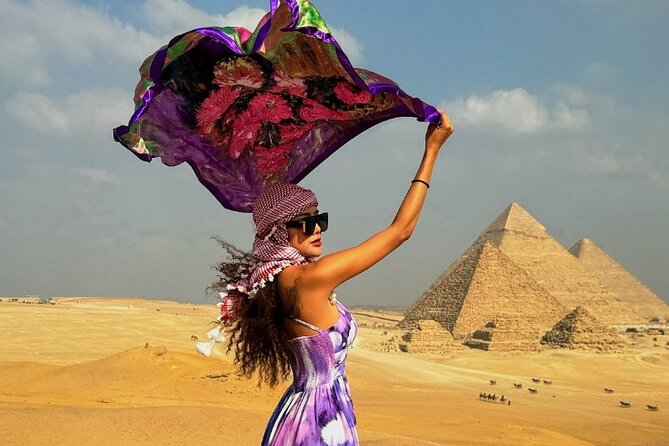
- Panorama View for quick orientation and photos with all three pyramids lined up
- A desert ride option: the listed inclusion is a camel ride for about 20 minutes
- Grand Egyptian Museum time that matters: around 3 hours, with the Grand Staircase route and major statues
- Friendly, question-friendly guides: many experiences mention guides like Rasha Yousrey, with driver support from people such as Esam
Ways onto the Giza plateau, compared
- Private guided tour to Giza Pyramids, and Great Sphinx★ 5.0 · 1,755 reviews
- VIP Giza Pyramids,Sphinx,ATV bike,CamelRide,Shopping&DinnerCruise★ 5.0 · 704 reviews
- From Hurghada: Pyramids and Egyptian Museum Tour & Boat Ride★ 4.4 · 381 reviews
- Private Tour to explore Giza Pyramids – Saqqara -Memphis★ 5.0 · 294 reviews
What you’re really buying with this all-in-one Giza day
This is an all-in-one package aimed at one goal: getting you from hotel pickup to the most important Giza stops, then into the newest big museum in the area. Instead of piecing together tickets and transport by yourself, you ride in an air-conditioned vehicle, meet a private guide, and move through the day with a plan.
The value is not just that it includes a lot. It is that it bundles “hard parts” that can eat up your time in Egypt. Line queues, ticket timing, and route confusion are real at the pyramids and the museum. Here, entry fees are included based on the option you booked, and the tour is advertised as guaranteed to skip the lines.
You are also not left hungry. The day includes bottled water on board and an Egyptian traditional lunch. That sounds basic, but on a day like this it is the difference between enjoying your time and running on snacks.
One more practical note: the tour is listed as private, meaning it is only your group. Reviews you’ll find for this kind of service often stress how much that changes the vibe, especially for families or anyone who wants to ask follow-up questions without a crowd watching.
Hotel pickup, timing, and how the 7-hour schedule fits
The tour runs about 7 hours, and it starts in the morning with pickup from Giza or Cairo downtown. Morning timing is smart on paper because it is typically cooler than midday heat.
The day’s built-in rhythm looks like this:
- Roughly 3.5 hours across the pyramids area, split into several shorter stops
- About 30 minutes at the Sphinx and the Valley Temple area
- A longer museum block of around 3 hours at the Grand Egyptian Museum
- Return transfer back to your accommodation
This structure is efficient, but it also means your time at each site is controlled. You are not paying to “hang out” for hours at one monument. You are paying for a greatest-hits loop with just enough time to see, photograph, and learn the key context.
If you like deep, slow archaeology-style wandering, you may feel slightly rushed at Giza. If you like a guided hit list where each stop teaches you something, this format is a good match.
Giza Plateau orientation: pyramids, Khufu, and how to use your guide time
You start with the Giza pyramids area and then move quickly into the Great Pyramid of Khufu. Stop 1 gives you around an hour to get oriented, and it also includes admission.
Then you spend about an hour at the Great Pyramid of Khufu, the largest and oldest of the main three pyramids and the only surviving wonder of the ancient world. Khufu’s pyramid is famous for its scale and for the fact it was built as a royal tomb. The description you’ll get from your guide focuses on massive limestone blocks and the internal passageways, plus how ancient Egypt used geometry and engineering to create an enduring structure.
Here is how I think about this stop as a visitor: an hour inside the pyramid plus a guided explanation helps you avoid the common mistake of seeing it as just a huge photo prop. If your guide talks about how it was designed for a king’s afterlife, you will look at the walls and passages differently afterward.
Practical consideration: the pyramids area involves a lot of walking and uneven ground. Your private transport helps between stops, but once you are on foot, plan for steady movement.
Why Menkaure and Khafre are more than side quests
After Khufu, you still have two key pyramid visits on the schedule, and they are worth treating as separate experiences, not “second photos.”
Menkaure’s Pyramid is the smaller of the main three and gets about 30 minutes. The time may be shorter, but that can be a plus if you want a less intense stop. The pyramid is described as being built for Pharaoh Menkaure and known for craftsmanship that uses granite and limestone. Smaller does not mean less important, it means different character.
Khafre’s Pyramid is next with about 30 minutes too. At around 136 meters and with remnants of original smooth casing stones near the top, it has a distinct look and it can appear taller than Khufu because of its position on the plateau. This stop also connects to the Sphinx, since Khafre is commonly associated with the Sphinx’s likeness.
If your guide is strong, this is where you really start to understand the Giza complex as a system. The pyramids are visually linked, and the Sphinx sits in the same narrative space. When a guide explains how the Valley Temple connects to royal funerary traditions, the monuments stop feeling like isolated landmarks.
Return trips to the Tahrir collection
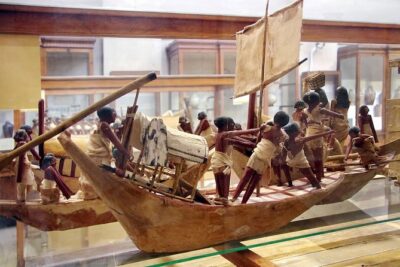
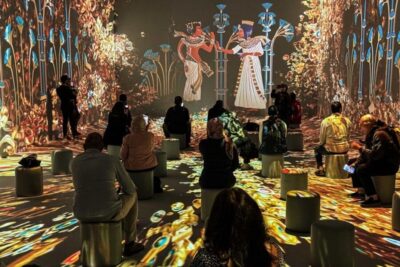
Panorama View: the best “quick understanding” stop on the whole route
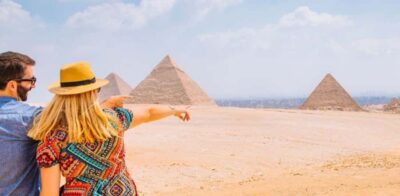
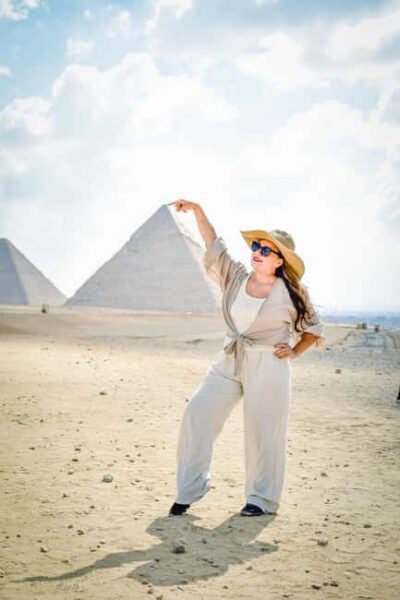
The panorama stop is only about 30 minutes, but it is one of the smartest parts of the day. You get a view where Khufu, Khafre, and Menkaure stand in a line against the desert background, which makes it easier to understand spacing and relative scale.
This is also where you are set up for better photos because you are not shooting straight at stone faces. Instead, you are framing the full trio. If you care about photos, this is your chance to capture the scene as a composition, not just close-ups.
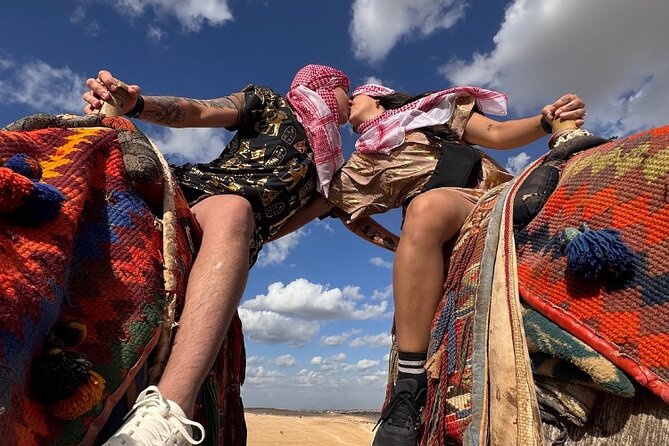
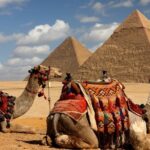
Your camel ride happens around this moment too, depending on your option. The included ride is listed as about 20 minutes. That is enough time to feel the experience without turning it into the kind of activity that overwhelms your schedule.
One practical thought: sand dust and sun are real. If you plan to photograph right after the ride, bring something simple to protect your camera lens and let it breathe before you swap between desert and shaded interiors.
Great Sphinx and Valley Temple area: the photo moment and the context moment
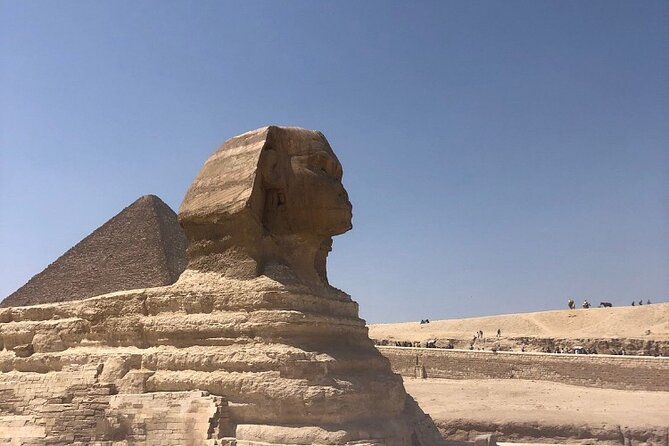
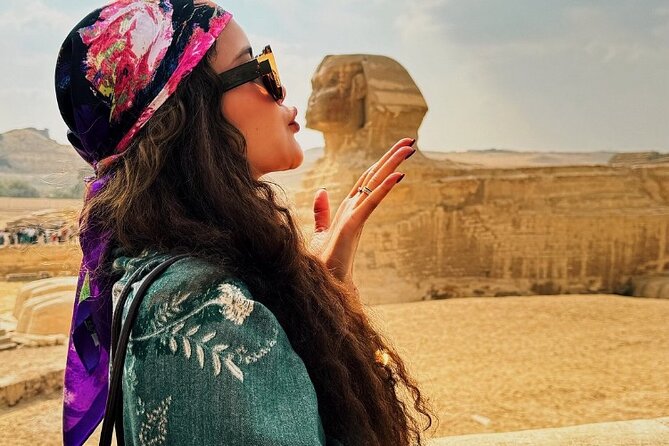
You finish the Giza-side sightseeing with the Great Sphinx, plus the Valley Temple of Khafre. This part is listed as about 30 minutes and includes admission.
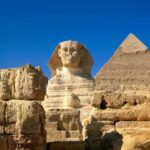
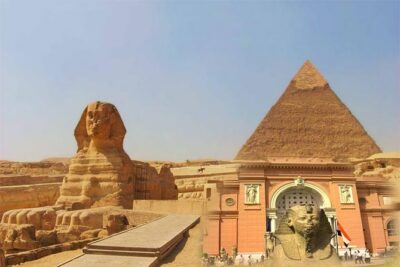
The Sphinx is described as a lion body with a pharaoh’s head, and it is tied to Khafre in tradition, with measurements given for size: about 73 meters long and about 20 meters high. In plain visitor terms, it is a monument you can feel in your chest, even if you did not study Egyptology before you arrived.
If you can, use this time for two things:
1) Get the iconic pictures while the lighting is decent
2) Get the story behind the Sphinx so you are not just photographing shapes
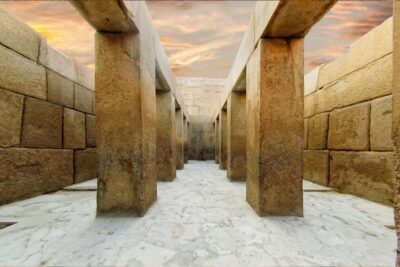
The Valley Temple area gets part of the explanation too. It is described as an architectural example from Old Kingdom royal funerary rituals, with massive limestone blocks and well-preserved statues. When a guide ties the Sphinx to its temple setting, the plateau stops being a random collection and becomes a designed landscape.
Also, the route overview mentions a Temple of Mummification as part of what you see. If it is included in your exact walk path, treat it like a bonus stop that rounds out the “afterlife” theme before you head into the museum.
Lunch break: keep it simple, then be ready for the museum
After the pyramids and Sphinx sequence, you have an Egyptian traditional lunch. This is included and comes after the outdoor block of the day.
I like this ordering because it prevents the museum visit from becoming a “hangry sprint.” Even a simple meal lets you refocus. The day is information-heavy, and museum time works better when your energy is stable.
You also get bottled water on board, which helps a lot. On a warm day in Giza, hydration is not optional if you want to enjoy the views and not just cope with discomfort.
Grand Egyptian Museum: what 3 hours is actually enough for
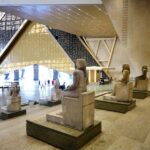
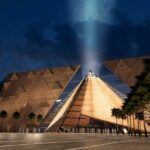
The Grand Egyptian Museum is the final major stop and it gets about 3 hours on the schedule. You enter to discover vast collections of artifacts in a modern setting, ranging from everyday items to major royal relics.
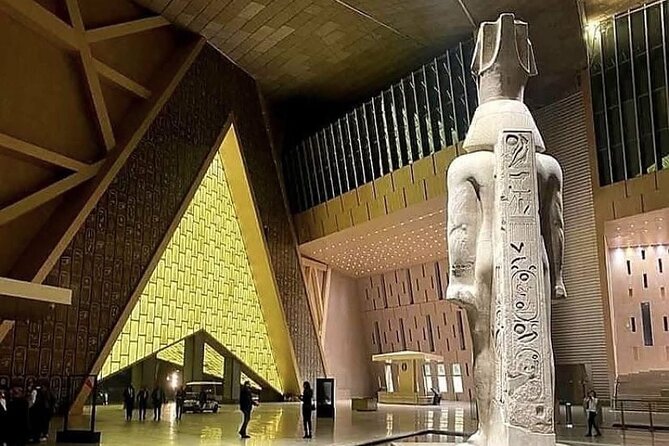
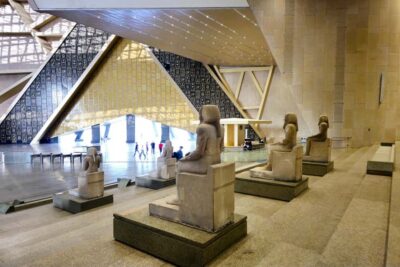
One of the most visitor-friendly parts of the museum route, according to the tour description, is the Grand Staircase. It connects floors through steps, travellators, and elevators, and it ends with a panoramic view of the pyramids from inside the museum complex. That means your day basically loops back visually, and you get an elevated sense of the Giza setting.
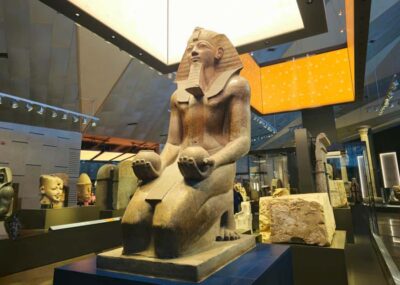
Your guide’s museum focus sounds like it includes big-name royal sculpture highlights. The description specifically mentions:
- the red granite colossus of King Seti I
- a magnificent statue of Queen Hatshepsut
- towering pillars, columns, and tops of obelisks dedicated to royal figures of different periods
Here is why that matters: a museum can feel overwhelming if you do not have anchors. If your guide pulls you toward these major pieces, you get a meaningful route rather than wandering until your brain fries.
Possible drawback to plan around: 3 hours can feel short if you love reading labels and want to see everything. But as a first-time museum visit, this time is a strong balance. It should be long enough to cover the highlights and understand how the displays communicate the past in a modern way.
Camel ride at the panorama: the included thrill with real limits
The camel ride is listed as included for about 20 minutes, and it is tied to the panorama area in the route.
If you are considering it, treat it as a short cultural-turned-touristic moment, not a full adventure. Twenty minutes is enough to get the feel of the experience and take a few photos with the pyramids in the background.
Also, remember this day is about monuments and museum learning. You will get more satisfaction if the ride stays a “brief contrast” between big stone and museum artifacts, rather than something that dominates your attention.
And if you are booking a tour option that changes the ride type, keep an eye on what is actually listed for your specific booking. Some Giza day trips in this area can offer alternative desert ride activities, but the inclusion stated here is the camel ride.
Guides like Rasha Yousrey: what to look for in how you’re led
Across the experiences tied to this tour style, one name keeps showing up: Rasha Yousrey. Many comments describe her as friendly, knowledgeable, and helpful with explanations. There are also accounts that she spoke Japanese, which is useful if you want clearer communication.
There is also mention of Esam, described as part of the team and connected to driver support. In a private setup, the driver and guide relationship can shape how smoothly your day flows, especially when you move between crowded zones.
Here is what I think you should do to get maximum value from your guide time:
- Ask one question early on that you can use later, like how the three pyramids relate to each other visually and politically
- Ask what you should photograph at each stop, then trust the plan
- Use the museum time to ask how the objects connect to the stories you heard at Giza
When a guide actively answers questions and helps you connect the monuments to the artifacts, the whole day feels less like a checklist.
Price and value: what $15 means in a day this packed
The listed price is $15.00 per person. In most places, that would be a red flag for a tour that includes tickets and museum time. Here, the package is described as including a lot: pickup and drop-off in an air-conditioned vehicle, a private expert guide, entry fees, bottled water, a traditional lunch, and a camel ride (about 20 minutes).
That combination is what makes the price feel plausible as value. You are not just buying transportation, you are buying time management. Skip-the-lines and entry-fee coverage can cut down wasted hours and reduce stress.
Still, do your own quick sanity check when you book:
- Confirm which admission tickets are included for your booked option, especially for the Grand Egyptian Museum
- Confirm the camel ride inclusion for your specific option
- Budget for tipping, since tipping is listed as not included
If you are trying to do Giza plus the Grand Egyptian Museum without turning the day into a logistics problem, this kind of bundled price can be a smart deal.
Who this Giza and GEM combo suits best
This tour fits best if you want a high-impact day that balances outdoor icons with museum learning.
It is a good match for:
- First-time visitors who want the big monuments without planning
- People who value a guide’s explanations more than long free time
- Families who want structure, since the stops are short and the ride and lunch break up the day
If you want maximum time per site, or you prefer quiet, unhurried exploration, you might find the pace a bit tight. But for a first visit, the itinerary is built to get you oriented and feeling the place.
Should you book this tour?
I would book it if your goal is a single-day plan that hits Giza’s main monuments and then brings you into the Grand Egyptian Museum with guided focus. The strongest reason to choose it is the way it reduces stress: pickup, private guide, entry fees included, skip-the-lines coverage, lunch, and a desert ride.
I would think twice if you hate structured pacing, or if you want to spend hours inside one pyramid or read every museum label without moving on. This tour is designed for momentum and clarity, not for slow roaming.
If you book, go in with one mindset: use the guide’s explanations to make the photos mean something. With a guide like Rasha Yousrey highlighted in past experiences and a team that keeps the day moving, you are likely to leave with a much clearer sense of what you saw and why it mattered.
FAQ
How long is the tour?
The tour duration is listed as about 7 hours.
Is pickup and drop-off included?
Yes. Pickup and drop-off are included in an air-conditioned vehicle, and pickup is offered from Giza or Cairo downtown.
Where is the pickup available, and is there extra cost for some areas?
The tour mentions pickup from Giza and Cairo downtown. Pickup from the airport, Nasr City, 6 October, or New Cairo is listed as extra 20$.
Is this a private tour?
Yes. It is described as private, with only your group participating.
Does the tour include tickets and admission fees?
Yes. Entry fees to the sites are included based on the tour option you booked.
Is the camel ride included?
Yes. A camel ride for about 20 minutes is included based on the tour option you’ve booked.
Is lunch included?
Yes. Traditional lunch is included based on the tour option you’ve booked.
Is skip-the-line access included?
Yes. The tour includes guaranteed to skip the lines.
What is not included in the price?
Tipping is not included, and extra pickup from the airport, Nasr City, 6 October, or New Cairo costs an additional 20$.
Can I cancel for a full refund?
Yes, free cancellation is available. You can cancel up to 24 hours in advance for a full refund.
About how far in advance is this tour commonly booked?
The tour is listed as being booked on average 12 days in advance.
Inside the Grand Egyptian Museum


Back at the Tahrir Museum
Giza, A Few More Ways In


More of Giza from our review pile
- Private half Day Tour to the Great 3 Pyramids of Egypt
★ 5.0 · 15 reviews - Elite Boats Tour in Cairo & Giza with Drinks Included
★ 4.5 · 15 reviews - Civilization Museum, Citadel and Old Cairo- Private Tour
★ 5.0 · 15 reviews - Private Half-Day Tour to City of the Dead and Mosque of Ibn Tulun in Cairo
★ 4.0 · 15 reviews - Full Day Tour to Explore Giza pyramids , Sakkara , Sphinx and Memphis
★ 5.0 · 15 reviews - Day Tour at The Egyptian Museum,Saladin Citadel and Khan El Khalili Bazaar
★ 5.0 · 15 reviews
Giza Pyramids & Sphinx Tours, compared.
 ★ 4.9Pyramids & Great Sphinx Private Tour with Camel RideFrom $486,335 reviews
 ★ 5.0Tour to Giza Pyramids and The Egyptian MuseumFrom $1556,016 reviews
 ★ 4.7Pyramids of Giza, Sphinx, Saqqara & Memphis TourFrom $903,110 reviews
 ★ 4.6Half-Day Tour to Pyramids of Giza and the SphinxFrom $502,891 reviews
 ★ 4.6Pyramids, Sakkara & Memphis Tour with LunchFrom $602,493 reviews
 ★ 5.0Private ViP all-inclusive Giza Pyramids,Sphinx,Inside PyramidFrom $142,448 reviews
 ★ 4.7Grand Egyptian Museum, Pyramids, Sphinx Tour & LunchFrom $892,282 reviews
 ★ 4.7Cairo Pyramids, Sphinx & Egyptian Museum Day TripFrom $932,271 reviews
The lists this one sits on