
REVIEW · PRIVATE
9 Days Private Tour in Egypt with Transportation
Egypt in 9 days, with a clear plan. This private route zeroes in on two temple days that most big tours shortcut, Dendera and Abydos, tied to Hathor and Osiris. I also like the way it mixes the famous hits around Giza and Luxor with less expected stops like the Egyptian Museum plus Coptic Cairo.
Two things I really liked: first, the focus on ancient belief, not just monuments, so you get a sense of how Egyptians pictured life after death through Osiris at Abydos. Second, the guide situation feels like the core value here, and names like Mohamed Samora come up in feedback for being patient, flexible, and very strong with languages.
One consideration: the days are long, and at least one highlight is an early departure. If you are sensitive to start times or heat, plan to handle a packed schedule and bring your stamina.
In This Review
- Key highlights from this Egypt private tour
- The biggest reason this tour feels efficient: it’s built around modern logistics
- Day 1 in Cairo: getting settled without losing the first hours
- Giza and Saqqara: the big icons, plus the payoff of starting with context
- Aswan: granite, sacred islands, and a gentler Nile moment
- Abu Simbel at dawn: one of the most intense travel days you’ll do
- Luxor temple circuit: Edfu, Karnak, and Luxor Temple in one strong arc
- The Dendera and Abydos day: where the trip’s theme becomes real
- Luxor’s funerary sites: Valley of the Kings, Queens, Hatshepsut, and Memnon’s colossi
- Back to Cairo: museum time plus Coptic Cairo’s quieter faith layers
- Price and value: what $1,980 per person is really buying
- Guide quality is the real differentiator, especially for temple-heavy days
- Who this private tour fits best
- Should you book this Egypt private tour?
- FAQ
- How long is the private tour?
- What does the tour include for transportation?
- Do you get guided tours?
- Are entrance fees included?
- What meals are included during the trip?
- Is the pickup included?
- Do I need an Egypt entry visa, and what does it cost?
- What is the main travel route covered in this experience?
- What if the weather is poor or the trip needs to be changed?
Key highlights from this Egypt private tour
- Dendera and Abydos on the same stretch of time, so Hathor and Osiris themes click together instead of feeling random
- Private vehicles with air conditioning for the in-city and between-site travel
- Domestic flights built into the route, so you do not spend the whole trip stuck on buses
- Abu Simbel at dawn, plus Kom Ombo the same day for a strong temple contrast
- A guide-first experience, with Spanish-speaking guiding and standout named guides in feedback
Trying to choose? These Giza trips kept surfacing in our notes.
- Private guided tour to Giza Pyramids, and Great Sphinx★ 5.0 · 1,755 reviews
- VIP Giza Pyramids,Sphinx,ATV bike,CamelRide,Shopping&DinnerCruise★ 5.0 · 704 reviews
- From Hurghada: Pyramids and Egyptian Museum Tour & Boat Ride★ 4.4 · 381 reviews
- Egyptian Museum in Cairo: Private Guided Tour★ 5.0 · 316 reviews
The biggest reason this tour feels efficient: it’s built around modern logistics
In Egypt, the hard part is often not the sightseeing, it’s the time it takes to get between places. This tour tackles that directly. You get airport-to-hotel transfers at the start and end, private air-conditioned vehicles for site days, and domestic flights that connect Cairo to Aswan and then back later via Luxor. That means you’re not turning your trip into one long travel day.
You also get entrance fees included to the places mentioned, plus taxes. That matters because Egypt site ticketing can be confusing when you are trying to coordinate on the fly. Here, you can spend your energy where it belongs: looking up, asking questions, and taking in the scale.
Finally, this is a private tour. That changes the vibe instantly. You’re not squeezed into a mass schedule where you have to keep up. The schedule is still full, but it’s meant for your group’s pace.
Day 1 in Cairo: getting settled without losing the first hours
Your first day is a practical setup day. You land in Cairo, handle visa procedures, then move straight to your hotel and check in. It’s not trying to cram temples on arrival day, which is smart if you are coming from far away.
Also, you have mobile tickets as part of the experience, which helps you manage entry days with less stress. You’re not hunting around for paper tickets at each stop.
Giza and Saqqara: the big icons, plus the payoff of starting with context
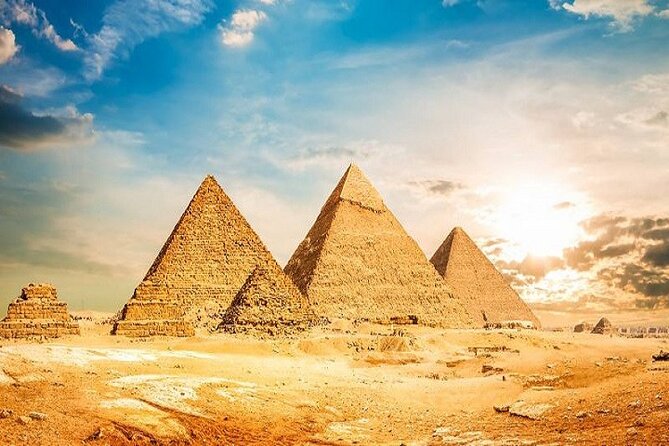
The next main block sets the tone for the whole trip. You visit Saqqara, including the stepped pyramid of Djoser, built by Imhotep and widely recognized as an early milestone in stone pyramid building. From there, you move to the pyramids of Giza and the Great Sphinx.
Why this order works: Saqqara helps you understand pyramid thinking as an evolving idea, not just a final product. Then Giza becomes easier to read. You’re not only looking at the pyramids as shapes, you’re seeing how Egyptian royal building ambitions changed over time.
This day is also built for time. You’ll typically spend a couple of hours at each major stop, so you can pace yourself. If you rush, these places start to feel like photos. If you slow down, details start rewarding you.
Aswan: granite, sacred islands, and a gentler Nile moment
Aswan is where the trip turns more intimate. You visit the old granite quarry, where you can see the unfinished obelisk. It’s a reminder that Egypt’s monuments were not magic tricks. They were a workforce, a system, and a deep understanding of stone.
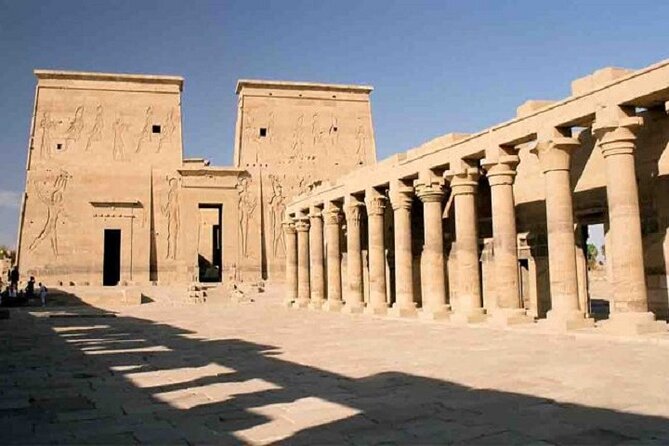
Next is Philae, devoted to Isis. This is not just another temple stop. You’re stepping into a sacred setting tied to love, peace, and magical powers, which helps you see Egyptian religion as something people used to explain and influence daily life.
Then comes a quieter interlude: a felucca ride on the Nile for about 45 minutes. You pass Elephantine Island, linked to worship connected with Satet and Junum at the first cataract of the Nile. That short boat segment gives your brain a break from monuments, so you can return to the temple days feeling refreshed.


Abu Simbel at dawn: one of the most intense travel days you’ll do
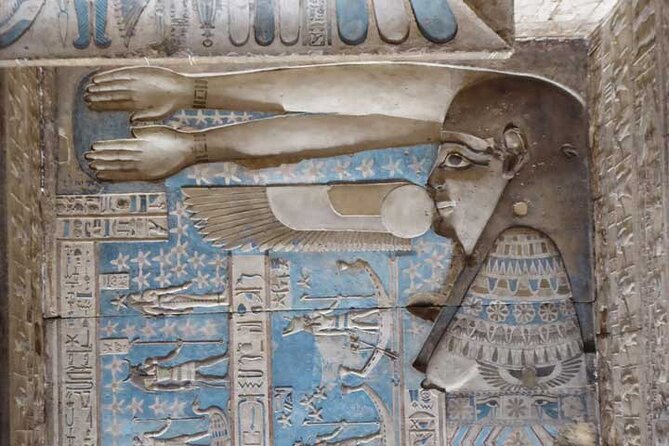
One day is built around Abu Simbel, the rock-cut temple of Ramses II. It leaves at dawn, and the visit runs close to eight hours. It’s long and bright and logistically demanding, so it’s the kind of day where the private setup helps.
Why I consider it a key value stop: Abu Simbel is not just famous because it’s impressive. It connects directly to royal power, carving, and the way pharaohs used architecture to project authority far beyond palace walls.
In the afternoon you also go to Kom Ombo. It has two gods in play, Sobek and Haroeris (the text identifies Haroeris as Horus the Great). So instead of only seeing one religious tone, you get an immediate contrast in what temples were designed to communicate.
Luxor temple circuit: Edfu, Karnak, and Luxor Temple in one strong arc
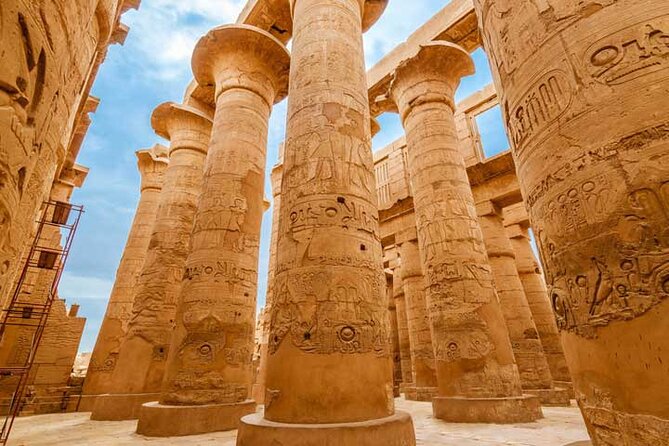
This stretch brings together three major temple experiences, each with a different feeling.
You start with Edfu, the temple of the falcon god Horus, described as the best preserved architecturally. It’s about a two-hour visit, which is a good tempo.
Next is Karnak, dedicated to Amun and his triad, and described as the largest complex erected, built over two thousand years. Karnak can overwhelm you if you don’t have a guide who can sort the buildings into a story. With a Spanish-speaking guide leading the way, you’re more likely to leave with mental structure, not just a list of columns.
Then comes Luxor Temple, linked to Amenhotep III and Ramses II, with a very tall entrance obelisk noted as about 25 meters, and the text says its twin is seen in France. That kind of detail helps you connect what you see in Egypt with what exists elsewhere, so the trip feels bigger than your own photos.
The Dendera and Abydos day: where the trip’s theme becomes real
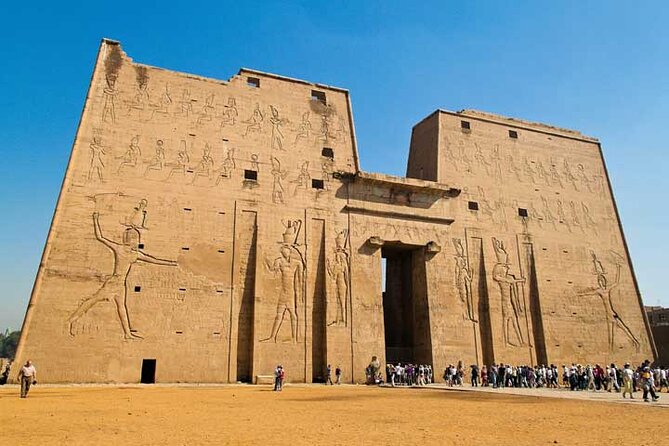
This is the day that most strongly matches the emotional purpose of the route. You visit Dendera and Abydos together, spending about nine hours.
At Dendera, you focus on the Greco-Roman era temple dedicated to Hathor, associated here with marriage and music. The description also notes Hathor as one of the oldest goddesses in Egypt and says she appears in texts of the Pyramids. That matters because it reframes a later temple as part of an older religious backbone, not just a later decoration.
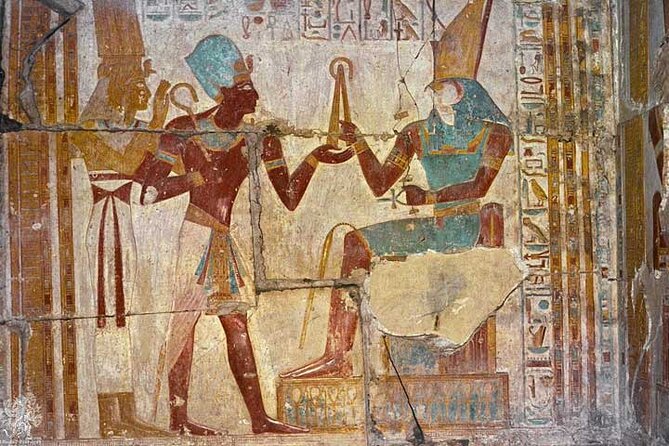
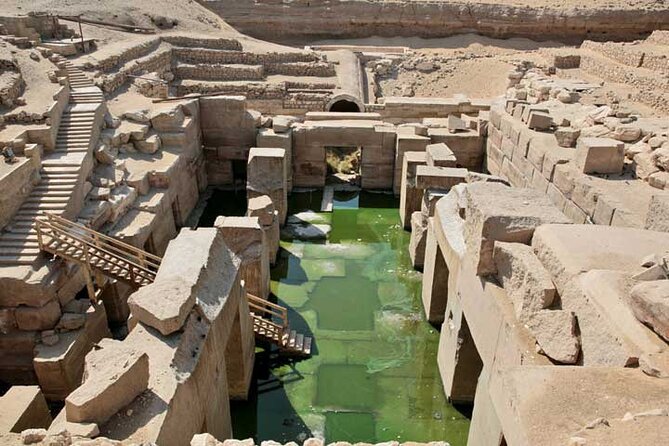
Then you move to Abydos, tied to the cult of Osiris. What makes Abydos special in this plan is not only the temple. It’s described as leaving a major vestige tied to the afterlife belief and as including the oldest cemetery in Egypt, especially connected with monarchs of the ancient empire, and particularly those from the first two pharaonic dynasties.
If you like religion, symbolism, and how Egyptians pictured what happens after death, this is the day you will remember. If you only want stone and scale, it can still impress you, but you will likely get more value by treating the sites as a story about life after death rather than separate stops.
Luxor’s funerary sites: Valley of the Kings, Queens, Hatshepsut, and Memnon’s colossi
After you exit the cruise and check into a hotel, Luxor becomes the core of the next day.
You visit the Valley of the Kings, where New Kingdom monarchs were buried. Then the Valley of the Queens, described as involving queens and children who died as adolescents. It’s a reminder that royal burial is not only about pharaohs. It’s also about family and the fragile reality behind court life.
Then you go to the temple of Queen Hatshepsut, famous for its terrace design. Terraces give you a different kind of visual reading. Instead of one huge courtyard, you see architecture climb and unfold.
Finally, you see the Colossi of Memnon, described as the two largest statues in Luxor and the remaining parts of the old funerary temple connected to Amenhotep III. When you stand in front of them, the meaning is not academic. It’s physical.
This day runs close to seven hours, so plan your energy. Also, it ends with transport to the airport.
Back to Cairo: museum time plus Coptic Cairo’s quieter faith layers
Your final city day brings you back to Cairo, with a longer sightseeing block.
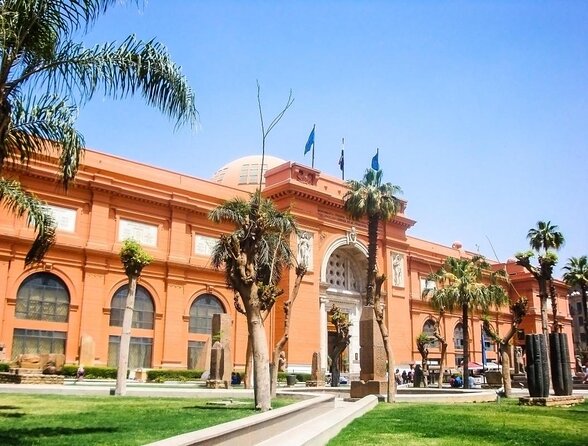
You visit the Egyptian Museum, focused on the riches of the pharaohs and the vestiges of ancient civilization. This is a good counterpart to all the outdoor stone sites, because it shows artifacts in a controlled setting. It also helps you link what you saw in temples and tomb contexts to objects and names.
Then you shift to Coptic Cairo. You visit the church of San Sergio, described here as the Hanging Church, plus the Synagogue of Ben Ezra. This part is valuable because it shows Cairo is not frozen in ancient times. You get layers of faith, including Christian and Jewish heritage, in the same general city fabric.
This final day includes about seven hours of sightseeing, followed by your overnight. It’s a solid close, because you finish with something calmer than a late-afternoon temple rush.
Price and value: what $1,980 per person is really buying
At $1,980 per person, this is not a bargain-bin deal, but it can make sense if you care about time and guidance quality.
Here’s what your money is supporting, based on what’s included:
- Private transfers airport to hotel and hotel to airport
- Local Spanish-speaking guided tours
- Private air-conditioned vehicles
- Domestic flights within Egypt
- Entrance fees to all listed sites, plus tax payment
- Meals: breakfast 8 times, lunch 3 times, dinner 3 times
What’s not included:
- International flights
- Egypt entry visa, listed as $25
- Tips and drinks
So the question is not only price. It’s risk management. You’re paying for fewer coordination headaches, fewer ticketing surprises, and a schedule that uses flights instead of grinding long bus days. If you can travel with comfort and you’ll use the guide for context, this price starts to look less like a premium and more like a practical way to protect your time.
Guide quality is the real differentiator, especially for temple-heavy days
You will spend many hours in places where the visuals alone can leave you guessing. The strongest praise in feedback is about guides who explain with detail, answer questions, and stay flexible.
Names like Mohamed and Mohamed Samora show up repeatedly, with comments describing them as very kind, professional, and attentive. Several notes also point to strong language ability, including Spanish and sometimes English, with one mention of Portuguese. Even when you do not get the exact same language combination, the program’s direction is clear: the guide experience is a central selling point.
For you, that matters most on the temple days. Karnak and Abydos in particular can feel like stone mazes unless someone helps you see how the pieces connect.
Who this private tour fits best
This one fits best if you:
- want a private pace with personal guidance
- care about religious meaning, not just photo stops, especially Osiris and Hathor themes
- are comfortable with long days, early starts like the Abu Simbel dawn departure, and lots of walking
It’s also a good match if you value a structured route that uses domestic flights to reduce travel fatigue.
Should you book this Egypt private tour?
I’d book it if you want Egypt to feel organized, temple-focused, and meaning-driven, with a guide who does more than point. The combination of Dendera and Abydos as a centerpiece, plus the way domestic flights and private transfers protect your time, is a strong reason to choose this over a looser self-planned trip.
I would hesitate if you hate long days or you are not comfortable with early departures. This plan is full, and even with private transport, you will need stamina.
If you do book, make your life easy on yourself. Bring essentials for hot, long temple hours, and set your expectations that the best payoffs come when you let a good guide turn monuments into stories.
FAQ
How long is the private tour?
The tour is about 9 days.
What does the tour include for transportation?
It includes transfers from the airport to the hotel and from the hotel to the airport, private air-conditioned vehicles, and domestic flights within Egypt.
Do you get guided tours?
Yes. Guided tours are provided by local Spanish-speaking guides.
Are entrance fees included?
Yes. Entrance fees for all the places mentioned are included, along with tax payment.
What meals are included during the trip?
Breakfast is included 8 times, lunch is included 3 times, and dinner is included 3 times.
Is the pickup included?
Pickup is offered, and airport-hotel and hotel-airport transfers are included.
Do I need an Egypt entry visa, and what does it cost?
The Egypt entry visa is not included. The listed cost is $25 by passport.
What is the main travel route covered in this experience?
It covers Cairo, Giza, Saqqara, Aswan including Philae and Abu Simbel, Luxor including Karnak and the Valley of the Kings, plus Dendera and Abydos, and it returns to Cairo for the Egyptian Museum and Coptic Cairo.
What if the weather is poor or the trip needs to be changed?
The experience requires good weather. If it’s canceled due to poor weather, you’ll be offered a different date or a full refund. Cancellation is free up to 24 hours in advance for a full refund.
More of Giza from our review pile
- Private half Day Tour to the Great 3 Pyramids of Egypt
★ 5.0 · 15 reviews - Elite Boats Tour in Cairo & Giza with Drinks Included
★ 4.5 · 15 reviews - Civilization Museum, Citadel and Old Cairo- Private Tour
★ 5.0 · 15 reviews - Private Half-Day Tour to City of the Dead and Mosque of Ibn Tulun in Cairo
★ 4.0 · 15 reviews - Full Day Tour to Explore Giza pyramids , Sakkara , Sphinx and Memphis
★ 5.0 · 15 reviews - Day Tour at The Egyptian Museum,Saladin Citadel and Khan El Khalili Bazaar
★ 5.0 · 15 reviews
Private, compared.
 ★ 4.9Pyramids & Great Sphinx Private Tour with Camel RideFrom $486,335 reviews
 ★ 5.0Private ViP all-inclusive Giza Pyramids,Sphinx,Inside PyramidFrom $142,448 reviews
 ★ 5.0Private guided tour to Giza Pyramids, and Great SphinxFrom $351,755 reviews
 ★ 5.0Half Day Tour Giza Pyramids &Great Sphinx with Private Tour GuideFrom $401,608 reviews
 ★ 5.0Private tour to Giza Pyramids,Sphinx,Egyptian Museum with Local LunchFrom $331,530 reviews
 ★ 4.4Giza Pyramids and Sphinx: Half-Day Private or Group TourFrom $301,424 reviews
 ★ 4.1Private Full-Day Tour of Historical AlexandriaFrom $651,155 reviews
 ★ 4.5Best Private Giza Pyramids,Sphinx, New Grand Egyptian MuseumFrom $171,056 reviews