
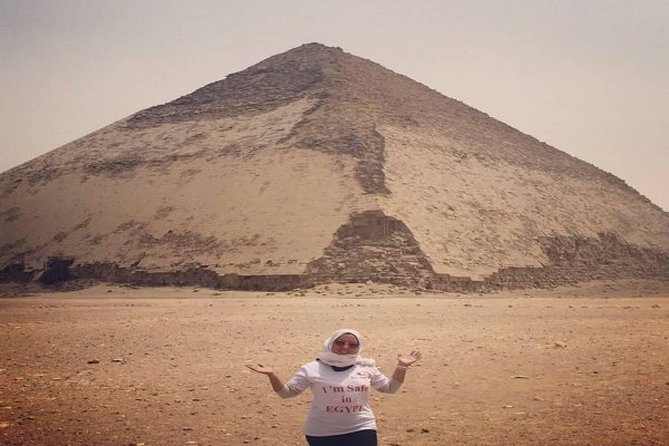
REVIEW · GIZA PYRAMIDS & SPHINX TOURS
8 hours Cairo day Tour to Giza Pyramids, Memphis City, Sakkara and Dahshur
Eight hours, four ancient stops. This Cairo day tour is built for first-timers who want big Egypt icons without the stress of timing, tickets, or connections. You’ll move through Giza, then swing into Memphis and Saqqara, and still have time for the famous Dahshur pyramids.
What I like most is how private hotel pickup removes the hardest part of Cairo logistics. Also, this kind of tour works best when your guide knows how to explain what you’re seeing, and guides such as Amr Fouad, Khaled, Sue, Marwa, and Tigo get called out for clear explanations and great photo spots.
One thing to keep in mind: the schedule is tight. With an 8-hour day and ancient sites that can close earlier depending on season, you may not get long, slow hangs at every stop.
In This Review
- Key things to know before you go
- Why this 8-hour Cairo route is worth planning
- Pickup, timing, and the reality of moving fast
- Giza Plateau: your quick orientation to the necropolis
- Outside time at Khufu, Khafre, and Menkaure pyramids
- Great Pyramid of Cheops (Khufu)
- Khafre’s pyramid
- Menkaure’s pyramid
- Great Sphinx: the photo stop that actually helps you understand Egypt
- Memphis City ruins: a quieter chapter after the pyramids
- Saqqara: the Step Pyramid zone and the Old Kingdom story
- Small add-on style pyramid stops
- Dahshur: Bent and Red Pyramids, and why they feel different
- The “Giza Plateau” repeats and panoramic stops, how to use them
- What your $70 price really buys, and what you’ll likely pay extra
- Guide quality and what to ask so the day feels personal
- Food breaks, the optional koshari lunch, and shopping detours
- Camel and horse add-ons: how to protect your time and budget
- Who this tour suits best
- Should you book this 8-hour Cairo pyramids tour?
- FAQ
- What time does the tour start?
- How long is the tour?
- Is hotel pickup and drop-off included?
- What entry fees are included, and what costs extra?
- Is lunch included?
- Is this a private tour?
Key things to know before you go

- Private guide attention: you’re not sharing instructions with strangers every time you move.
- Giza, Memphis, Saqqara, Dahshur in one pass: fewer decisions, more seeing.
- Outside viewing is fast: most Giza stops are short, so bring your main questions for your guide.
- Extra cost for pyramid interiors: the interior ticket for the Great Pyramids is not included.
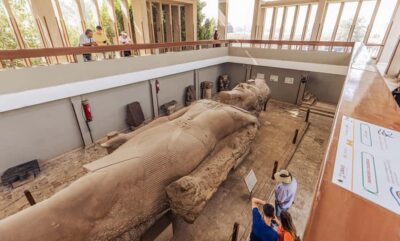
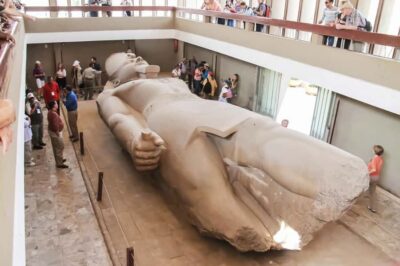
- Quick Memphis photo moments: you can expect stops tied to Ramses II statue and an alabaster Sphinx.
- Some time spent on optional add-ons: shop stops and a camel option can eat minutes if you let them.
Ways onto the Giza plateau, compared
- Cairo: Pyramids & Great Sphinx Private Tour with Camel Ride★ 4.9 · 6,335 reviews
- Tour to Giza Pyramids and The Egyptian Museum★ 5.0 · 6,016 reviews
- VIP All inclusive Best of the best Giza Pyramids,Sakkara,Memphis★ 5.0 · 3,164 reviews
- From Cairo: Pyramids of Giza, Sphinx, Saqqara & Memphis Tour★ 4.7 · 3,110 reviews
Why this 8-hour Cairo route is worth planning
Cairo can be exhausting even when you’re excited. This tour helps because it’s structured, driven, and guided, so you spend your energy looking at stone that’s older than most countries.
You get a full sweep of Egypt’s pyramid story arcs without bouncing between too many “one-site” tours. I like that it’s designed like a checklist with context, not just a bus ride with photos.
And yes, it’s busy. But busy is often the right trade when you have limited time and you want to hit the top names.
Pickup, timing, and the reality of moving fast
The day starts at 8:00 am with pickup from your hotel in Cairo or Giza. You’ll ride in an air-conditioned vehicle, and that matters. In Egypt, heat plus waiting lines plus traffic can turn a great plan into a long day.
The tour runs about 8 hours, and you’ll get drop-off back at your hotel or your pickup point area. Stops are timed in chunks, often around 30 minutes, with some shorter breaks for specific pyramid spots.
My practical take: think of this as a “see it first, learn it on the way” day. If you want slow interior exploring and long museum-style reading, you’ll feel the limits.
Giza Plateau: your quick orientation to the necropolis
The first stretch is the Giza Plateau, also called the Giza Necropolis. This is where you get the Great Pyramid of Khufu, plus the pyramid complexes tied to Khafre and Menkaure. You’re also in the zone of the Great Sphinx and older cemeteries, and there’s even mention of a workers village.
You get about 30 minutes here. That’s not much, so use it as orientation. I recommend you ask your guide early for what order makes the most sense visually, so you don’t waste later moments “trying to see it right.”
If you love photos, Giza is basically built for it. From most viewpoints, the angle helps you understand the relationship between pyramids and the Sphinx without needing a diagram.
Outside time at Khufu, Khafre, and Menkaure pyramids
After the plateau overview, the tour makes three separate pyramid stops, each around 30 minutes.
Necropolis stops south of the city

Great Pyramid of Cheops (Khufu)
You’ll spend a short block at Khufu’s pyramid complex. The complex includes parts like a valley temple, with details about what was found there historically. The key practical point is this: most of what you’ll see is the monumental exterior and the immediate areas around it.
The interior ticket is not included. That means you can still get the “wow” factor even if you skip going inside.
Khafre’s pyramid
Khafre’s pyramid complex comes with multiple components, including a valley temple and the Sphinx temple area. This is a good stop for your guide to connect the dots between causeways, temples, and the Sphinx presence in the complex.
Again, the time is short. Treat this as a guided look with a chance to ask one or two high-value questions, like why Khafre’s complex placement feels so close to the Sphinx.
Menkaure’s pyramid
Menkaure’s complex is similar in structure, with a mortuary temple and a causeway concept. This stop is a chance to compare scale and feel, because Menkaure’s pyramid looks different at a glance, even in quick viewing.
My advice: if you’re choosing which pyramid interior (if any) to pay for, do it based on your guide’s suggestion and how much time you can realistically fit.
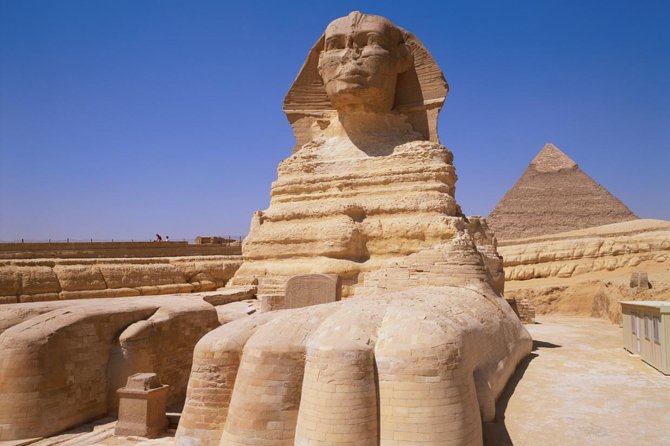
Great Sphinx: the photo stop that actually helps you understand Egypt
Next comes the Great Sphinx area, with a time block of about 30 minutes. This stop is where the tour leans into the famous visual spine of the whole plateau.
The big practical benefit is that your guide can point out what’s going on around the Sphinx, not just the Sphinx itself. That makes your photos more meaningful. You’re not only capturing a face in the sand, you’re capturing a central piece in the landscape of temples and royal symbolism.
If you care about the best angles, this is the moment to ask for photo timing and positioning. Guides like Khaled and Sue get praised specifically for giving strong photo direction, which is exactly what you want here.
Memphis City ruins: a quieter chapter after the pyramids
After Giza, the itinerary moves you toward Memphis, the ancient capital tied to Lower Egypt. You’re not going to walk a fully preserved “main strip” like you do at Giza, and that’s part of the appeal.
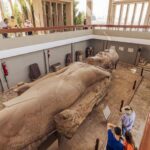
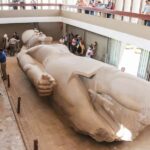
Instead, you get key relics and context around the city’s role. The tour specifically mentions seeing Ramses II statue and an Alabaster Sphinx. That’s the kind of detail that makes Memphis feel more specific than generic ruins.
You spend about 1 hour at the Memphis/Saqqara vicinity based on the schedule. Use that hour to ask how Memphis relates to the necropolis sites. The connection makes the day feel like more than four unrelated stops.
Saqqara: the Step Pyramid zone and the Old Kingdom story
Saqqara is where the tour earns its history points. You’re heading to the necropolis for Memphis, with the world-famous Step Pyramid of Djoser in the mix. The site covers a big burial ground area, and it’s packed with pyramids, mastaba tombs, and tomb complexes.
The tour’s main Saqqara block is about 1 hour with entry included. Expect quick, targeted viewing rather than a slow wandering day.
The best way to get value here is to have your guide explain why Saqqara matters for the evolution of pyramid building. The Step Pyramid helps you connect early monumental ambition to the later Giza giants.
Small add-on style pyramid stops
The itinerary also includes additional pyramid-related stops with shorter durations, around 15 minutes each.
- A stop tied to the Pyramid of Unas is listed as a replica stop in the schedule.
- A stop tied to the Pyramid of Teti is listed with time for exploring chambers and corridors.
Those short segments are useful if you want a bit more structure to the day, but don’t expect long, unhurried exploring. Think of them as guided “taste tests” that help you keep the sites straight.
Dahshur: Bent and Red Pyramids, and why they feel different
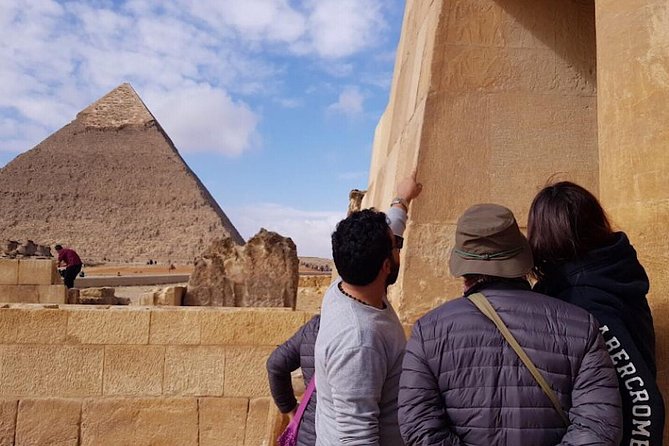
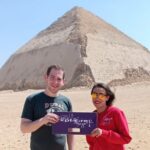
Then you shift to Dahshur, known for some of the oldest, best-preserved pyramids in Egypt, including Senefru’s Bent Pyramid and the Red Pyramid. Dahshur sits along the pyramid fields connected to the Memphis capital era.
You get about 1 hour here, and the included entry for the area is listed as free in the schedule. This matters because Dahshur can feel like a more “local” detour compared with Giza’s nonstop intensity.
What makes Dahshur a smart value add is that it gives you variety. You’re not just seeing the same pyramid silhouette again and again. The Bent Pyramid in particular tends to change how people interpret what they just saw at Giza.
The “Giza Plateau” repeats and panoramic stops, how to use them
You might notice the itinerary includes repeated moments tied to the Giza area and a “Panoramic View of the Pyramids” stop. Even if it sounds redundant on paper, it can actually help in real life because viewpoints at different times give different perspective.
A panoramic view is useful for understanding the overall layout. That’s why short viewpoint blocks can be worth keeping even when you’re eager to move on.
The “Pyramids of Giza” stop is also listed with about 1 hour. In practice, this is where you revisit the most iconic landmarks and solidify what you saw earlier.
What your $70 price really buys, and what you’ll likely pay extra
The tour price is $70 per person and it includes: a tour guide, hotel pickup and drop-off, a private tour, entry fees, and bottled water.
That entry-fee line is important because the schedule also notes that entry fees include basic area only. It also says the ticket inside the Great pyramids is $23 and not included.
So the value equation looks like this:
- You’re paying for logistics plus guide time plus access to the core areas.
- You may pay extra if you want interior access at the Great Pyramids.
If you’re budgeting, decide early whether you want interiors. Interior tickets can be a worthwhile upgrade, but you’ll want to be realistic about how much time you’ll still have for photos and for other sites.
Guide quality and what to ask so the day feels personal
The strongest praise in the experience is about the guide. Names that come up include Amr Fouad, Khaled, Sue, Marwa, and Tigo, along with drivers like Mohammed and Hammad.
The common theme is not just knowledge. It’s how guides explain what you’re seeing, and how they help with photo spots and viewing decisions. That’s huge because at Giza, a small positioning change can make your photo dramatically better.
Here’s what I’d ask your guide during the first hour:
- Which pyramid interior is most worth it for your time?
- Where should I stand for the clearest Sphinx composition?
- What’s one detail at Saqqara that makes it different from Giza?
When you ask those early, you stop treating the day like a checklist and start turning it into a story.
Food breaks, the optional koshari lunch, and shopping detours
Lunch is listed as optional, with koshari mentioned as an example. The schedule does not promise a full sit-down meal, so plan for snacks or simple meals depending on how the day runs.
One more practical caution: some versions of this kind of day tour can include stops at shops. A helpful way to handle this is to treat it as a timing trade. If you want more pyramid time, ask your guide to keep the shop stops short, or decline entirely when you can.
In general, when a guide stops at a workshop with sales pitches, you are still on your vacation. You get to say no. A quick browse or a polite pass is often the best move.
Camel and horse add-ons: how to protect your time and budget
There’s also mention of a camel option connected to a panoramic viewing stop, and the experience was described as time consuming. If you see an offer for camel or horse rides, keep two things in mind:
1) It may slow you down versus simply walking.
2) It can feel like extra cost layered onto a day that’s already planned.
My advice: if you want the view, ask how long the ride will take and whether it will cut into your official viewing time. If you’re short on time or trying to keep the day smooth, walking is usually the simplest choice.
Who this tour suits best
This is a strong pick if:
- You’re on a first Cairo trip and want the headline sites in one day.
- You like structure because you do not want to coordinate buses, entry lines, and timing yourself.
- You want a private guide experience without a huge time commitment for separate tours.
It may be less ideal if:
- You want deep museum time and long interior visits at multiple sites.
- You dislike shopping detours or you want a totally strict itinerary with no flexibility.
Should you book this 8-hour Cairo pyramids tour?
If your goal is to see Giza, Memphis, Saqqara, and Dahshur in a single day with private pickup and guide support, this is a good value plan. The guide quality points and the AC vehicle make it feel like the right kind of “efficiency,” not just rushing.
Book it if you’re okay with short stops and quick viewing. Skip it or plan an upgrade if you know you want lots of interior access or you hate time pressure. For most first-timers, though, this route is one of the most practical ways to get your bearings fast and understand how the pyramid story fits together.
FAQ
What time does the tour start?
It starts at 8:00 am.
How long is the tour?
The duration is listed as 8 hours (approx.).
Is hotel pickup and drop-off included?
Yes. Hotel pickup and drop-off are included.
What entry fees are included, and what costs extra?
Entry fees are included, but they cover basic area only. The ticket inside the Great pyramids is listed as $23 and is not included.
Is lunch included?
Lunch is not included. A koshari lunch is mentioned as optional.
Is this a private tour?
Yes. It is described as a private tour/activity, meaning only your group participates.
South to Saqqara and Dahshur

Giza, A Few More Ways In


More of Cairo from our review pile
- Cairo Layover Tour to Giza Pyramids Egyptian Museum and Khan Khalili Bazaar
★ 5.0 · 25 reviews - Private Luxor Day tour from Cairo by Flight
★ 5.0 · 25 reviews - Private full day tour to Giza Pyramids, Sphinx, Sakkara and Dahshour with guided
★ 5.0 · 25 reviews - Nile Dinner Cruise in Cairo With Belly Dancing and Transfer
★ 5.0 · 25 reviews - Private Giza Pyramids,Sphinx,camel,lunch, 2 tombs,Great Pyramid
★ 5.0 · 25 reviews - All inclusive Giza Pyramids ,Sphinx ,Lunch ,Camel&Inside pyramid
★ 5.0 · 25 reviews
Giza Pyramids & Sphinx Tours, compared.
 ★ 4.9Pyramids & Great Sphinx Private Tour with Camel RideFrom $486,335 reviews
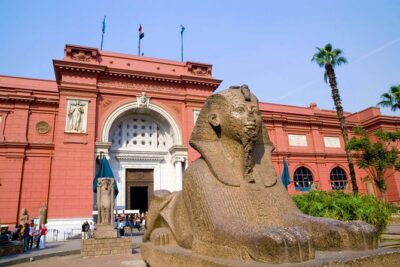 ★ 5.0Tour to Giza Pyramids and The Egyptian MuseumFrom $1556,016 reviews
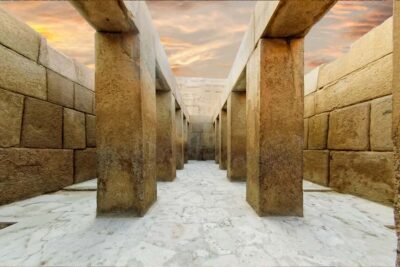
 ★ 4.7Pyramids of Giza, Sphinx, Saqqara & Memphis TourFrom $903,110 reviews
 ★ 4.6Half-Day Tour to Pyramids of Giza and the SphinxFrom $502,891 reviews
 ★ 4.6Pyramids, Sakkara & Memphis Tour with LunchFrom $602,493 reviews
 ★ 5.0Private ViP all-inclusive Giza Pyramids,Sphinx,Inside PyramidFrom $142,448 reviews
 ★ 4.7Grand Egyptian Museum, Pyramids, Sphinx Tour & LunchFrom $892,282 reviews
 ★ 4.7Cairo Pyramids, Sphinx & Egyptian Museum Day TripFrom $932,271 reviews
The lists this one sits on