
REVIEW · 4-DAY EXPERIENCES
4 Days Aswan Luxor Cruise with Visit in the Famous Attractions
Big temples, smooth sailing, tight timing. This 4-day Aswan to Luxor Nile cruise is a focused way to see Egypt’s headline monuments, with guided visits by an Egyptologist and a 5-star boat setup that keeps the travel friction low. I especially liked the Egyptologist-led tours, because the sites make more sense when someone connects the dots between gods, kings, and the architecture.
I also liked the small-group feel (maximum 10 travelers) and the human support that comes through from the planning side. Names like Daniel and George show up in real experiences, and that matters when you want your day to run on time and your questions answered quickly. One consideration: entrance fees are listed as not included, so budget for site entry even though many stops are timed and guided for you.
In This Review
- Quick highlights you should know
- What $850 Really Buys You on This Aswan to Luxor Cruise
- Cruise Comfort on the Nile: Clean Cabins, Deck Time, and Real Food
- Day 1 in Aswan: Philae Temple and the High Dam in One Day
- Philae Temple, Isis, and UNESCO relocation
- Aswan High Dam: Big numbers, bigger impact
- Timing reality
- Day 2: The Optional Abu Simbel Morning and the Kom Ombo Sunset Stop
- Abu Simbel, by choice: an early start worth considering
- Kom Ombo: Graeco-Roman temple geometry and a sunset feel
- Edfu evening: dinner and galabia party energy
- Day 3 Arrival in Luxor: Karnak’s Hypostyle Hall and Luxor Temple at Sunset
- Karnak Temple: 2,000 years of power, written in stone
- Luxor Temple: built for royal worship, used for later faiths
- Day 4 on the West Bank: Valley of the Kings, Hatshepsut, and the Colossi of Memnon
- Valley of the Kings: underground preparation for the afterlife
- Deir el Bahari and the Temple of Hatshepsut
- Colossi of Memnon: 60-foot statues facing east
- Entrance Fees and Tickets: The One Money Detail You Should Confirm
- Who This Cruise Is Best For, and Who Should Rethink It
- Should You Book This Aswan to Luxor Nile Cruise with Visit in Famous Attractions?
- FAQ
- What is the duration of the Aswan to Luxor cruise?
- What time does the tour start?
- Is pickup offered?
- What is included in the price besides the cruise?
- Are entrance fees included?
- Is Abu Simbel included?
- How big is the group?
- Does the tour depend on weather?
- What is the cancellation window?
Quick highlights you should know
- Philae Temple on an island setting tied to Isis, relocated because of the Aswan Dam
- Abu Simbel as an optional early-morning add-on with a private AC transfer
- Karnak Temple’s Hypostyle Hall with 134 columns and an enormous scale that feels unreal
- Luxor Temple at sunset plus layers of later history, including Christian and Coptic use
- West Bank trio on Day 4: Valley of the Kings, Hatshepsut at Deir el Bahari, and the Colossi of Memnon
- Onboard full board across 3 nights, with meals included and downtime on the Nile
Trying to choose? These Aswan trips kept surfacing in our notes.
- 4-Days Nile Cruise From Aswan To Luxor including Abu Simbel and Hot Air Balloon★ 5.0 · 3,142 reviews
- From Aswan: Abu Simbel Temple Day Trip with Hotel Pickup★ 4.4 · 2,807 reviews
- 4-Day 3-Night Nile Cruise from Aswan to Luxor&Abu Simbel+Balloon★ 5.0 · 2,023 reviews
- 4-Day 3-Night Nile Cruise from Aswan to Luxor including Abu Simbel, Air Balloon★ 4.5 · 612 reviews
What $850 Really Buys You on This Aswan to Luxor Cruise
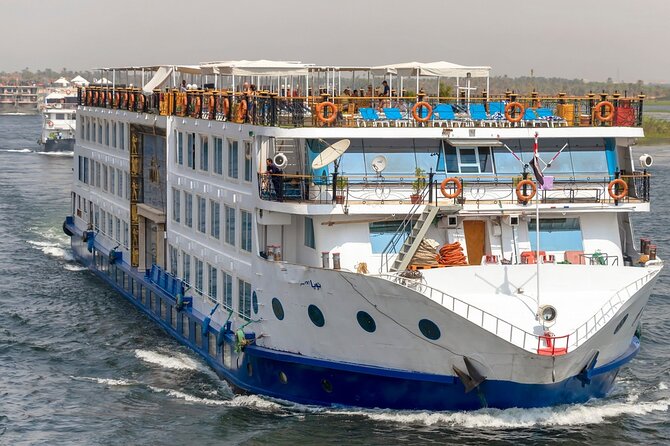
For $850 per person, the big value here is not just the boat. It’s the way the day is structured so you spend your limited time seeing major sites, not stuck in logistics.
You’re getting 3 nights on a 5-star Nile cruise on a full board basis, plus an Egyptologist guide, and air-conditioned vehicle transport for the sightseeing days. You also get meals included: 3 breakfasts, 3 lunches, and 3 dinners. In practical terms, that means you can focus on temples and photos without hunting down food between stops.
The other value is the pace control. Maximum group size is 10, so you’re less likely to feel like a number in a large crowd. In real experiences with this operator, Daniel is repeatedly described as responsive and organized, and that kind of coordination helps when you hit Egypt’s daily variables like traffic timing and moving between sites.
Cruise Comfort on the Nile: Clean Cabins, Deck Time, and Real Food
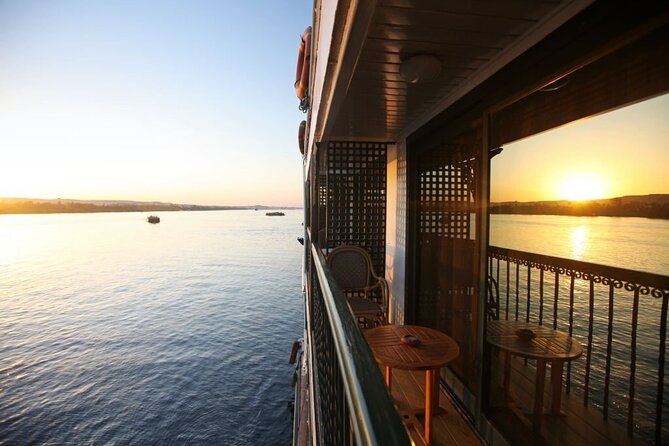
The cruise experience is the in-between space that makes the sightseeing days feel doable. Between temple hours, you get that slow Nile rhythm: sailing time, deck time, and meals without leaving the ship.
From the type of cruising described in real bookings, the boats can include ships like Ms. Adonis, with features such as a cabin with a panoramic window you can open. Other experiences mention Daniel recommending a ship like Blue Shadow. I can’t promise which exact vessel you’ll get every time, but the consistent theme is comfort and cleanliness, not a bare-minimum floating hotel.
Two onboard moments stand out as worth mentally scheduling in advance. First, the day on the river includes tea time on the sundeck, which is a nice reset after a temple visit. Second, there’s an evening element where you dress in galabia for an oriental party, which helps break up the intensity of ancient monuments with something fun and local-feeling.
Practical tip: pack light layers. Egyptian days can be warm, and AC vehicles plus indoor temple spaces can feel cooler than you expect.
Day 1 in Aswan: Philae Temple and the High Dam in One Day
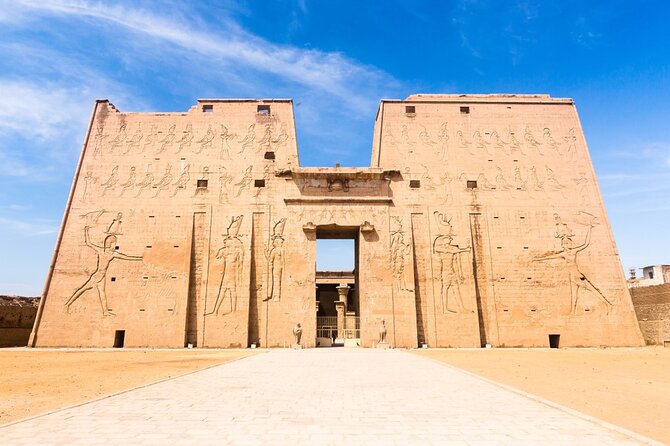
Aswan is a smart start because it sets the mood. You’re arriving in a river city, stepping into sacred architecture, then looking at a modern engineering landmark that changed the region.
Philae Temple, Isis, and UNESCO relocation
Philae Temple is dedicated to Isis, and it’s not just important because of its legends. It’s important because the site has a story of survival, relocated after the Aswan Dam threatened it. When you see Trajan’s Kiosk and references like Pharaoh’s Bed, you’re looking at layers of Roman-era influence on a temple that originally served earlier Egyptian worship.
If you like mythology that actually connects to what you’re seeing, this stop helps. Isis is tied to funeral rites, but also to rebirth, healing, and protection of kings. During the Roman period, her cult spread widely, even far enough that there was a temple dedicated to her in London. That kind of connection is exactly why a guided visit pays off.
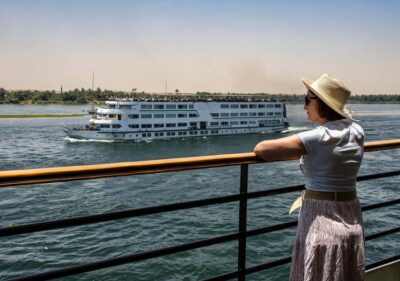
Aswan High Dam: Big numbers, bigger impact
After Philae, you visit Aswan High Dam. The scale is hard to hold in your head: 3,600 meters long, 980 meters thick at the base, and 111 meters tall at its highest point. It forms Lake Nasser, described as the world’s largest man-made lake, and it supports irrigation and electricity for Egypt.
What makes this stop valuable is that you’re seeing how a modern structure reshaped the geography around ancient monuments. It also gives you a different angle on why certain temples and landscapes are now where they are today.
Timing reality
Day 1 includes lunch on board, then visits after lunch. The upside is you avoid a stressful scramble for meals and you get a paced start to the week. The downside is you may have an energetic first day if you’re arriving from a flight that morning.
Day 2: The Optional Abu Simbel Morning and the Kom Ombo Sunset Stop
Day 2 is where your itinerary can branch, and that’s a good thing. You can choose to take the optional Abu Simbel early, then still enjoy the river stops afterward.
Abu Simbel, by choice: an early start worth considering
Abu Simbel is handled as an optional trip. If you choose it, you get an early morning private transfer by AC vehicle, then about 2 hours on site to visit the two temples.
These are Ramses II’s temples, and they’re described as among the most famous after the Giza Pyramids. You’re getting an experience that feels like a “special mission” day, because you’re traveling farther than the usual Aswan-Luxor corridor.
Consideration: it is an early day. If you don’t love waking up before your body is ready, skip it and keep your energy for Luxor and the West Bank.
Kom Ombo: Graeco-Roman temple geometry and a sunset feel
After the river navigation, you reach Kom Ombo for a guided tour. The temple dates to the Graeco-Roman period (332 BC to AD 395), with earlier structures from the 18th dynasty leaving little behind.
This is a temple stop that benefits from a guide. Kom Ombo’s design and symbolism can feel confusing without someone explaining the meaning behind what you’re seeing. You also get a sunset-related rhythm, including tea time and time to enjoy the river views.
Edfu evening: dinner and galabia party energy
Then the cruise navigates to Edfu. The plan includes an oriental dinner and an oriental party where you dress in galabia after dinner.
This is not the same as a quiet museum evening. It’s more like a cultural break in the middle of serious history. If you enjoy a bit of performance and playful participation, it works well. If you prefer quiet time, you might treat it as optional mood, then return to your cabin early.
Day 3 Arrival in Luxor: Karnak’s Hypostyle Hall and Luxor Temple at Sunset
Luxor is where the cruise starts feeling like the center of the story. The boat arrives in the afternoon, then the guided time begins, starting with Karnak and finishing with Luxor Temple by sunset.
Karnak Temple: 2,000 years of power, written in stone
Karnak is described as the largest religious building ever constructed, known in ancient times as Ipet-isu, meaning most select of places. It’s a temple complex built over 2,000 years and dedicated to the Theban triad: Amun, Mut, and Khonsu.
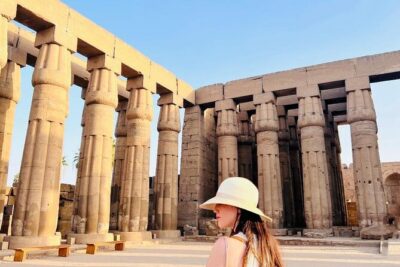
The Hypostyle hall is the headline moment. It spans 54,000 square feet, and it has 134 columns. The scale is so big it’s almost hard to photograph properly, which is why a guided route helps you hit the key views without getting lost.
There’s also mention of a sacred lake at the site, and multiple smaller temples across the complex. You’ll get the sense that Karnak isn’t one temple, it’s a whole system.
Luxor Temple: built for royal worship, used for later faiths
After Karnak, you go to Luxor Temple. This one is a sunset visit, which is exactly when stone starts to glow and the crowds tend to thin out a little.
Luxor Temple was built by Amenhotep III and completed by Tutankhamun and Horemheb, with later additions by Ramses II. At the rear there’s a granite shrine dedicated to Alexander the Great, which is a reminder that the story of Egypt’s sacred spaces doesn’t end with the pharaohs.
A fascinating part is the layers of continued use. The temple served worship into Christian era times, including conversion of a hypostyle hall into a Christian church. Later, it was buried under streets and houses, then uncovered, and the mosque of Sufi Shaykh Yusuf Abu al-Hajjaj was built over the area and preserved.
This stop is a great example of why guided context matters. You don’t just see ruins, you see a long timeline of how people kept using the same sacred geography.
Day 4 on the West Bank: Valley of the Kings, Hatshepsut, and the Colossi of Memnon
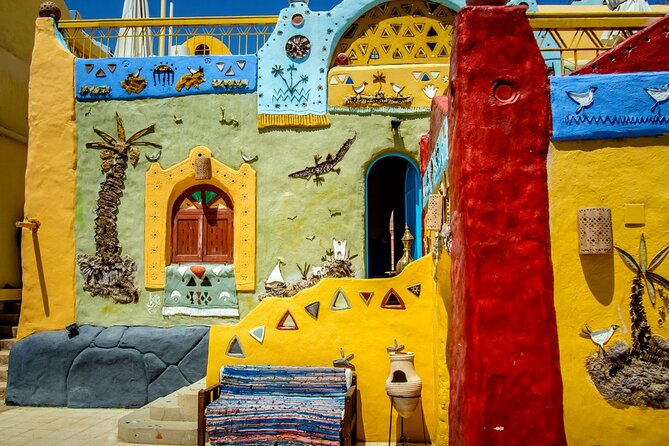
If Day 3 is about Luxor’s daytime monument aura, Day 4 is about the West Bank, where the tomb culture is the main character.
Valley of the Kings: underground preparation for the afterlife
After breakfast, you cross the Nile to visit the Valley of the Kings. The New Kingdom era (1539 to 1075 BC) turned this valley into a royal burial ground. You’ll hear about tombs linked to pharaohs like Tutankhamun, Seti I, and Ramses II, plus queens, high priests, and other elites from the 18th, 19th, and 20th dynasties.
What makes this visit hit emotionally is the contrast between secrecy and ambition. These were hidden underground mausoleums, built with elaborate preparations for an afterlife worldview where mummification played a role.
A good tip is to pace yourself inside the tomb spaces if you choose ones with restrictions. The architecture is the point, but your body needs breaks in hot conditions.
Deir el Bahari and the Temple of Hatshepsut
Next is Temple of Hatshepsut at Deir el Bahari. This site sits beneath stark cliffs and is known for stepped platforms and pillared porticoes, with reliefs set against the desert backdrop.
The most important thing you learn here is the person behind the temple. Hatshepsut was the eldest daughter of King Thutmose I, and she first became regent after the death of Thutmose II. When her stepson Thutmose III came of age, she adopted the title of pharaoh and ruled for more than two decades. She’s considered one of Egypt’s first female pharaohs.
This is history that feels personal. You’re standing in a structure built to assert authority, and you can see why her reign mattered.
Colossi of Memnon: 60-foot statues facing east
To wrap up, you visit the Colossi of Memnon, also known as el-Colossal or el-Salamat. These are two monumental statues representing Amenhotep III, seated and facing east toward the Nile.
They rise about 60 feet (18 meters) high and weigh around 720 tons each. They were carved from single blocks of sandstone, which explains why these figures are so solid and imposing even from a distance. The statues include details tied to symbols like his mother, his wife, and the god Happy.
It’s a short stop, about 20 minutes, but it’s a satisfying way to end. You get scale, symbolism, and the classic West Bank “you are in ancient Egypt” feeling without running yourself ragged.
Entrance Fees and Tickets: The One Money Detail You Should Confirm
The package note says entrance fees to all sites are not included. At the same time, the daily plan you receive often shows some sites as marked included or free.
That mismatch is common in multi-language listings, and it can create confusion. Before you go, I’d confirm directly with the operator what you must pay on the spot. If you don’t, you might arrive expecting something to be covered and then get asked to pay at a gate.
For planning purposes, assume you will need extra money for site entries, and keep a bit of flexibility in your schedule. The guided tours are timed well, but gates and ticketing rules can always vary based on the day.
Who This Cruise Is Best For, and Who Should Rethink It
This experience is a strong match if you want a practical, guided way to see Egypt’s biggest hits in a short window.
It’s best for:
- People who like structure and don’t want to plan a day-by-day route through multiple cities
- Travelers who want an Egyptologist guiding the stories, not just walking between photos
- Small-group fans, since the maximum is 10 travelers
- Anyone who appreciates full board convenience on a 5-star Nile cruise
You might rethink it if:
- You dislike early starts, since Abu Simbel, if chosen, is early
- You want total freedom with zero set timings, because this runs on a guided schedule
- You don’t want to handle any extra costs, since entrance fees are listed as not included
Also, I’d think carefully about month and heat. One review note explicitly warned against August due to heat, and that’s not just nerves. If you travel in high heat season, plan hydration and protect your skin and head.
Should You Book This Aswan to Luxor Nile Cruise with Visit in Famous Attractions?
I’d book it if your priority is value for time. Four days to cover Aswan highlights, a possible Abu Simbel morning, and Luxor plus the West Bank classics is a lot to do well. The included guide service and full board meals do real work here, because they reduce daily friction.
I’d also book it if you care about explanation, not just sightseeing. Philae, Karnak, Luxor Temple, and the West Bank tomb culture all reward context, and Egyptologist guiding is built into the experience.
The key reason not to rush: entrance fees are not included in the package note. If that detail is a dealbreaker for your budget, confirm the exact site fee situation before you pay. Once you do that, this cruise is a smart, organized way to experience Egypt’s top monuments with a steady, human pace.
FAQ
What is the duration of the Aswan to Luxor cruise?
It runs for 4 days approximately.
What time does the tour start?
The start time is listed as 8:00 am.
Is pickup offered?
Pickup is offered.
What is included in the price besides the cruise?
You get 3 nights on a 5-star Nile cruise with full board, an Egyptologist tour guide, air-conditioned vehicle, and meals including 3 breakfasts, 3 lunches, and 3 dinners.
Are entrance fees included?
Entrance fees to all sites are listed as not included, so you should plan for additional site entry costs.
Is Abu Simbel included?
Abu Simbel is described as an optional trip.
How big is the group?
The maximum group size is 10 travelers.
Does the tour depend on weather?
Yes, it requires good weather. If canceled due to poor weather, you’ll be offered a different date or a full refund.
What is the cancellation window?
Free cancellation is offered up to 24 hours in advance for a full refund. If you cancel less than 24 hours before the start time, the amount you paid is not refunded.
More of Aswan from our review pile
- Nubian Dinner at Nubian Village
★ 4.5 · 15 reviews - Private 1-Hour Felucca Sailing and Botanical Garden In Aswan
★ 3.5 · 15 reviews - 4 Days Nile Cruise From Aswan to Luxor 5*
★ 5.0 · 15 reviews - Sail Through Time:Unforgettable Felucca Ride on the Nile in Aswan
★ 5.0 · 15 reviews - Aswan Airport Private Arrival Transfer
★ 5.0 · 15 reviews - 4 Days Nile Cruise From Aswan To Luxor
★ 5.0 · 15 reviews
4-Day Experiences, compared.
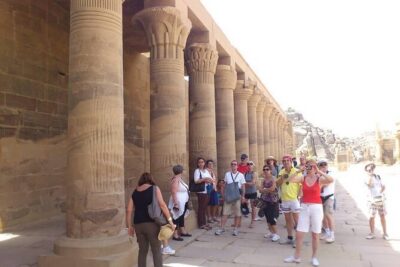 ★ 4.54-Day 3-Night Nile Cruise from Aswan to Luxor including Abu Simbel, Air BalloonFrom $329612 reviews
 ★ 4.14-Day Nile Cruise from Aswan to Luxor with GuideFrom $830593 reviews
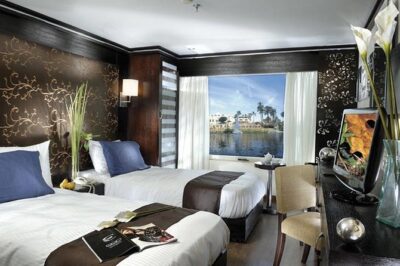 ★ 5.04-Day 3-Night Nile Cruise from Aswan to Luxor – Private TourFrom $504369 reviews
 ★ 4.54 Days Nile Cruise from Aswan to Luxor including Abu Simbel and Hot Air BalloonFrom $329356 reviews
 ★ 5.04-Day 3-Night Nile Cruise from Aswan to Luxor With Balloon and Abu SimbelFrom $311327 reviews
 ★ 4.44 Days Nile Cruise Luxor Abu Simbel & Air BalloonFrom $450310 reviews
 ★ 4.54-Day Nile Cruise sails Aswan to Luxor&Abu Simbel.Hot air BalloonFrom $306247 reviews
 ★ 5.04-Day Nile Cruise Aswan and Luxor Hot Air Balloon with Abu SimbelFrom $715234 reviews
The lists this one sits on