
REVIEW · ABU SIMBEL TEMPLE TRIPS
3-Day Luxor Aswan and Abu Simbel Historical Sites Private Tour
Three days, three ancient anchors of the Nile. This private tour is a smart way to hit Luxor, Aswan, and Abu Simbel without spending your time figuring out transport or fighting for tickets, and you get an Egyptologist guide plus first-class train between Luxor and Aswan. It is built for people who want big results with less hassle.
I especially like that the plan includes hotel pickup and drop-off, so you start each day already in motion. The Egyptology part matters here too, because guides do the explaining so you can actually read what you are seeing. In the guide lineup, Khaled is a name that comes up often in participant praise for keeping the storytelling lively.
One possible drawback to plan for up front: entrance fees are not included, so you still need to budget for admissions at each stop. Also, some optional add-ons can cost extra, like the Tomb of Tutankhamun.
In This Review
- Key things that make this tour worth your time
- Why this Luxor, Aswan and Abu Simbel tour feels easier than DIY
- Day 1 on the West Bank: Valley of the Kings, Hatshepsut, and Memnon in one sweep
- Valley of the Kings: what you can do, and what your guide handles
- Temple of Hatshepsut: a female pharaoh told through stone
- Colossi of Memnon: quick, dramatic, and easy to overlook
- Karnak and Luxor Temple: two ways to experience power and time
- Karnak Temple complex: go from old to older
- Luxor Temple: pharaohs, obelisks, and a big dose of symbolism
- Day 2 in Aswan: Philae Temple by boat, plus the High Dam era
- Philae Temple: the relocated island sanctuary
- Unfinished Obelisk: the crack that changed everything
- Aswan High Dam: modern ambition on the Nile
- Day 3 Abu Simbel: the long day that’s still worth it
- The Great Temple and the smaller Hathor Temple, with one important rule
- How to get value even with the interior restriction
- Price and value: what you pay for, and what you still need to budget
- Who this private tour is best for
- Should you book it?
- FAQ
- What is the duration of the tour?
- Is hotel pickup and drop-off included?
- Does the tour include transportation between Luxor and Aswan?
- Are entrance fees included for the temples and sites?
- Can I visit the Tomb of Tutankhamun?
- Are Egyptologists allowed inside the tombs and Abu Simbel temples?
- How do you get to Philae Temple?
- Is this a private tour?
- Is the tour easy to cancel?
Key things that make this tour worth your time
- First-class train Luxor to Aswan included: it replaces a stressful transport chore with comfortable, scheduled travel.
- Philae Temple by boat: a short motorboat ride gets you to the island setting and keeps the river experience part of the day.
- A true private tour for your group: no mixing, no waiting for strangers who move slower than you.
- UNESCO relocation story at Abu Simbel: you get the context for why the temples ended up where they are today.
- Free time inside major sites: at places like Hatshepsut, Karnak, and Luxor Temple, you are not stuck on a nonstop leash.
- Long-haul day 3 is handled for you: Abu Simbel is a vehicle day from Aswan with a guide and on-the-ground logistics.
Further south to Abu Simbel, other operators
- 4 Nights Luxor to Aswan Nile cruise with Abu Simbel&Air Balloon★ 5.0 · 155 reviews
- 4 Days Aswan and Luxor Nile cruise&Abu Simbel by plane from Cairo★ 5.0 · 155 reviews
- Luxor: 4 Days Nile Cruise with Guided Tours & Abu Simbel★ 4.5 · 104 reviews
- 4 nights Luxor to Aswan Nile Cruise with Abu Simbel & Air Balloon★ 4.5 · 102 reviews
Why this Luxor, Aswan and Abu Simbel tour feels easier than DIY
Luxor and Aswan can be a logistical puzzle if you arrive with only a rough plan. This tour cuts the stress by bundling transportation, site guidance, and key transit. You get hotel pickup and drop-off, an air-conditioned vehicle, and included booked components like the first-class train.
The biggest practical win is the train. The Luxor to Aswan route is one of the classic ways to move through Upper Egypt, but it can turn into a scavenger hunt if you try to coordinate it yourself. Here, first-class seating is part of the deal, which means you spend that mental energy on the art and architecture instead of schedules.
The second win is that you are not just touring, you are being taught how to look. At the Valley of the Kings, guides cannot go into the tombs with you, but they can still explain what to notice in the decorated rooms. At Karnak and Luxor Temple, they can connect the scenes to the pharaohs and the way the sacred spaces evolved over time. That kind of guidance can turn a visit from I saw it into I understand what I am seeing.
Finally, this is structured as one private group, meaning the pace can actually match your preferences. If your idea of a great day is to spend a little longer in the places that click for you, this setup gives you that room.
Day 1 on the West Bank: Valley of the Kings, Hatshepsut, and Memnon in one sweep
Day 1 focuses on the West Bank, where the Theban necropolis story starts. The West Bank is where you go to see how the ancient Egyptians treated death as a journey that needed serious preparation. The sites here are close enough to combine in a single day, but varied enough to feel like more than one stop.
Valley of the Kings: what you can do, and what your guide handles
You start with a brief stop at the visitors center. Guides are not permitted inside the tombs, which is a key limitation to understand. Your guide will still help you get value from what you see by pointing out what to look for inside the decorated chambers.
If you want to add the Tomb of King Tutankhamun, there is an extra cost you pay directly. That is worth considering if Tutankhamun is your must-see, but if you want to keep the day from feeling rushed, you can choose other tomb options that fit your interest.
Temple of Hatshepsut: a female pharaoh told through stone
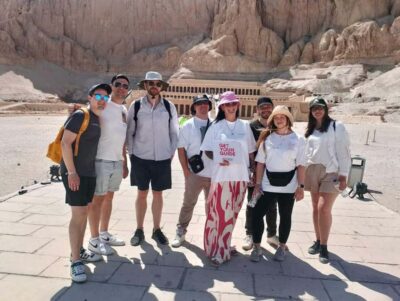
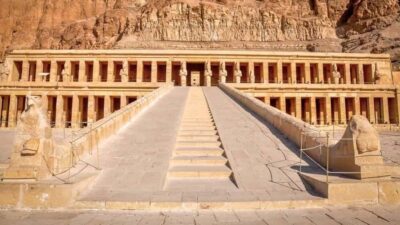
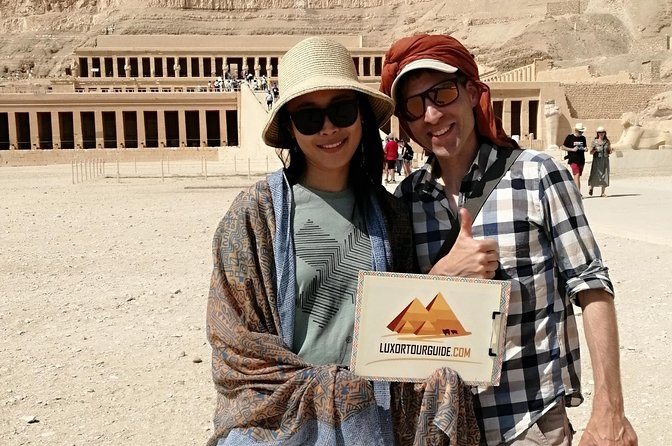
Then you move to the Temple of Hatshepsut, one of the most striking monuments in Egypt. Your guide sets the stage with the story of Queen Hatshepsut, including the fact that she is known for taking on a male presentation to secure the throne.
The site also gives you time to wander. There is free time to explore the courtyards and hieroglyphic details at your own pace. That matters here because the temple is not just a backdrop. The carvings and layout reward a slower look.
Colossi of Memnon: quick, dramatic, and easy to overlook
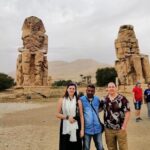
The Colossi of Memnon are fast, about 20 minutes. These two giant statues are all that remain of Amenhotep III’s funerary temple. Even in a short stop, they land because they are monumental and stripped down. You get a sense of scale without needing to read a hundred texts to enjoy it.
Karnak and Luxor Temple: two ways to experience power and time
If Day 1 is about the West Bank’s funerary world, Day 1’s second half (and the rest of Luxor Temple) is about the living city’s sacred center.
Karnak Temple complex: go from old to older
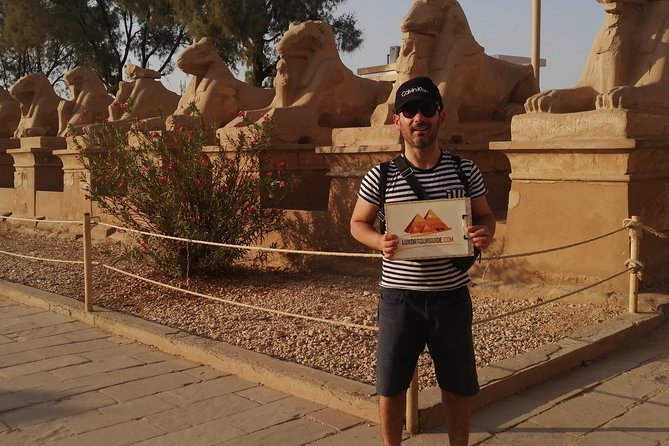
Karnak is a temple complex that grows over time, leaving legacies from multiple pharaohs. You enter along the Avenue of Sphinx, and your guide explains how the massive façade was constructed.
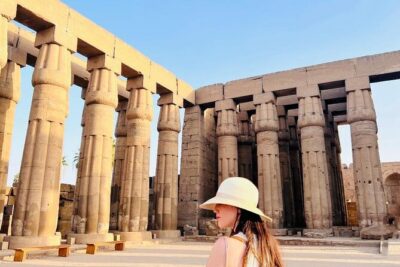
Once you step inside, you move into the Great Court and the Great Hypostyle Hall. The scale can feel unreal: 134 columns tower above you like an ancient forest. The further back you go into the complex, the older the ruins feel in your head, even if you are not measuring years. It is a place where the building itself is the timeline.
At the rear, there is the sacred lake, tied to purification rituals and offerings. After the guided walk, you get extra free time. Use it to sit with the space, not just scan it.
Luxor Temple: pharaohs, obelisks, and a big dose of symbolism
Luxor Temple is dominated by statues of Ramses II, and your guide connects it to its relationship with Karnak through the historic two-kilometer Avenue of Sphinx. The temple has survived Nile flooding, foreign invasions, and thousands of years of exposure, which helps you appreciate why these sites are both fragile and resilient.
Inside, the inner walls and columns are decorated with hieroglyphics. Your guide helps you decipher them, and that makes a real difference here. Luxor Temple also connects into unexpected world history, including Alexander the Great writing himself into the site’s story. You can also see one of the original pair of obelisks, with the other now in Paris.
You also get about an hour at Luxor Temple, which is a good length. It is long enough to see the main features, and short enough that you do not feel dragged through it.
Day 2 in Aswan: Philae Temple by boat, plus the High Dam era
Day 2 shifts from ancient Egypt’s sacred riverine story to how modern Egypt reshaped that river. Aswan is a great place for this contrast. It is not just about old stones. It is also about how people in more recent times tried to protect or relocate those stones.
Philae Temple: the relocated island sanctuary
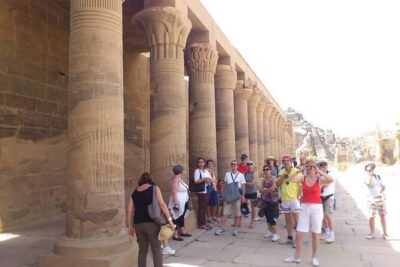
Philae Temple is the centerpiece. It was moved around 500 meters when the High Dam caused Nile waters to rise. That relocation is not a small detail, it is the reason the site is still standing the way you can visit it today.
You take a short motorboat ride to the island. Then you walk through the temple with your guide before being given free time to explore on your own. The setting on the river is a big part of the experience, because Philae was originally tied to the goddess Isis and the myth of Isis and Osiris. Shrines and sanctuaries reflect that theme through their arrangement.
This stop is included as part of the tour’s boat journey, so you do not have to negotiate or puzzle out the timing.
Unfinished Obelisk: the crack that changed everything
Next is the Unfinished Obelisk in Aswan’s granite quarries. It is a rare type of attraction: you see a monument that stopped mid-production.
Your qualified Egyptologist guide explains how a one-tonne obelisk was carved and why it was abandoned after a crack was discovered. That adds a human and practical layer. It reminds you this was heavy work, not just myth.
Even if you are not obsessed with ancient engineering, this stop works because it shows failure and interruption, not only finished grandeur.
Aswan High Dam: modern ambition on the Nile
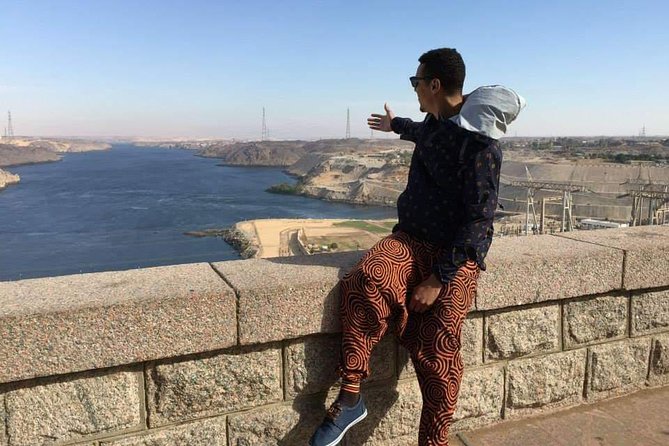
The day ends with the Aswan High Dam. You see a modern Egyptian achievement that took ten years to build, from 1960 to 1970. Your visit also includes a view of Lake Nasir, described as the second largest artificial lake in the world, and you cross over the Friendship emblem.
This is worth it because it connects directly to why Philae had to move. If you enjoyed the relocation story earlier, this makes the cause and effect feel real.
Day 3 Abu Simbel: the long day that’s still worth it
Day 3 is the big highlight and it is a full day. The Abu Simbel visit is about 8 hours on a vehicle tour from Aswan, with a qualified Egyptologist guiding the experience.
The Great Temple and the smaller Hathor Temple, with one important rule
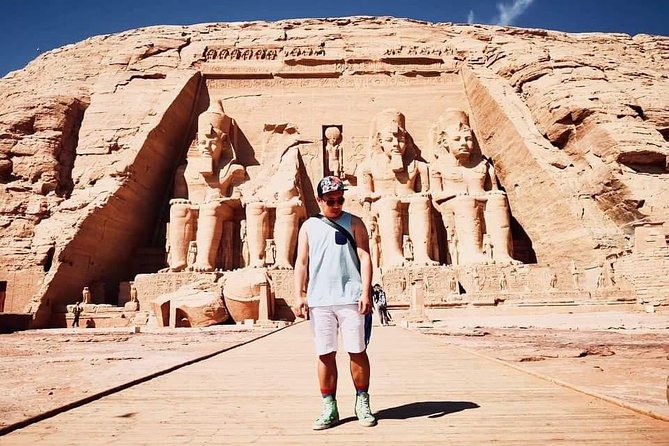
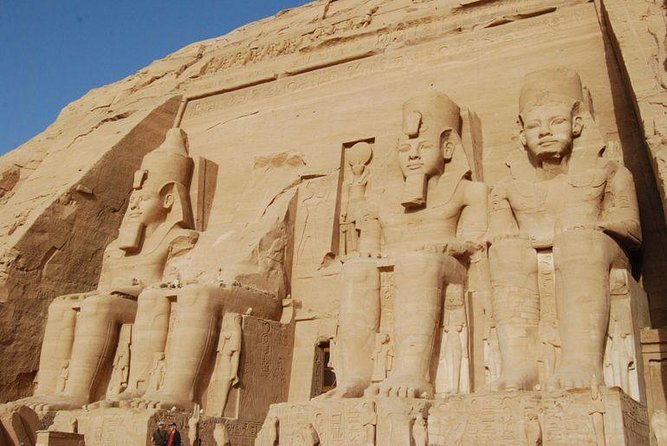
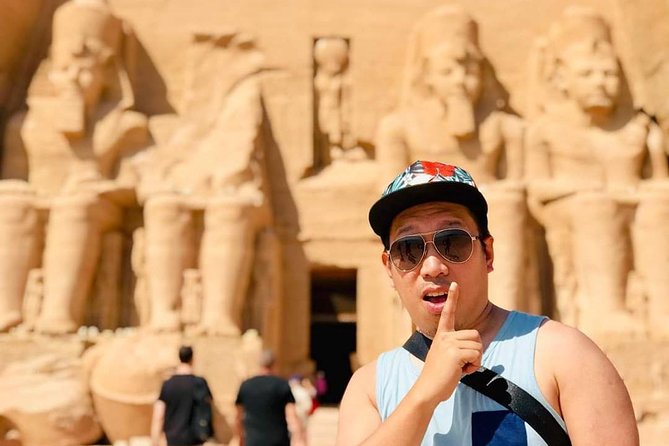
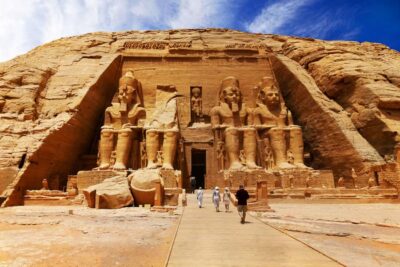
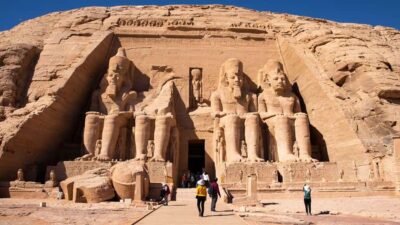
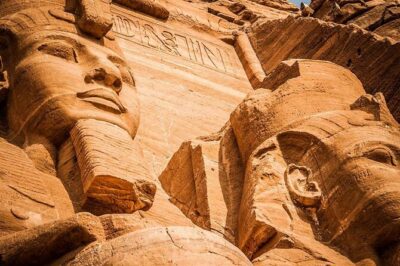
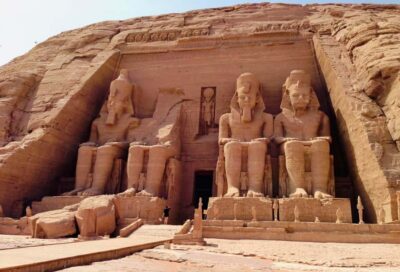
Abu Simbel is famous for its rock-hewn pharaoh figures, four towering statues on the cliff face. Your guide explains the history of the site, including how it was discovered by accident in 1813. You also learn about the UNESCO-led relocation of the entire cliff face to higher ground.
One rule to know: guides are not permitted inside either the Great Temple of Ramses II or the smaller Temple of Hathor due to the volume of visitors. Instead, your guide uses photos and illustrations to explain what you would otherwise see inside.
That can feel disappointing if you expect to be physically shown every chamber, but it still keeps the experience coherent. You will leave with a clear understanding of what the temples look like, what they were built for, and what you are missing.
How to get value even with the interior restriction
Even with no guide walk-ins, you can still get a lot out of Abu Simbel by doing two things. First, focus on the exterior storytelling, the scale of the façade, and the placement. Second, listen closely to the photos and illustrations. When your guide is explaining, the visuals help you map the inside from what you already learned.
Price and value: what you pay for, and what you still need to budget
The price listed is $251.29 per person for a roughly 3-day experience. That sounds like a lot until you break it down into pieces that can cost real money and effort on your own.
You are paying for a private Egyptologist guide, hotel pickup and drop-off, and air-conditioned transport. You are also paying for booked transit components like first-class train tickets between Luxor and Aswan and the boat journey to Philae Temple. Those are the exact items that can be hardest to coordinate quickly when you are juggling directions, ticket lines, and timing.
The tour does not include entrance fees to the sites. That means you should budget for admissions for each stop, and also keep in mind optional extras like the Tomb of Tutankhamun, which requires an additional cost if you want to go.
Gratuities are recommended. Accommodations are not included, unless you ask. Food and drinks are not included either.
So the real value question is this: if you want high-effort Egyptology stops plus multiple forms of transport handled for you, this price can be a solid trade. If you only want one or two sites and you like managing everything yourself, then it could feel expensive.
Who this private tour is best for
This tour fits best if you fall into one of these groups:
- You want a time-efficient route across Luxor, Aswan, and Abu Simbel with minimal logistics work.
- You prefer to have an Egyptologist guide explain context, so you do not rely on guesswork when looking at hieroglyphics and temple layouts.
- You like private pacing and want your group to move together without waiting on the pace of strangers.
It also fits people with moderate physical fitness. The plan includes walking inside complexes like Karnak and Luxor Temple and moving between sites. If you know you can handle that kind of walking, this is likely to feel satisfying rather than exhausting.
If you are the type who wants total freedom to skip stops or linger for hours in one place, a private guided schedule can still be flexible, but you will want to confirm how much your guide can adjust the time within the fixed day structure.
Should you book it?
I would book this tour if you want the big Egyptian stops in a short window and you do not want to gamble on transport planning. The first-class train, the Philae boat connection, and the fact that you get a qualified guide to explain what you are looking at are the core reasons this feels like good value.
I would think twice only if you hate paying extra on top for admissions, or if a day like Abu Simbel, with interior restrictions for guides, would frustrate you. Otherwise, this is a practical way to see why Luxor and Aswan are the center of the Egypt story, and why Abu Simbel remains a must.
FAQ
What is the duration of the tour?
The tour is approximately 3 days.
Is hotel pickup and drop-off included?
Yes. Hotel pickup and drop-off are included.
Does the tour include transportation between Luxor and Aswan?
Yes. It includes first-class train tickets from Luxor to Aswan, plus a boat journey to Philae Temple.
Are entrance fees included for the temples and sites?
No. Entrance fees are not included. Admission tickets for sites are listed as not included.
Can I visit the Tomb of Tutankhamun?
You can choose to visit it for an additional cost payable direct. Guides are not permitted inside tombs, but they can explain what to look for.
Are Egyptologists allowed inside the tombs and Abu Simbel temples?
Guides are not permitted inside the Valley of the Kings tombs. At Abu Simbel, guides are also not permitted inside the Great Temple or the smaller Temple of Hathor.
How do you get to Philae Temple?
You take a short motorboat ride to the island where Philae Temple is located.
Is this a private tour?
Yes. It is a private tour where only your group participates.
Is the tour easy to cancel?
There is free cancellation. You can cancel up to 24 hours in advance of the experience’s start time for a full refund.
Further South: Abu Simbel


More of Luxor from our review pile
- Private Tour Nile Felucca Ride at Sunset in Luxor
★ 5.0 · 26 reviews - Private Full day East and West Bank, Luxor
★ 5.0 · 26 reviews - Luxor Day Tour: Kings Valley & Karnak & Luxor & Hatshepsut Temple
★ 5.0 · 26 reviews - Full-Day East and West Luxor Private Tour
★ 4.5 · 26 reviews - Day Trip to Edfu & Kom Ombo temples from Luxor and drop off in Aswan or Luxor
★ 5.0 · 26 reviews - 5 Days 4 Nights Nile Cruise Tour
★ 5.0 · 27 reviews
Abu Simbel Temple Trips, compared.
 ★ 5.04-Days Nile Cruise From Aswan To Luxor including Abu Simbel and Hot Air BalloonFrom $3493,142 reviews
 ★ 4.4Abu Simbel Temple Day Trip with Hotel PickupFrom $702,807 reviews
 ★ 4.54-Day 3-Night Nile Cruise from Aswan to Luxor including Abu Simbel, Air BalloonFrom $329612 reviews
 ★ 4.6Abu Simbel Temple Private Guided Day Trip with LunchFrom $148546 reviews
★ 4.54-Days Nile Cruise From Aswan To Luxor including Abu Simbel and Hot Air BalloonFrom $320509 reviews
★ 4.6Abu Simbel Temple Private Guided Day Trip with LunchFrom $148546 reviews
★ 4.54-Days Nile Cruise From Aswan To Luxor including Abu Simbel and Hot Air BalloonFrom $320509 reviews
 ★ 4.5Private Day Tour to Abu Simbel Temples from AswanFrom $53507 reviews
★ 4.54 Days Nile Cruise from Aswan to Luxor including Abu Simbel and Hot Air BalloonFrom $329356 reviews
★ 4.5Private Day Tour to Abu Simbel Temples from AswanFrom $53507 reviews
★ 4.54 Days Nile Cruise from Aswan to Luxor including Abu Simbel and Hot Air BalloonFrom $329356 reviews
 ★ 4.3Abu Simbel Day Tour with Private Guide and CarFrom $95342 reviews
The lists this one sits on