
REVIEW · 2-DAY EXPERIENCES
2 Days In Giza And Cairo. (Including lunch)
Two days, zero Cairo whiplash. This private 2-day tour slows things down across Giza, Saqqara, Memphis, Dahshur, the Egyptian Museum, the Citadel, and Khan el-Khalili, so the history actually lands. I especially like the on-the-ground explanations from guides such as Hala and Mohammed, and I love that hotel pickup and drop-off mean you spend your energy on sights, not logistics. One thing to consider: if you prefer lots of unstructured wandering, you’ll want to clearly ask for a slower pace, because at least one experience included a rushed feeling.
I think the best part here is that you are not bouncing between random stops for a photo and a sprint. You get time to connect the dots, from Old Kingdom pyramids (Giza and Saqqara) to the later twists of royal experiments at Dahshur, then into Cairo’s major landmarks. Guides often focus on what you are looking at right now, not a lecture you forget five minutes later.
Also, this is a true private setup, so your group sets the tone. That matters in Cairo, where crowds and confusion can steal the fun fast. If you communicate what you want to prioritize, you will get a much better match than if you just assume the schedule equals your ideal day.
In This Review
- Key highlights worth caring about
- Why two days in Giza and Cairo beats a one-day dash
- Hotel pickup, air-conditioned rides, and the real timing of the day
- Day 1 in Giza: Great Pyramids views, Sphinx time, and Valley Temple context
- Saqqara’s Step Pyramid and Memphis: why these stops matter
- Dahshur Bent and Red Pyramids: the day’s underappreciated payoff
- Day 2 at the Egyptian Museum: King Tut and the “what am I looking at?” advantage
- Salah El-Din’s Citadel and Muhammad Ali Mosque: Cairo’s power story in stone
- Khan el-Khalili after lunch: market time with a history brain
- Price and value at $300: what you really get for your money
- Should you book this 2-day Giza and Cairo tour?
- FAQ
- Is this tour private?
- What time does the tour start?
- What is included in the price?
- Are admission tickets included for the museum and the mosques?
- Do you get hotel pickup and drop-off?
- What sites are covered over the two days?
- How long is the tour?
- Is tipping included?
- What is the cancellation policy?
- What happens if weather is poor?
Key highlights worth caring about
- Private guide storytelling that makes each pyramid feel different, not just another viewpoint
- Hotel-to-hotel pickup and drop-off in an air-conditioned vehicle, which is a real quality-of-life upgrade in Cairo
- All admission tickets included, so you do not spend time at windows hunting for the right paperwork
- Two included lunches that keep you fueled through long museum and site blocks
- A smart split of Day 1 pyramid country and Day 2 Cairo landmarks, instead of cramming everything into one day
- Guides are often described as punctual and helpful, with support that can make shopping and navigation easier
Trying to choose? These Cairo trips kept surfacing in our notes.
- Cairo: Pyramids & Great Sphinx Private Tour with Camel Ride★ 4.9 · 6,335 reviews
- Tour to Giza Pyramids and The Egyptian Museum★ 5.0 · 6,016 reviews
- VIP All inclusive Best of the best Giza Pyramids,Sakkara,Memphis★ 5.0 · 3,164 reviews
- From Cairo: Pyramids of Giza, Sphinx, Saqqara & Memphis Tour★ 4.7 · 3,110 reviews
Why two days in Giza and Cairo beats a one-day dash
Cairo and Giza are famous for being packed, and that can work against you. In a one-day tour, you often end up treating huge ancient sites like a checklist. This two-day plan is built around the idea that big places need time to sink in.
On Day 1, you cover four major ancient zones without the “blink and miss it” tempo: Giza, Saqqara, Memphis, then Dahshur. On Day 2, you switch gears to the Egyptian Museum, the Citadel, and the historic market at Khan el-Khalili. That rhythm helps you absorb different layers of Egypt, from pyramid-era building minds to later Islamic Cairo.
I also like that the tour is private, so you are not stuck with someone else’s pace. If you want photos, you can ask for a quick stop at a panoramic point, then move on. If you want meaning, you can ask questions while the guide is already standing there explaining.
Hotel pickup, air-conditioned rides, and the real timing of the day
This tour starts at 8:00 am, which is not just a convenience. It gives you the best chance of getting through popular sites before the day heats up and gets crowded. You also avoid Cairo’s chaos of figuring out transport and meeting points on your own.
You get front-door pickup and drop-off from any hotel in Cairo, plus an air-conditioned vehicle for transfers between sites. That matters because distances between Giza, Saqqara, and central Cairo can be longer than they look on a map, and traffic can turn “quick hops” into stress.
Another practical win: you travel with an expert tour guide and you do not need to manage every ticket line yourself. The schedule includes admission for all the named sites, so you can focus on the experience rather than paperwork. And because this is private, your group stays together, which saves time for re-assembly and re-checking.
Day 1 in Giza: Great Pyramids views, Sphinx time, and Valley Temple context
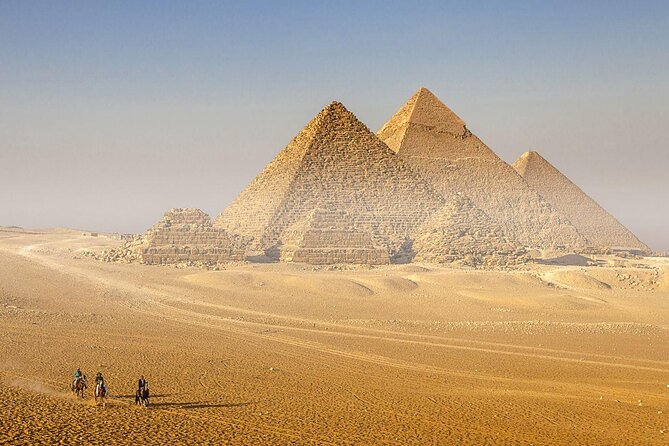
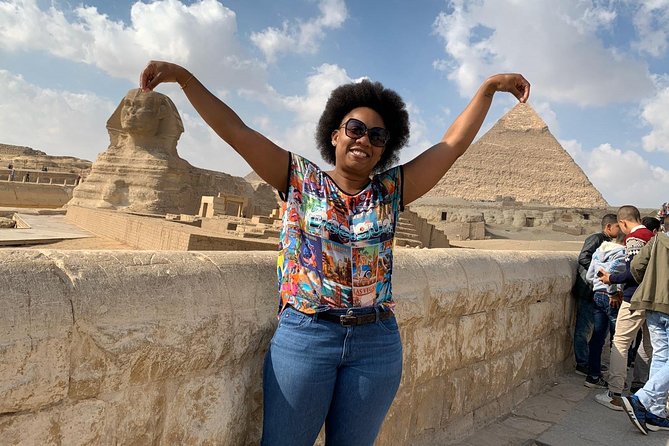
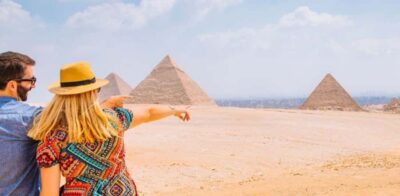
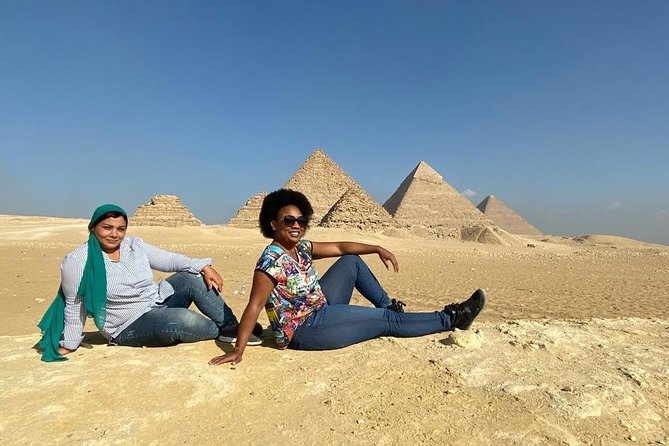
Day 1 begins at the Pyramids of Giza plateau, where you get to see the Great Pyramids of Giza, including the Pyramid of Cheops, plus the pyramids of Chephren and Mycerinus. You also visit the tombs of high officials and relatives of kings, which helps you understand that this was not only a “royal monument” zone. It was a whole planned landscape of elite power and burial culture.
After that, the tour moves to the Valley Temple and the Great Sphinx. This is the part where a guide’s explanations make a huge difference. Without context, the Sphinx can feel like a stop on the way to pictures. With context, it becomes part of a larger story about the funerary landscape and the symbolism people saw in it.
You also get time for panoramic photos before moving on. Think of this as your moment to reset your bearings: where you are standing, how the pyramids line up, and what angles you like best. If you have ever visited a major site and then realized later you photographed the wrong side, you will appreciate having that built-in rhythm.
One drawback to plan around: the Giza area is physically demanding, and your comfort depends on good shoes and sun protection. The tour helps with transport, but you still need to handle the walking and heat.
Saqqara’s Step Pyramid and Memphis: why these stops matter
Next up is Saqqara, where you visit the Step Pyramid of King Djoser (Zoser). This is the world’s oldest major stone structure, and that alone makes it worth your time if you care about how the pyramid idea evolved. You also learn about the 3rd Dynasty context, including that Djoser’s assistant architect Imhotep is associated with the genius build, and that limestone plays a key role in the construction.
The stop continues beyond the main pyramid to include the funerary complex and other pyramid-related structures, plus the Step Pyramid-era setting around King Teti and officials’ mastabas. This is where Saqqara shines, because it is less about one perfect monument and more about an entire ancient plan you can walk through.
Then you transition to Memphis, founded by King Menes and described as the capital during the Old Kingdom for thousands of years. You see highlights like the Statue of Ramses II and the Alabaster Sphinx of Memphis. Even if you know names already, a guide can help you see why Memphis mattered: it was a center of rule and culture, not just an early Egypt trivia answer.
The practical benefit here is that you get an Old Kingdom bridge between Giza and what comes next. You are not just ticking boxes. You are watching a civilization think, build, and refine its royal architecture over time.

Dahshur Bent and Red Pyramids: the day’s underappreciated payoff
After Memphis and lunch, you head to Dahshur, where the mood changes from iconic plateau scenes to something more experimental and, frankly, more interesting.
You visit the Bent Pyramid and the Red Pyramid. The Bent Pyramid is often described as an attempt that did not go exactly as planned when it came to the true pyramid shape. The guide’s explanation usually matters here, because you are not just looking at a “weird-looking pyramid,” you are seeing a step in engineering and design during the reign of Snefru, who is also identified as the father of Khufu and founder of the 4th Dynasty in the tour description.
Then comes the Red Pyramid, built for Snefru as well, which ties the story back to the era that produced the famed Giza pyramids. This contrast gives you a satisfying “before and after” feel, even within one day.
One reason I like this stop: it gives you a breather from the big crowd magnet sites, while still staying in the same ancient world. If you are the type who wants meaning over the most famous photo spot, Dahshur tends to pay off.
Day 2 at the Egyptian Museum: King Tut and the “what am I looking at?” advantage
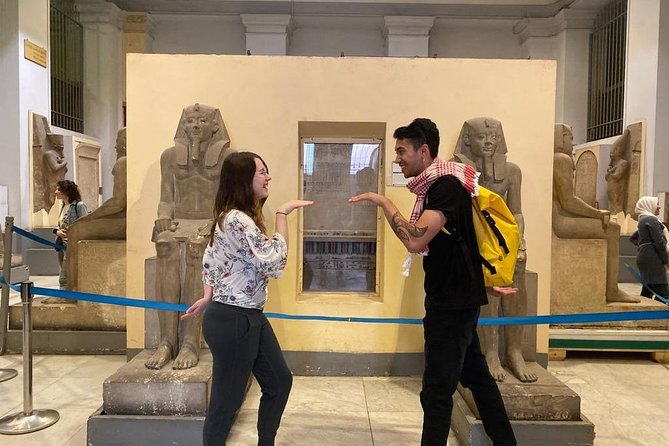
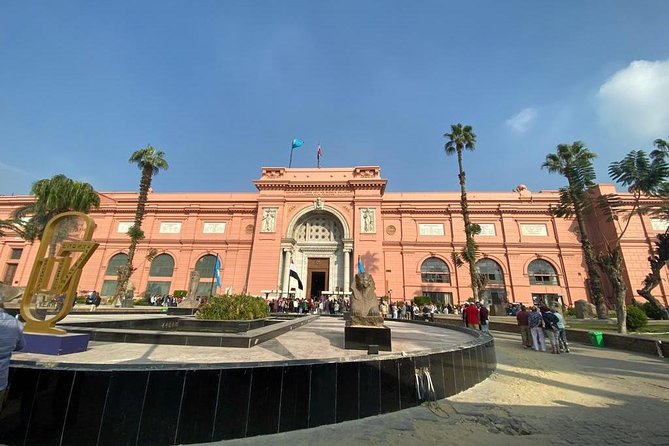
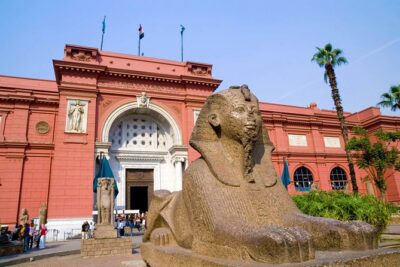
Day 2 starts in central Cairo at the Egyptian Museum of Antiquities. This is where people often feel overwhelmed, because the collection spans so many eras and objects. A private guide helps you focus on what you are seeing right now and why it matters.
You get a chance to visit the collection of King Tutankhamen, including the famous golden mask of the boy king. You also see other royal-related finds, like the collection of the princes Yuya and Thuya, described as great grand parents of King Tut. That detail is important because it gives you a family thread, not just a celebrity artifact.
The museum visit is timed for about three hours, which is enough to hit the highlights without rushing every room. Still, museums are tiring, so plan for slow down moments. Sit down when you can. Drink water. Let the objects do their job.
If you like Egypt as more than selfies, this is one of the best-value parts of the whole trip. A guide can help you connect symbolism, funerary traditions, and the way objects were meant to be seen.
Salah El-Din’s Citadel and Muhammad Ali Mosque: Cairo’s power story in stone
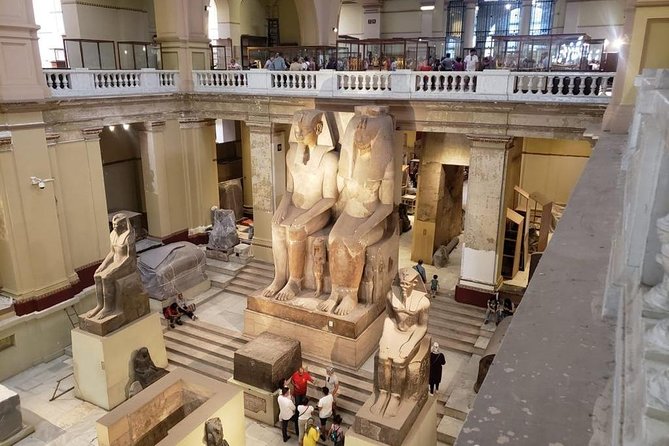
After the museum, you move to the Cairo Citadel of Salah El-Din, built in 1182 AD. This stop helps you zoom out from ancient Egypt and into the long timeline of Cairo as a political and military center.
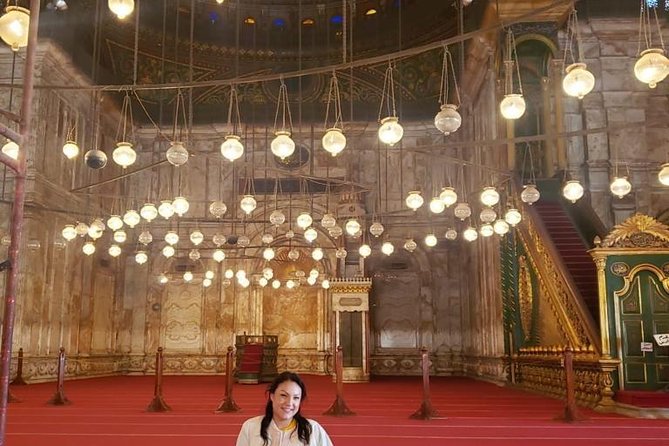
From there, you visit the Alabaster Mosque of Mohamed Ali pasha, built in 1848 AD by Turkish architect Youssef Bushnok. The description notes an Ottoman style, with the idea that Muhammad Ali wanted to challenge Ottoman power, including the mosque being designed like the emperor mosque. That kind of political motive is the difference between seeing a pretty building and understanding why it exists.
This stop is also visually rewarding. The Citadel complex gives you sweeping views and a sense of how strategic this area was. It is a good match after the museum, because you swap indoor artifacts for architecture you can walk around and take in from different angles.
Practical note: you will want comfortable footwear again. Citadel walks can add up, and the day already contains long museum time.
Khan el-Khalili after lunch: market time with a history brain
The last major stop is Khan el-Khalili, an open market built in the days of the Mamluk Sultan Barqouq in the 14th century AD. It is described as the oldest and biggest market in the Middle East, and also as part of Islamic Cairo with a connection to Fatimid rulers.
This is where the tour shifts from monuments to everyday history. Instead of focusing only on royal power, you see how commerce and city life shaped Cairo over centuries. It is also one of the easiest places to feel overwhelmed if you do not know what you are looking for, so having a guide helps you navigate without getting pulled in 20 directions.
This is also the part of the tour where your personal shopping style matters. If you want souvenirs, your guide can help you manage the chaos and find what you actually want. Some guests specifically appreciated help getting staff in best price and having someone guide them through buying decisions, which can turn a stressful market visit into a fun one.
Keep expectations realistic: a market is a sensory experience, not a museum. Go in with a loose plan, wear something comfortable, and set aside time just to wander calmly.
Price and value at $300: what you really get for your money
At $300 per person for about two days, the value depends on what you would otherwise pay and how much stress you want to avoid. The big win is that admission is included for all the named sites, and you get two included lunches. Those costs add up fast when you start booking sites separately.
You also get air-conditioned vehicle transport, an expert guide, and hotel pickup and drop-off from any hotel in Cairo. For many people, that is the difference between enjoying Cairo and spending your energy negotiating transport, entry fees, and timing.
There is also a quality signal baked in: the tour is highly rated, with a strong recommendation rate and a 4.8 overall rating from 17 experiences. The consistent praise points toward smooth guiding, easy communication, and guides who make the sites feel understandable rather than intimidating.
One balanced note: because the schedule is packed with major sites, it can feel rushed if your group wants more free time than the plan allows. If you are the type who likes to linger, tell your guide early that you want more slow exploring and fewer “move along quickly” moments.
Should you book this 2-day Giza and Cairo tour?
Book it if you want a smooth, private way to see the key pyramid zones plus Cairo’s top monuments without planning day after day. This works especially well if it is your first time in Cairo and you want context fast, or if you prefer having a guide handle the complexity while you enjoy the sights.
I would also book it if you care about variety: Giza and Saqqara for the pyramid story, Memphis for the Old Kingdom bridge, Dahshur for the engineering twists, then the museum, citadel, and Khan el-Khalili for Cairo’s long timeline.
Skip or adjust it if you hate structured itineraries and you want hours of free wandering. In that case, ask for pacing tweaks from the start, and be explicit about how much time you want for photos and slow exploration. With that clarity, this tour can turn two intense days into a trip that feels like you actually understood what you saw.
FAQ
Is this tour private?
Yes. It is a private tour/activity, and only your group participates.
What time does the tour start?
The start time is 8:00 am.
What is included in the price?
The package includes an air-conditioned vehicle, an expert tour guide, entry and admission for all mentioned sites, and lunch (2 meals).
Are admission tickets included for the museum and the mosques?
Yes. Entry and admission are included for all mentioned sites, including the Egyptian Museum, the Citadel, and the Mosque of Muhammad Ali.
Do you get hotel pickup and drop-off?
Yes. You get front-door pickup and drop-off from any hotel in Cairo.
What sites are covered over the two days?
You will visit the Pyramids of Giza and the Great Sphinx, Saqqara including the Step Pyramid, Memphis, Dahshur including the Bent and Red Pyramids, the Egyptian Museum, the Cairo Citadel with the Mosque of Muhammad Ali, and Khan el-Khalili.
How long is the tour?
It is listed as approximately 2 days, with timed stops across both days.
Is tipping included?
No. Tipping is not included.
What is the cancellation policy?
Free cancellation is available up to 24 hours in advance for a full refund. If you cancel less than 24 hours before the start time, the amount paid will not be refunded.
What happens if weather is poor?
This experience requires good weather. If it is canceled due to poor weather, you will be offered a different date or a full refund.
More of Cairo from our review pile
- Cairo: Djoser Pyramid & Memphis Private tour with transfers.
★ 4.0 · 14 reviews - White Desert Overnight Camping Sharing Tour in Egypt
★ 5.0 · 15 reviews - Cairo Best 2Days tour Pyramids, Saqqara & Old Cairo
★ 5.0 · 15 reviews - Monastery St Simon with Cave Church and Garbage City Private Tour
★ 5.0 · 15 reviews - Full-Day Tour to Giza Pyramids, Egyptian Museum & Khan Al-Khalili
★ 5.0 · 15 reviews - Private Walking Tour in ElMoez Street & Khan Elkhalili Market
★ 5.0 · 15 reviews
2-Day Experiences, compared.
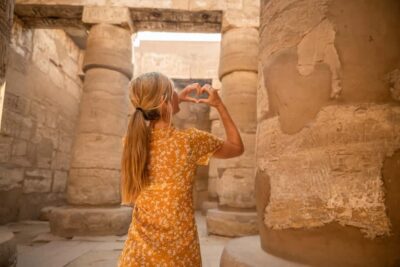 ★ 4.52-Day Luxor Tour with Hotel, Balloon, & Boat RideFrom $2701,113 reviews
 ★ 5.0White & Black Desert tour 2 Days 1 night camping from Cairo.From $110649 reviews
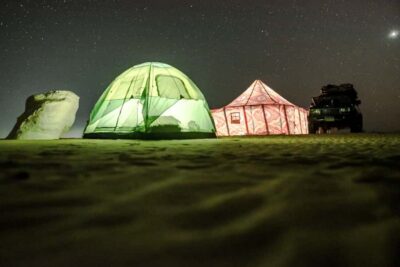 ★ 4.92-Day Bahariya Oasis Camp and Desert TourFrom $205616 reviews
 ★ 5.0White & Black desert camping tour 2 Days 1 night From CairoFrom $110467 reviews
 ★ 5.02 days cairo and giza attractions plus Gem, private tourFrom $90231 reviews
 ★ 5.0All Inclusive 2-Day Private Tour to All Pyramids and Cairo and 2 eveningsFrom $299187 reviews
 ★ 5.02-Day Top Attractions and Adventures Package in Luxor with AccommodationFrom $110178 reviews
 ★ 4.82-Day Bahariya & White Desert Private Camp AdventureFrom $162147 reviews
The lists this one sits on